Modern Classic Era

1980-1995

The cars that defined Generation X. Boxy, reliable, and increasingly collectible.

Historical Context

After the malaise era's dark days, manufacturers figured out how to make power while meeting emissions standards. Japanese imports proved that performance and reliability weren't mutually exclusive. These are the cars millennials grew up wanting.

Defining Characteristics

  • Fuel injection replacing carburetors
  • Angular, geometric styling
  • Japanese reliability entering the conversation
  • The rise of the turbo
  • Driver-focused sports cars

Vehicles from the Modern Classic Era (20)

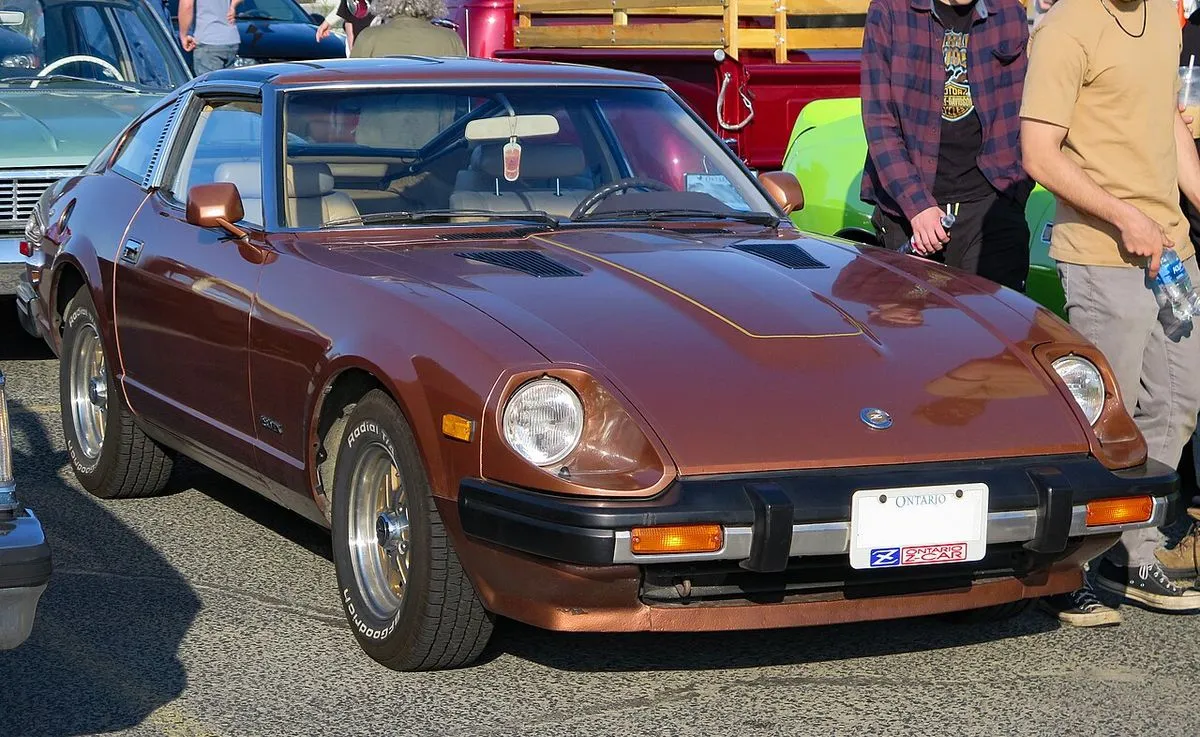
1981 Datsun 280ZX Turbo

1981 Datsun 280ZX Turbo

Datsun

$15,000-45,000 Car
Engine: 2.8L L28ET Turbocharged I6
Power: 180 hp (turbo)
Trans: 5-speed manual
Years: 1979-1983

The 280ZX took the Z car into the '80s with a cushier, more refined approach that purists hated and buyers loved. It was Motor Trend's Car of the Year in 1979. The turbo model brought real performance back, making this the first forced-induction Z car. Critics called it too soft, too heavy, too GT-focused — but it sold like crazy and brought a new generation into the Z fold. This is the Z car you could take on a road trip without your kidneys filing a complaint.

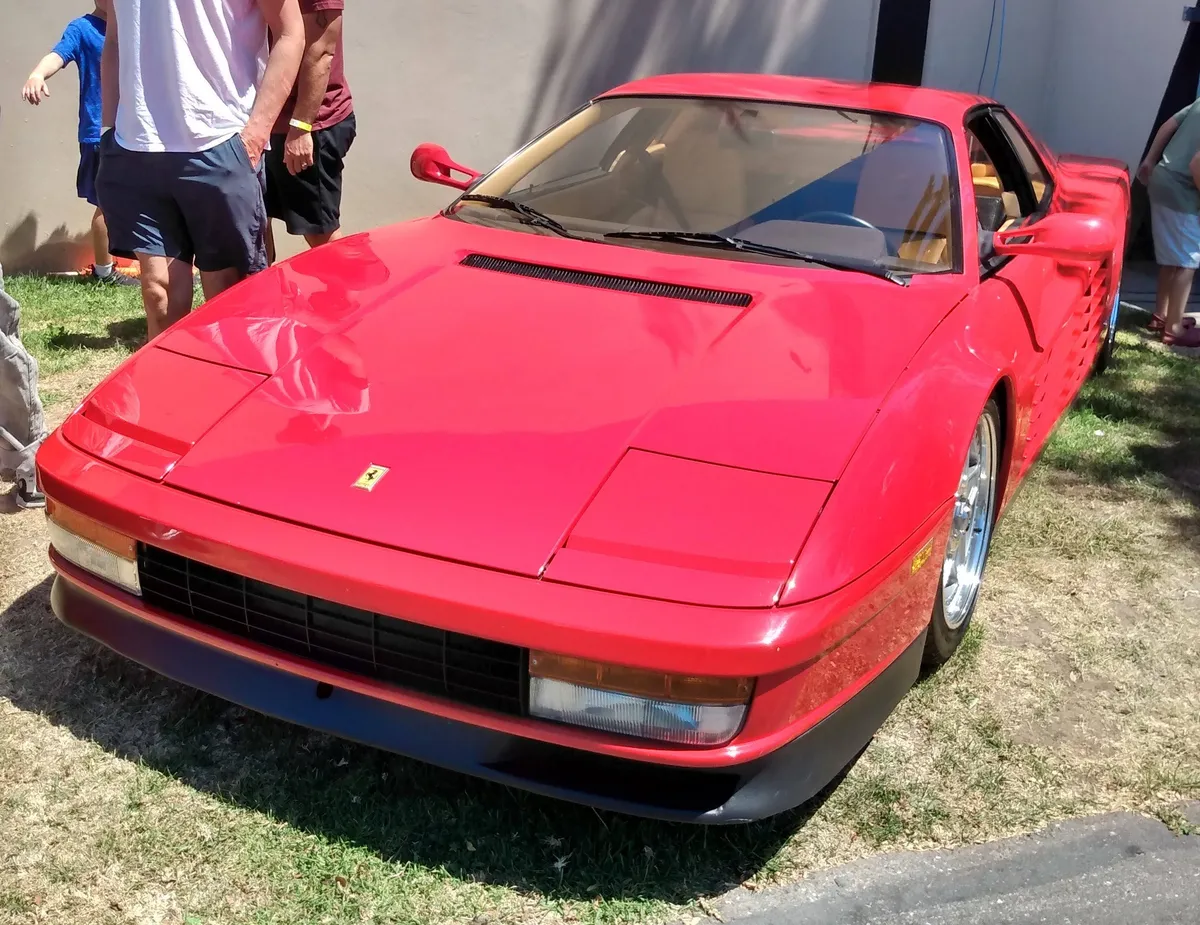
1984 Ferrari Testarossa

1984 Ferrari Testarossa

Ferrari

$125,000-300,000+ Car
Engine: 4.9L flat-12
Power: 385 hp @ 6,300 rpm
Trans: 5-speed manual
Years: 1984-1996

The Testarossa was the ultimate '80s supercar — wide, low, and straked to hell. Pininfarina's design put the radiators in the doors (hence the side strakes), allowing a lower nose and dramatic proportions. The flat-12 engine was Ferrari racing technology adapted for the road. 'Miami Vice' made it a cultural icon; every kid in America had one on their wall. The name referenced Ferrari's legendary racing Testarossas ('red head' for the red cam covers). Critics called it overstyled. They were wrong. The Testarossa was exactly as dramatic as the '80s demanded.

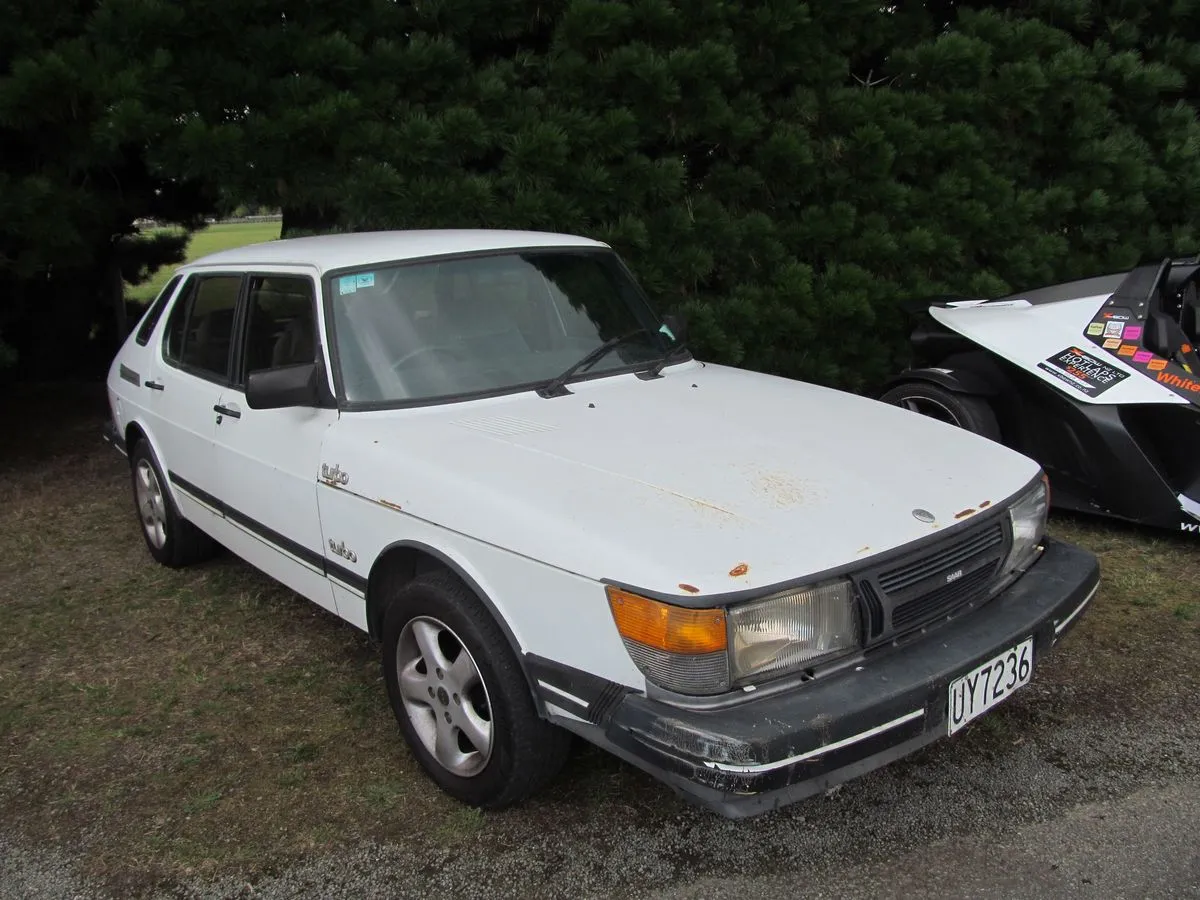
1986 Saab 900 Turbo

1986 Saab 900 Turbo

Saab

$10,000-30,000 Car
Engine: 2.0L Turbocharged I4
Power: 160 hp (later SPG: 175 hp)
Trans: 5-speed manual
Years: 1978-1993

The Saab 900 Turbo proved that weird could be wonderful. Everything about this car was deliberately unconventional — the ignition between the seats (so you don't hurt your knee in a crash), the wraparound windshield (better visibility), the curved doors (easier entry). Saab was founded by aircraft engineers, and the 900 felt like something pilots would design. The turbo models brought genuine performance to the package, creating the original hot hatch before the term existed.

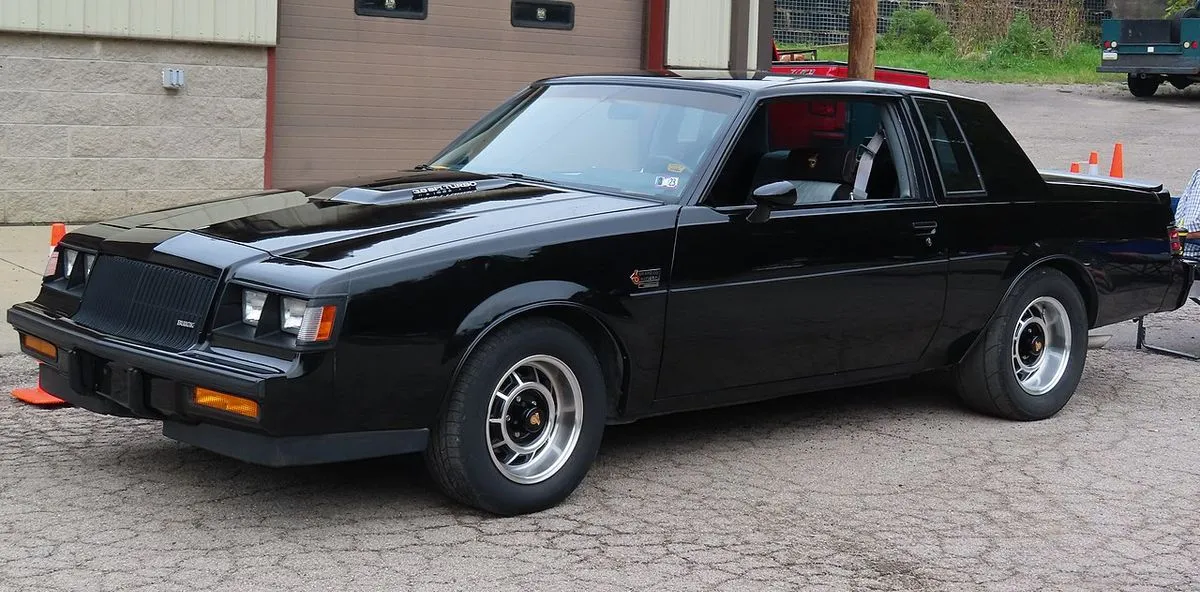
1987 Buick Grand National

1987 Buick Grand National

Buick

$40,000-100,000+ Car
Engine: 3.8L Turbocharged V6
Power: 245 hp (276 hp in GNX)
Trans: 4-speed automatic (200-4R)
Years: 1984-1987

The Grand National proved you don't need a V8 to be fast. In 1987, this turbocharged V6 sedan could embarrass Corvettes at the drag strip — 13.4 seconds in the quarter mile, stock. Car and Driver called the GNX 'the quickest American production car ever.' The all-black styling earned it the 'Darth Vader' nickname, and the menacing looks backed up the performance. This was the last great rear-wheel-drive American performance sedan of its era, and it killed the malaise attitude dead.

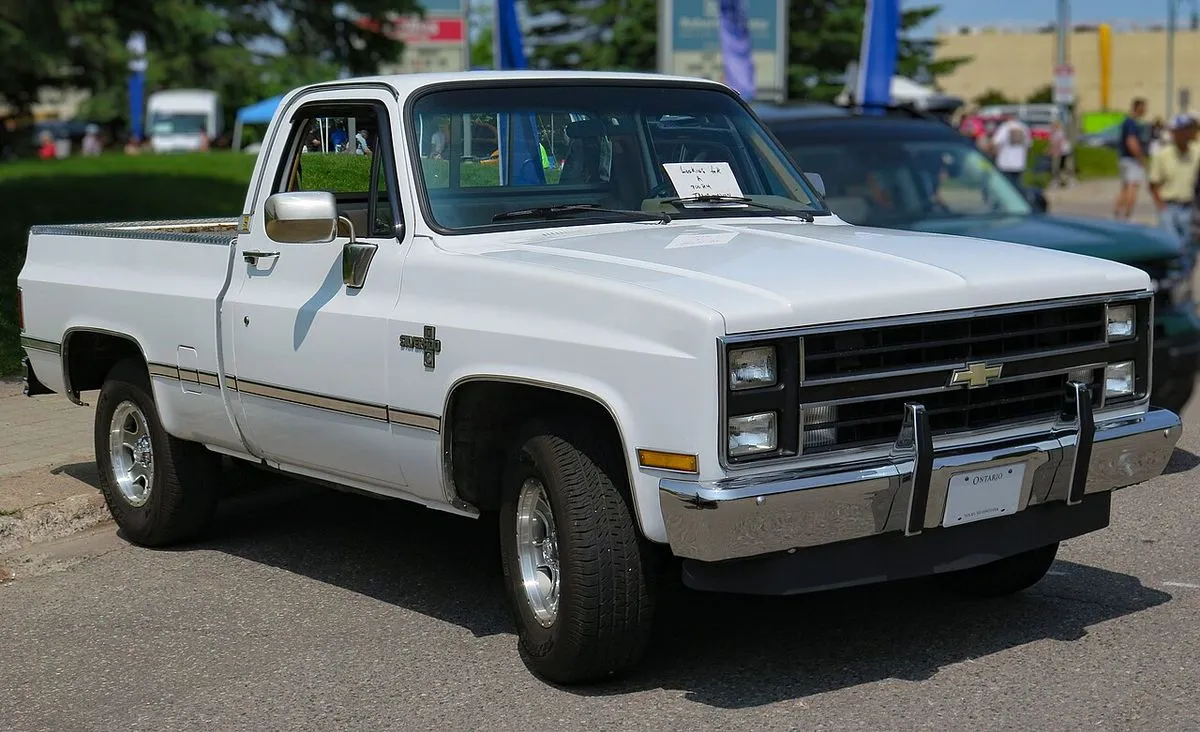
1973-1987 Chevy C/K Square Body

1973-1987 Chevy C/K Square Body

Chevy

$15,000-80,000+ Truck
Engine: 250 I6
Power: 100-245 hp
Trans: 3-speed manual
Years: 1973-1987

The Chevrolet Square Body is the last old-school American truck — simple, solid, and infinitely fixable. The design ran for 14 years with only incremental changes, which means parts interchange across the entire run. The square styling that gives these trucks their nickname was revolutionary in 1973 and still looks purposeful today. They were workhorses when new, and the survivors are either beat to hell or lovingly maintained. The K-series 4x4 trucks, especially short-bed models, have become the hottest segment in the collector truck market. A clean 1987 K10 Silverado can sell for more than it cost new, adjusted for inflation.

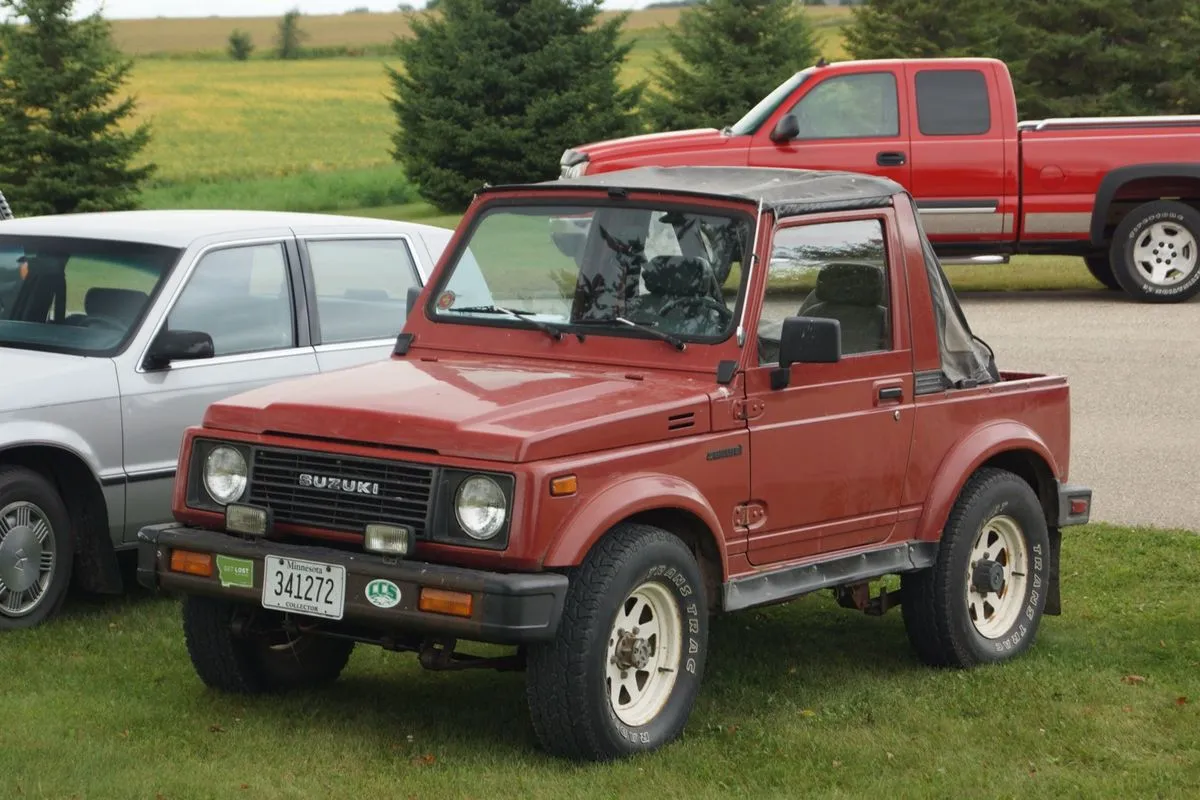
1987 Suzuki Samurai

1987 Suzuki Samurai

Suzuki

$5,000-15,000 Truck
Engine: 1.3L SOHC inline-4
Power: 63 hp @ 6,000 rpm
Trans: 5-speed manual
Years: 1985-1995

The Samurai proved that small doesn't mean incapable. At barely 2,000 pounds with proper 4WD and low range, the Samurai could go places that heavier trucks couldn't reach. Consumer Reports' rollover controversy nearly killed it in America, but the Samurai was vindicated — it wasn't more dangerous than comparable vehicles. The lightweight platform created a cult following among off-roaders who appreciated what less weight and tight turning could accomplish on trails.

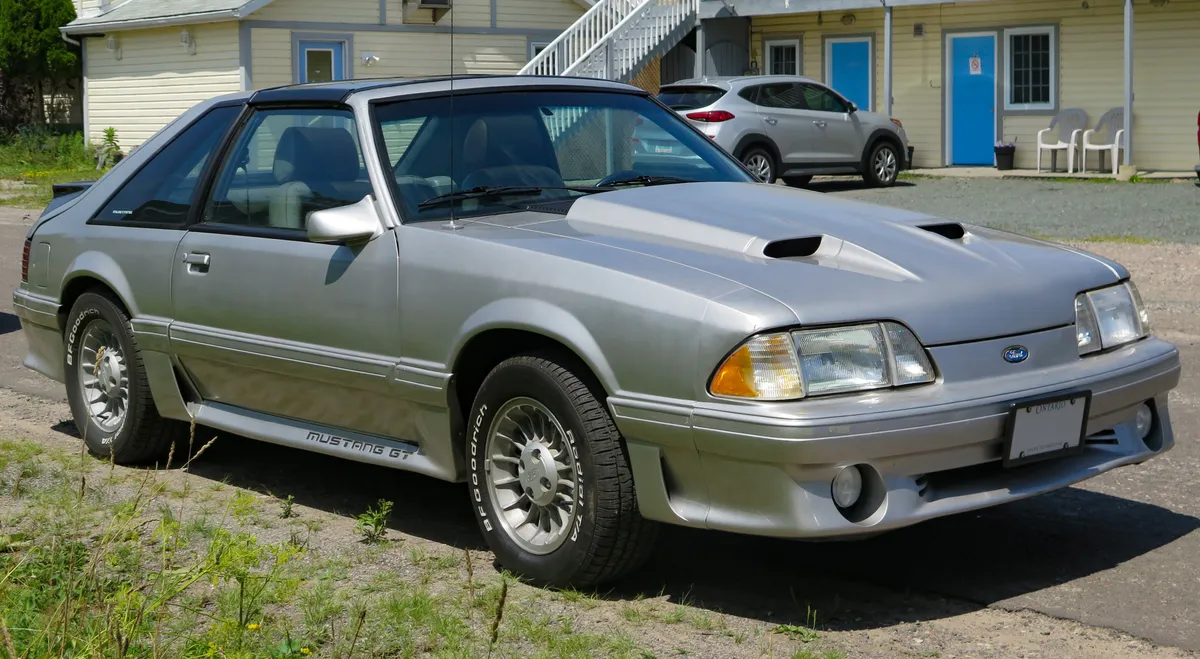
1989 Ford Mustang 5.0

1989 Ford Mustang 5.0

Ford

$15,000-45,000 Car
Engine: 302 cu in (5.0L) V8
Power: 225 hp @ 4,200 rpm
Trans: 5-speed manual (Tremec)
Years: 1987-1993

The Fox Body 5.0 saved the Mustang. After years of malaise-era disappointment (Mustang II, anyone?), Ford finally gave enthusiasts what they wanted: a lightweight, rear-drive chassis with a fuel-injected V8 that actually made power. The 1987-1993 5.0 HO engine produced 225 hp — modest by modern standards but transformative for its era. The LX 5.0 notchback became the sleeper of choice; the GT had the aggressive body kit. The aftermarket exploded. Drag strips filled with Fox Bodies. This was the car that proved the pony car segment could survive and thrive.

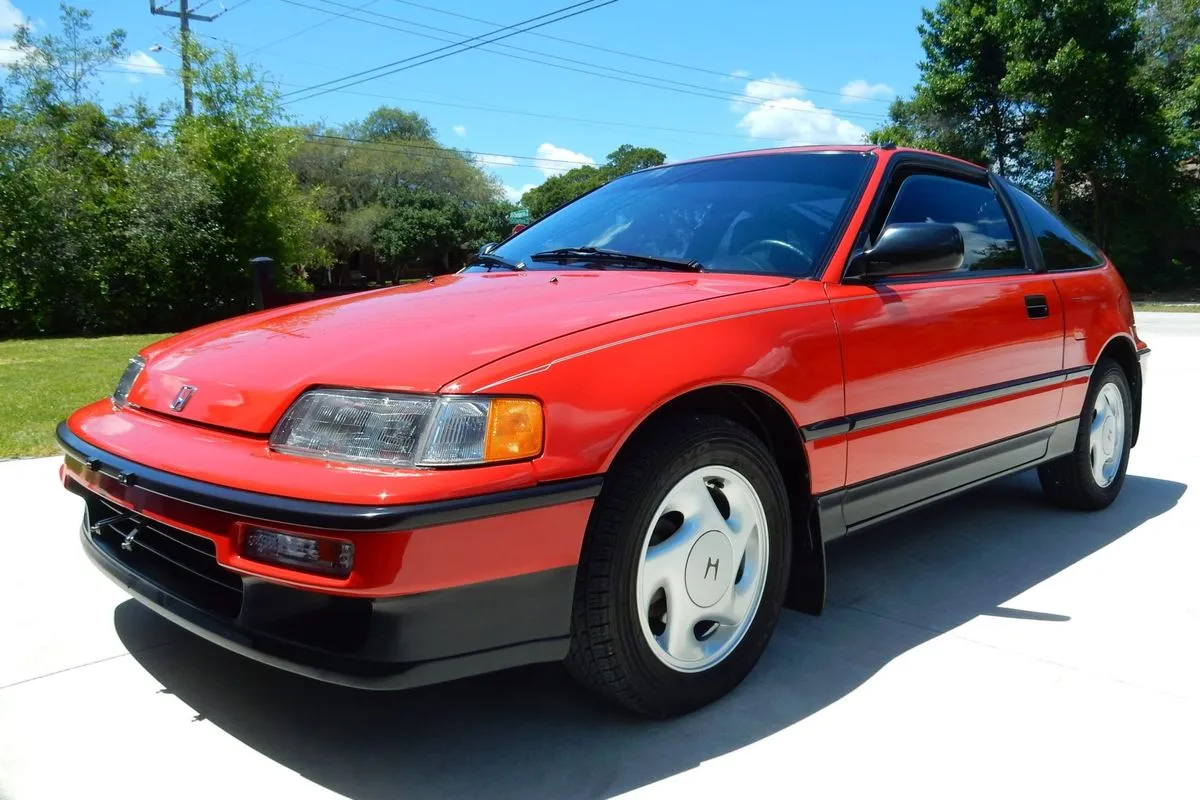
1990 Honda CRX Si

1990 Honda CRX Si

Honda

$8,000-25,000 Car
Engine: 1.6L SOHC inline-4 (D16A6)
Power: 108 hp @ 6,000 rpm
Trans: 5-speed manual
Years: 1988-1991

The second-gen CRX is the Miata's sibling that never got the credit. While Mazda was building the perfect roadster, Honda built the perfect coupe. Under 2,200 pounds, a willing SOHC engine, and handling that embarrassed cars costing three times as much. The Si version with the D16A6 engine found the sweet spot: enough power to be fun, reliable enough to be daily driven, efficient enough to pass gas stations without stopping. This was Honda at the height of their engineering arrogance — building cars that made you wonder why anyone bothered with anything else.

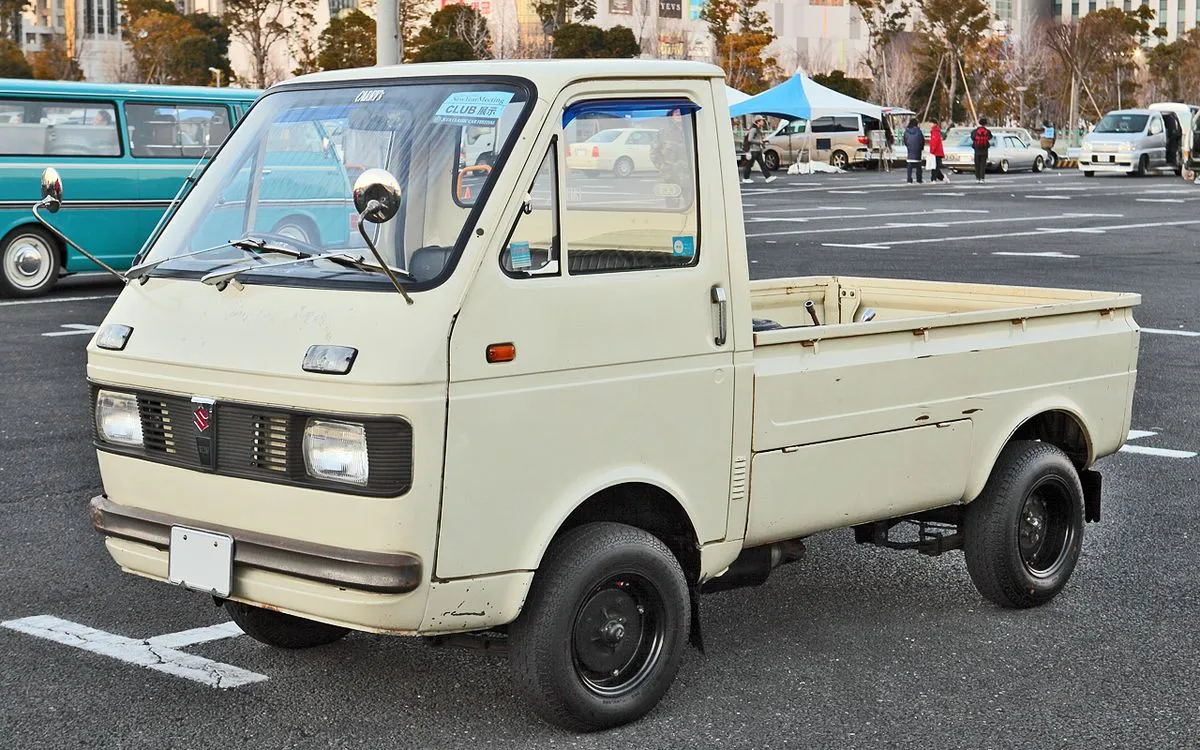
1990 Suzuki Carry Kei Truck

1990 Suzuki Carry Kei Truck

Suzuki

$5,000-12,000 Truck
Engine: 660cc inline-3 (later models)
Power: 31-45 hp depending on version
Trans: 4-speed manual
Years: 1979-1998

Kei trucks are Japan's dirty secret. For decades, these miniature pickups have done real work on Japanese farms, construction sites, and narrow streets. The 25-year import rule has finally made them legal in America, and people are discovering what Japan has known: sometimes smaller is better. A Carry can fit where full-size trucks can't, haul surprisingly heavy loads, and sip fuel. They're not highway vehicles, but for property work, they're brilliant.

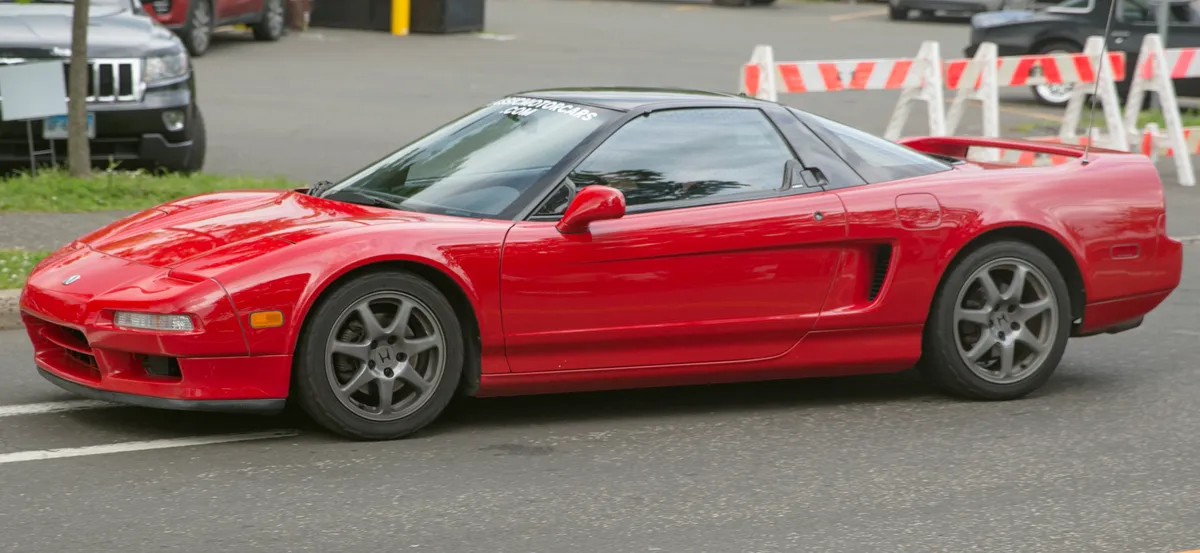
1991 Acura NSX

1991 Acura NSX

Acura

$60,000-225,000 Car
Engine: 3.0L V6 (NA1)
Power: 270 hp (NA1)
Trans: 5-speed manual
Years: 1991-2001

The NSX was Honda's declaration that Japanese engineering had caught up to — and surpassed — the European supercar establishment. Ayrton Senna helped develop the chassis at Suzuka. Honda engineers built the first all-aluminum monocoque for a production car. The 3.0L VTEC V6 made modest power but revved to 8,000 RPM with mechanical precision that made Italian engines seem agricultural. And unlike a Ferrari, you could drive the NSX to work every day, park it outside, and never worry about it not starting. The NSX didn't just compete with the Ferrari 348 — it embarrassed it. Ferrari responded with the F355, arguably designed specifically to answer Honda's challenge.

1992 Dodge Viper RT/10

1992 Dodge Viper RT/10

Dodge

$40,000-65,000 Car
Engine: 8.0L V10
Power: 400 hp
Trans: 6-speed manual
Years: 1992-1995

The Viper was Chrysler's insane bet that Americans still wanted raw, unassisted muscle. Bob Lutz and Carroll Shelby created a car with no safety nets — no ABS, no traction control, no airbags, and side exhaust pipes that would brand your calf if you weren't careful. The 8.0L V10 was derived from a truck engine but made 400 hp in an era when Corvettes made 300. The Viper was automotive machismo distilled to its purest form. It was too hot, too loud, too uncomfortable, and too willing to swap ends if you disrespected it. That was the entire point.

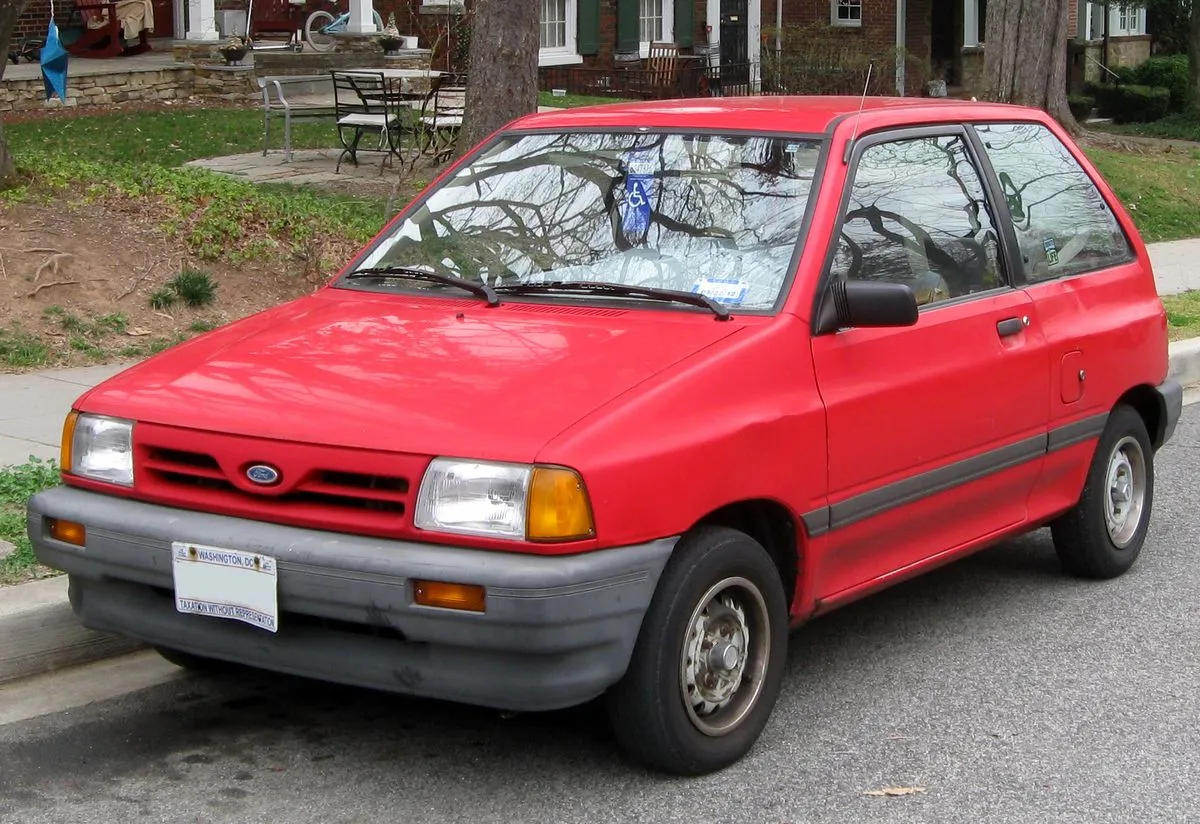
1992 Ford Festiva

1992 Ford Festiva

Ford

$1,500-6,000 Car
Engine: 1.3L Mazda B3 inline-4
Power: 63 hp @ 5,000 rpm
Trans: 4-speed manual
Years: 1988-1993

The Festiva is transportation reduced to its absolute essence. Built by Kia, engineered by Mazda, sold by Ford — a globalized economy before anyone used that word. It's slow. It's tinny. The three-speed automatic is basically two gears and a suggestion. But it weighs nothing, sips fuel, and will get you from A to B forever if you do basic maintenance. For kids learning to drive, this was perfect: nothing to break, nothing to race, just honest transportation that taught you how cars work.

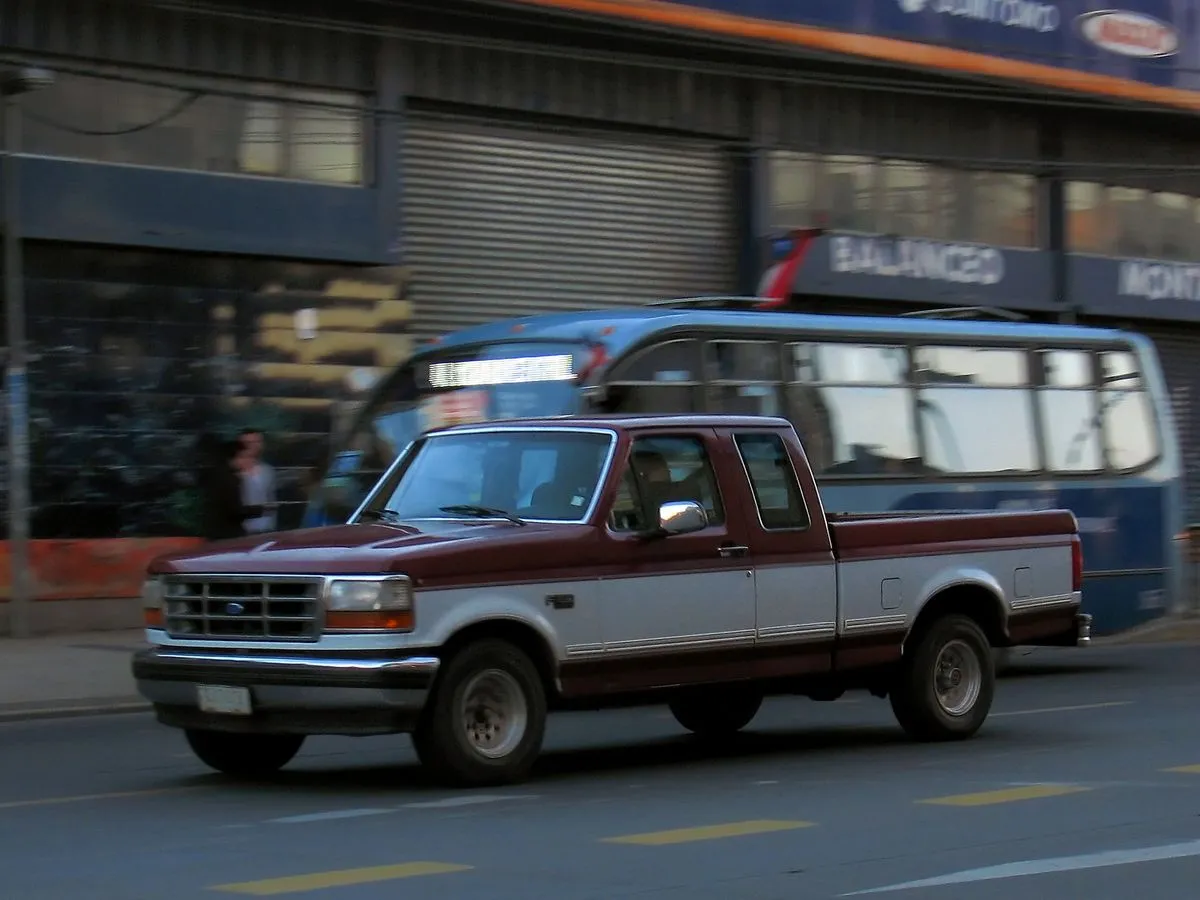
1993 Ford F-150 XLT Lariat

1993 Ford F-150 XLT Lariat

Ford

$5,000-20,000 Truck
Engine: 4.9L inline-6
Power: 150-210 hp depending on engine
Trans: 5-speed manual
Years: 1987-1996

The OBS (Old Body Style) F-150 is the quintessential American truck. It's what people picture when they think 'pickup.' The 1987 redesign added aerodynamics without losing the truck's essential character. The 300 cubic inch inline-6 is legendarily reliable — truckers call it the 'big six' and swear by it. The XLT Lariat trim added carpet, power everything, and enough creature comforts to make the wife happy. This is the working truck that could also be the family vehicle.

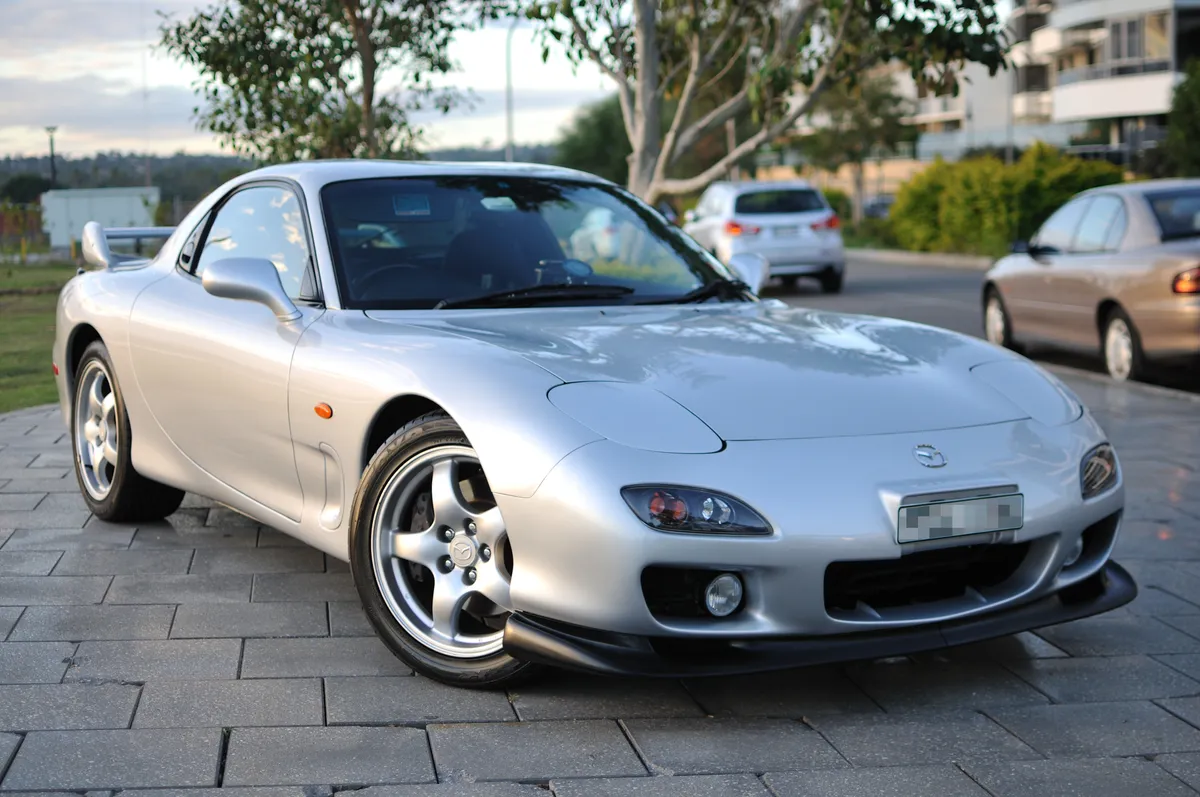
1993 Mazda RX-7 FD

1993 Mazda RX-7 FD

Mazda

$35,000-80,000 Car
Engine: 1.3L Twin-Turbo Rotary (13B-REW)
Power: 255 hp (US)
Trans: 5-speed manual
Years: 1993-2002

The FD RX-7 was Mazda's final statement on the rotary sports car, and it was magnificent. The styling — penned by Mazda's own design team — remains timeless. The sequential twin-turbo 13B-REW was the most sophisticated rotary engine ever mass-produced. At under 2,900 lbs with perfect 50/50 weight distribution, the FD handled like a telepathic extension of the driver. It was also Mazda's most expensive car to build, and they lost money on every one. The RX-7 was discontinued in 2002 because emissions and crash regulations made the rotary untenable. It was the rotary's swan song, and Mazda made it beautiful.

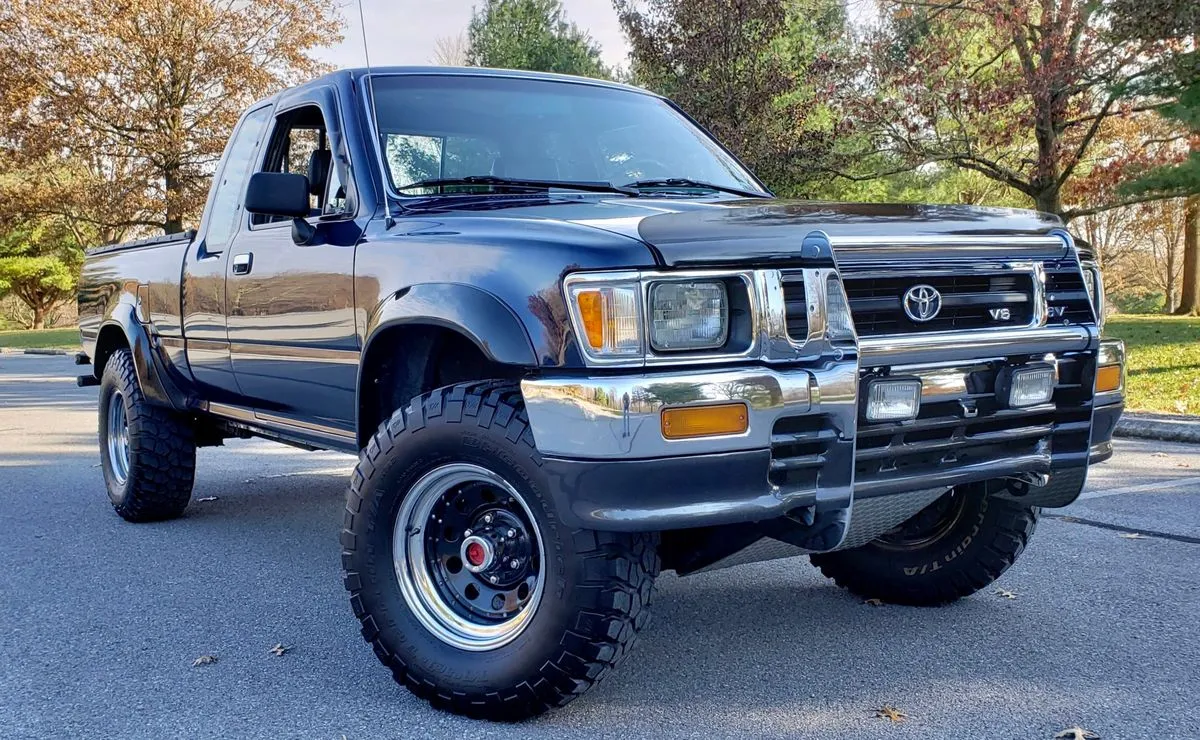
1994 Toyota 4x4 Pickup

1994 Toyota 4x4 Pickup

Toyota

$10,000-30,000 Truck
Engine: 3.0L 3VZ-E V6
Power: 150 hp
Trans: 5-speed manual
Years: 1989-1995

This is the truck that built Toyota's American reputation. The one that survives neglect, abuse, and decades of use. It's not fast, not luxurious, not particularly capable by modern standards. But it starts every time, runs forever, and does exactly what a truck should do without drama. The 22R-E engine has a cult following for good reason: it may be the most reliable engine ever mass-produced. These trucks just refuse to die.

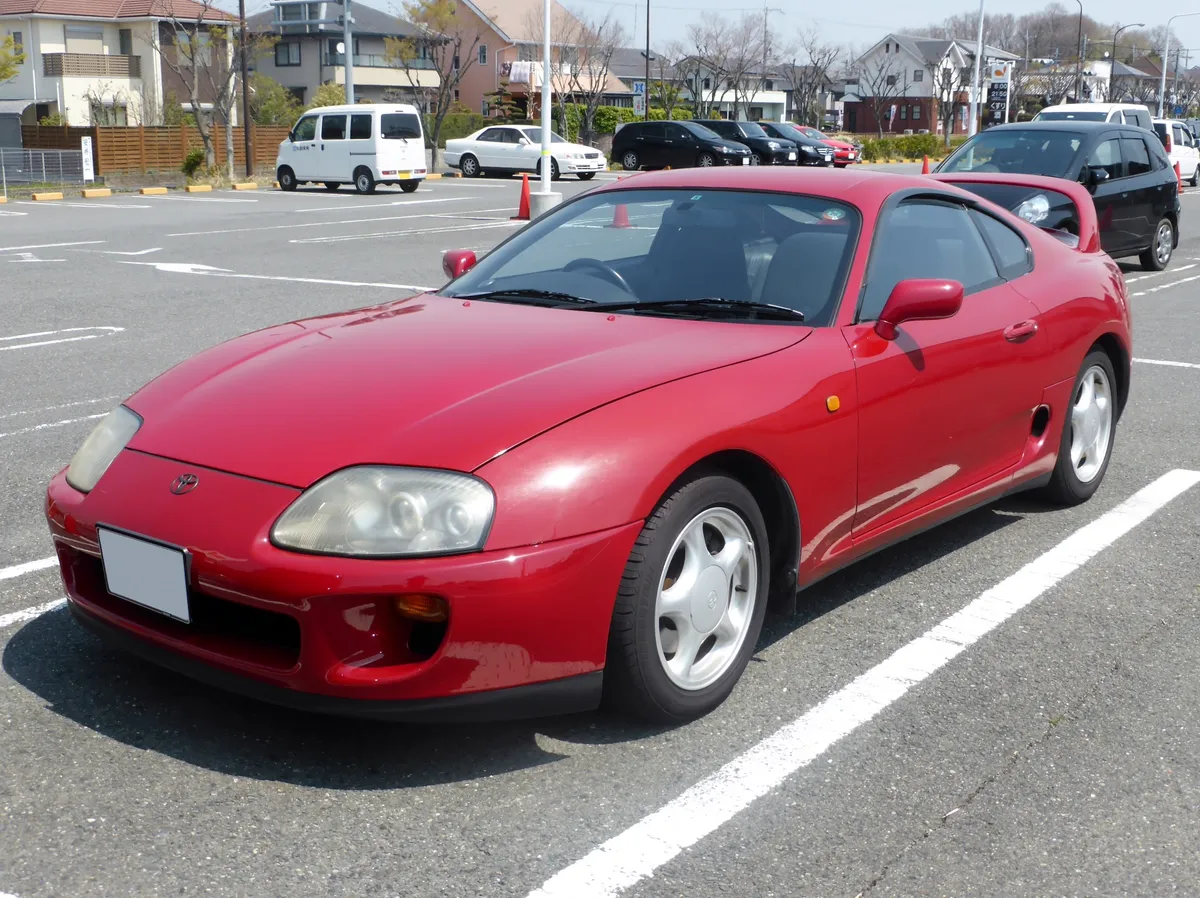
1994 Toyota Supra Turbo

1994 Toyota Supra Turbo

Toyota

$70,000-150,000 Car
Engine: 3.0L Twin-Turbo Inline-6 (2JZ-GTE)
Power: 320 hp (US, detuned)
Trans: 6-speed manual (Getrag V160)
Years: 1993-1998

The A80 Supra was Toyota's grand touring flagship, but the tuning community turned it into legend. The 2JZ-GTE inline-six is perhaps the most overbuilt engine ever put in a production car. The factory bottom end can handle 700+ horsepower without modification. Tuners discovered this, and 1,000 hp street Supras became almost common. The Fast & Furious franchise made the orange Supra iconic, and prices went stratospheric. But even stock, the Supra Turbo was a sophisticated GT car with genuine performance. The sequential turbos eliminated lag. The Getrag 6-speed was nearly indestructible. It was the last of Toyota's great sports cars before they went conservative.

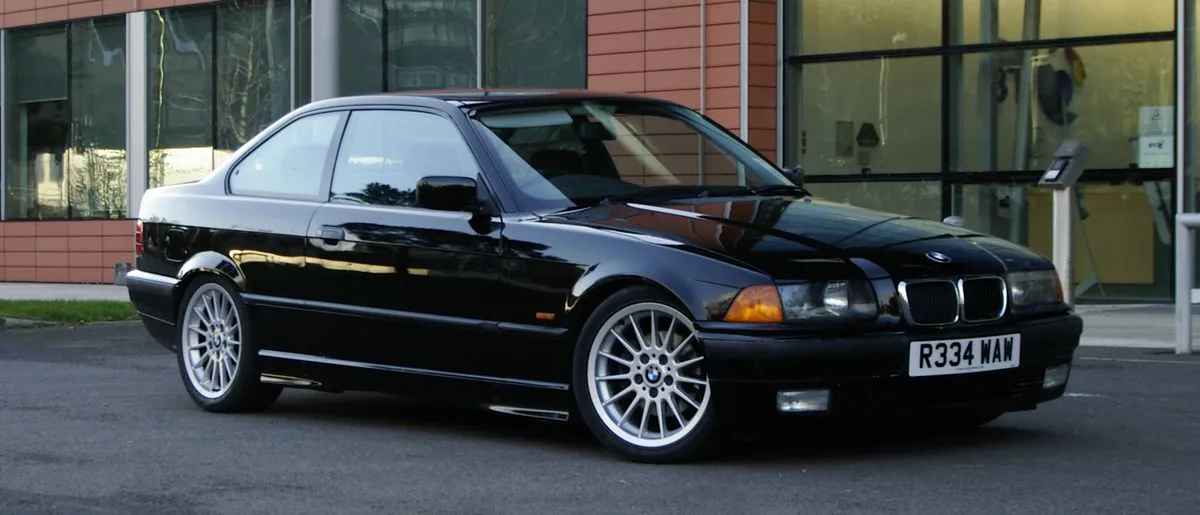
1995 BMW E36 328i

1995 BMW E36 328i

BMW

$5,000-20,000 Car
Engine: 2.8L M52 inline-6
Power: 190 hp @ 5,300 rpm
Trans: 5-speed manual
Years: 1992-1999

The E36 is the forgotten middle child between the legendary E30 and the bloated E46. But it might be the sweet spot. It's the last 3-Series you can work on without dealer software. The last one that feels connected to the road through hydraulic steering. The M52 straight-six is one of the great engines — smooth, willing, and tough. These cars taught a generation what 'Ultimate Driving Machine' actually meant, before BMW forgot.

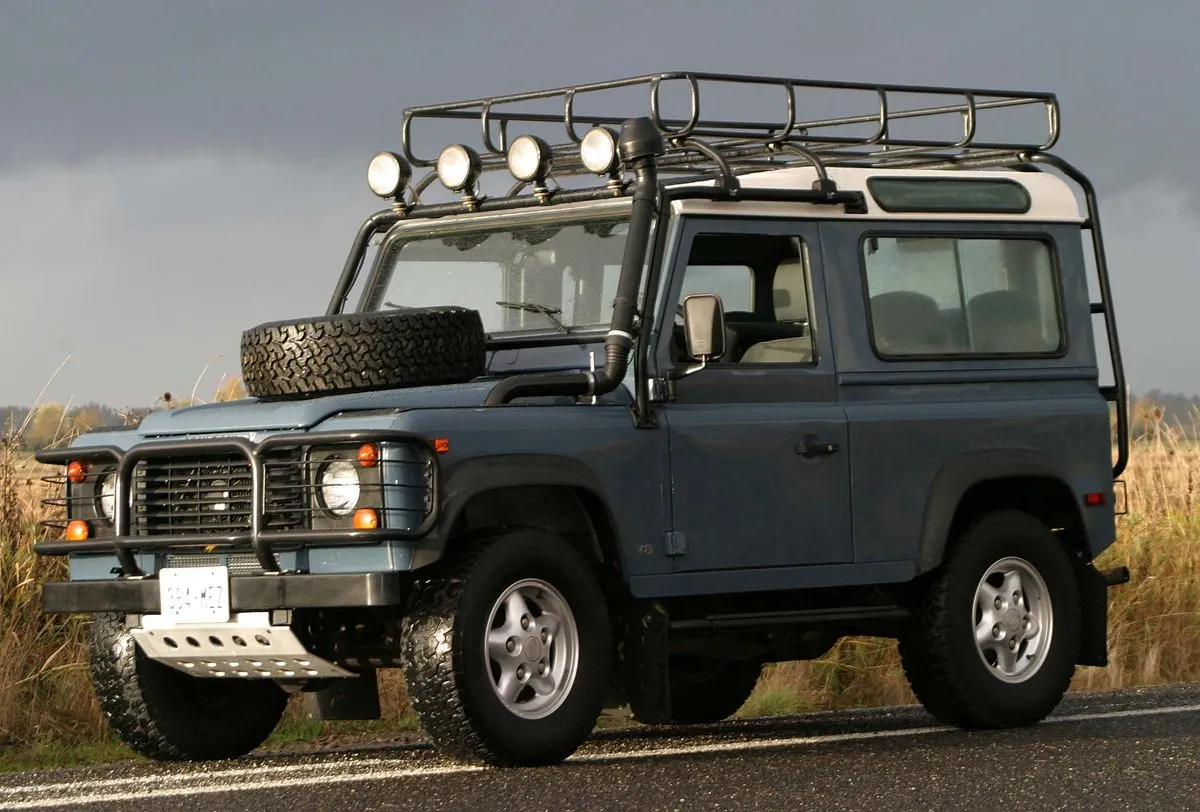
1995 Land Rover Defender 90

1995 Land Rover Defender 90

Land Rover

$40,000-100,000+ Truck
Engine: 3.9L V8 (NAS spec)
Power: 182 hp (NAS V8)
Trans: 5-speed manual (R380)
Years: 1983-2016

The Defender is what happens when function dictates form for 68 years. Land Rover started with a vehicle designed to go anywhere, and despite periodic updates, never abandoned that mission. The Defender became the vehicle of choice for African safaris, military operations, aid organizations, and anyone who needed absolute capability. The NAS (North American Specification) Defenders from 1993-1997 are particularly desirable because they're the only ones that were legally sold new in the US.

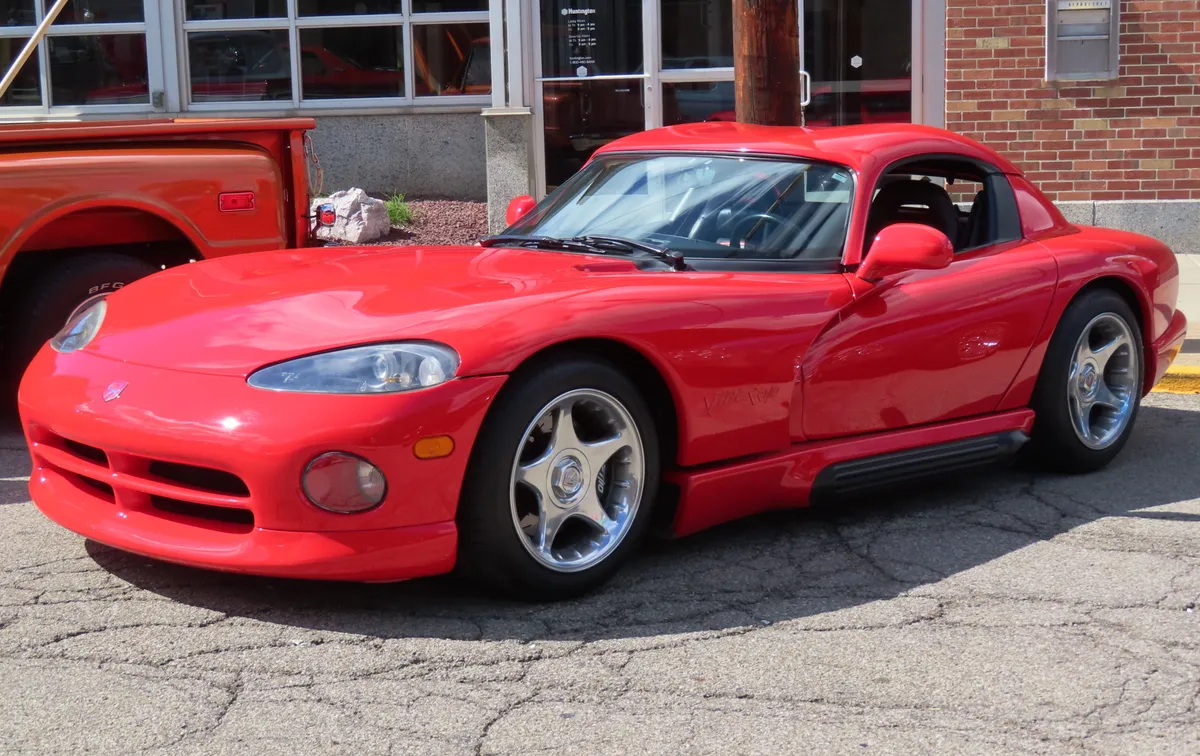
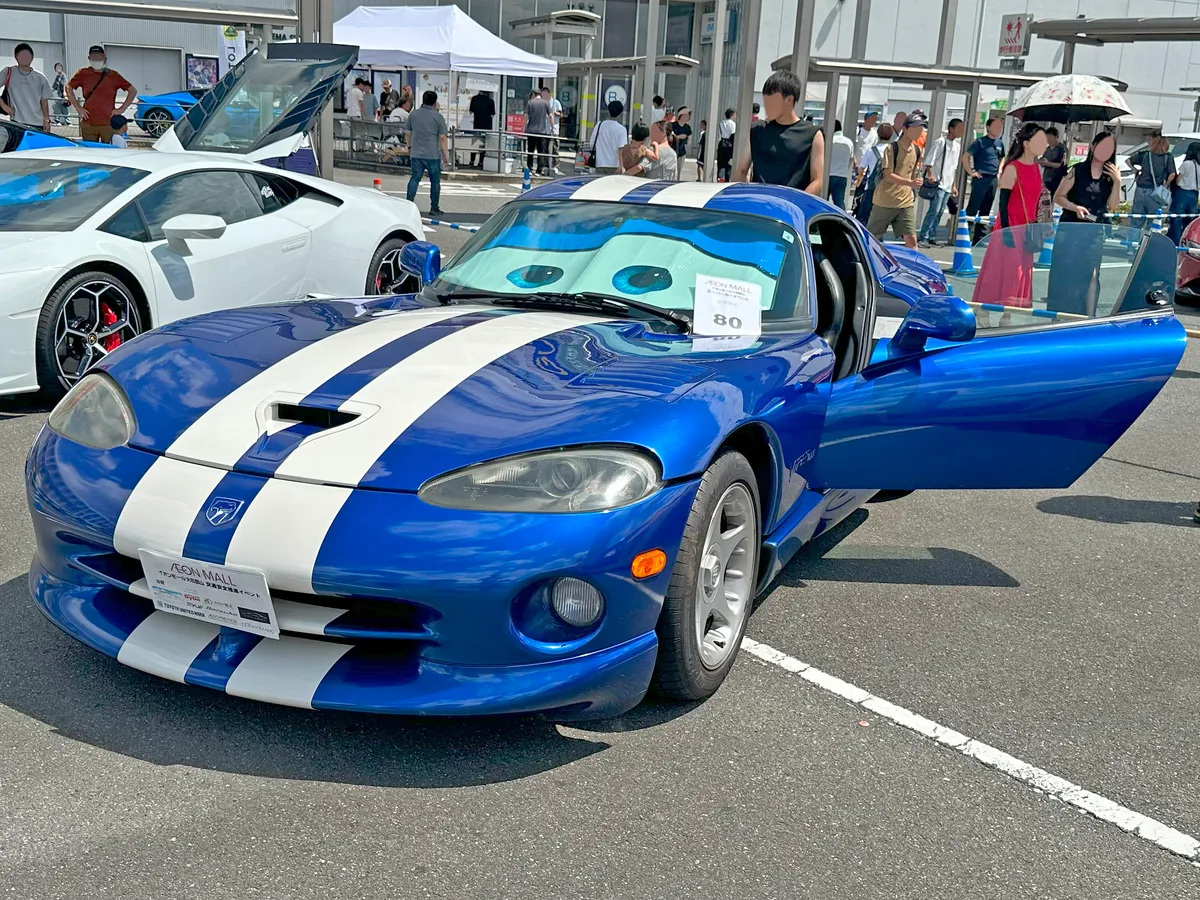
1996 Dodge Viper GTS

1996 Dodge Viper GTS

Dodge

$45,000-90,000 Car
Engine: 8.0L V10
Power: 450 hp
Trans: 6-speed manual
Years: 1996-2002

The GTS coupe took the RT/10's brutality and added just enough refinement to make it usable without losing the soul. The double-bubble roof — a direct homage to the Shelby Cobra Daytona coupe — made it instantly recognizable. The 450 hp V10 was even more aggressive than the roadster's. And then Chrysler went racing. The Viper GTS-R dominated GT2 class racing, including class wins at Le Mans in 1998, 1999, and 2000. The blue-with-white-stripes livery became iconic. The GTS proved the Viper wasn't just a drag strip brawler — it could humiliate European exotics on road courses too.

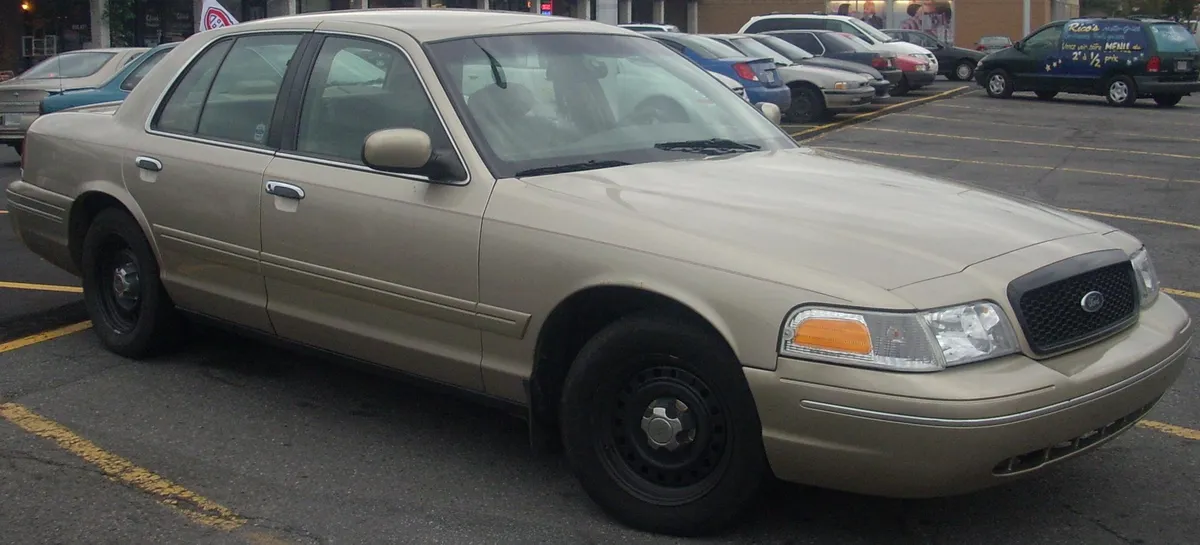
1999 Ford Crown Victoria

1999 Ford Crown Victoria

Ford

$3,000-12,000 Car
Engine: 4.6L Modular V8
Power: 200-235 hp
Trans: 4-speed automatic (4R70W)
Years: 1992-2011

The Crown Victoria was the last of the American body-on-frame V8 sedans. While everyone else moved to front-wheel drive and unibody construction, Ford kept building a proper full-frame car with a pushrod V8 and rear-wheel drive. It became the default American police car, taxi, and fleet vehicle. Every cop movie from 1992 to 2011 featured Crown Vics. Every taxi in every city outside New York ran Crown Vics. It was boring by design — reliable, cheap to fix, and fundamentally indestructible. That's exactly why it matters.