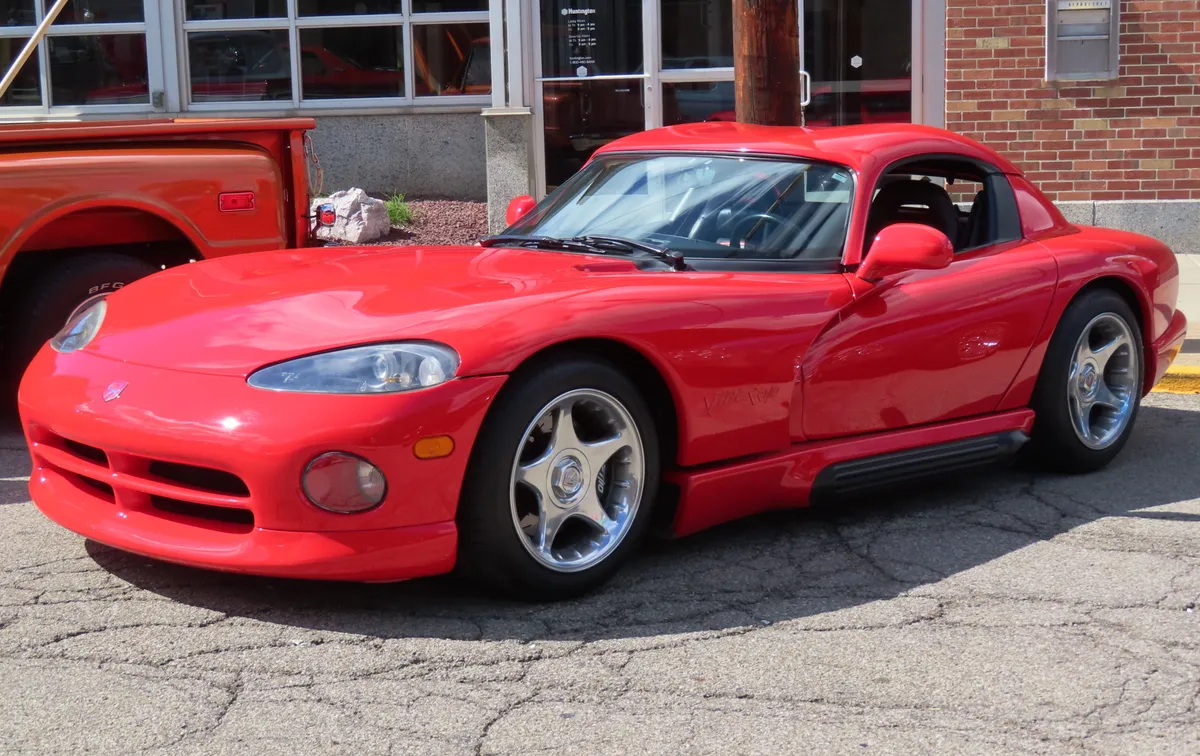
Why this vehicle matters
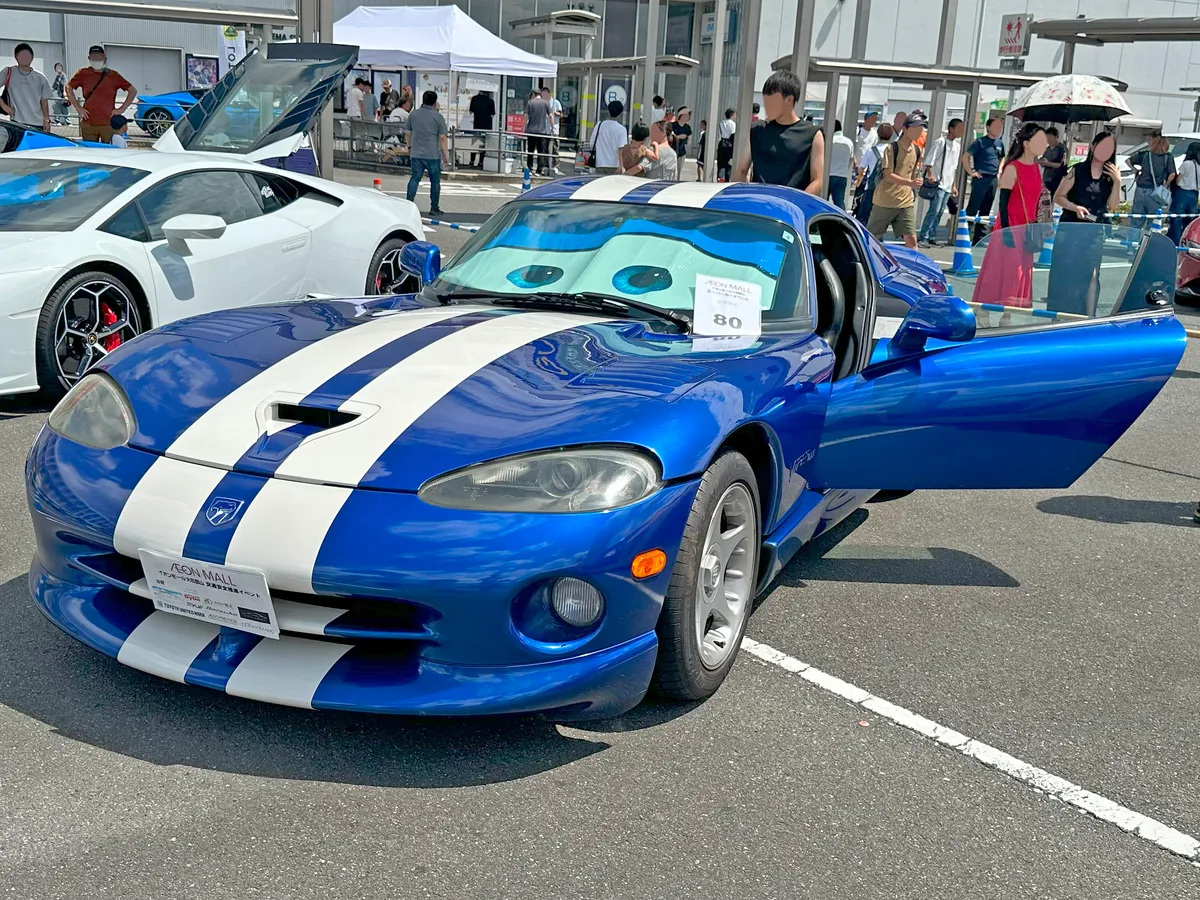
The Viper was Chrysler's insane bet that Americans still wanted raw, unassisted muscle. Bob Lutz and Carroll Shelby created a car with no safety nets — no ABS, no traction control, no airbags, and side exhaust pipes that would brand your calf if you weren't careful.
The 8.0L V10 was derived from a truck engine but made 400 hp in an era when Corvettes made 300. The Viper was automotive machismo distilled to its purest form.
It was too hot, too loud, too uncomfortable, and too willing to swap ends if you disrespected it. That was the entire point.
Patina notes
The RT/10 roadster ages well in red or black. The soft top was always an afterthought — many owners never used it. The side pipes develop a patina that's part of the character.
Interior wear happens fast in the footwells where the engine heat intrudes. The fiberglass body doesn't rust, but stress cracks can develop around mounting points. Original cars with factory soft boots and tonneau covers are increasingly rare.
Ownership reality
This is a car that will hurt you if you're stupid. First-gen Vipers have killed overconfident drivers who didn't respect the lack of electronic aids. The V10 is actually reliable — it's based on truck engine architecture.
But the clutch is heavy, the steering is heavy, and the cockpit gets hot enough to cook you. Air conditioning was not available until 1994. Parts availability is okay — the Viper community is dedicated.
But shop carefully: a weekend toy can become an expensive project if previous owners abused it.
The verdict
Buy if
You want the most visceral American driving experience this side of a NASCAR stock car. You're comfortable with a car that can kill you. You run cool and don't mind sweating.
Skip if
You need air conditioning (1992-1993). You want electronic safety nets. You have short legs (the pedal box is cramped). You're married to someone who values comfort.
What to look for
- → Clutch wear (heavy clutch = abused clutch)
- → Frame cracks at suspension pickup points
- → Previous crash damage in fiberglass
- → Electrical gremlins in early cars
- → Coolant leaks at water pump and thermostat housing
- → Soft top condition and mounting hardware
- → Signs of overheating abuse
Common problems
- ⚠ Heat soak in cockpit (no solution, it's the design)
- ⚠ Clutch hydraulics fail frequently
- ⚠ Water pump failure
- ⚠ Catalytic converter heat damage to floors
- ⚠ Rear tire wear from wheel spin
- ⚠ Door hinge wear and sagging
Parts & community
Parts sources
- Viper Parts Rack
- Prefix Corporation
- AutoZone/O'Reilly (surprisingly good for basics)
- Mopar Performance
Forums & communities
- VCA Viper Club of America
- ViperAlley.com
- DrivingEnthusiast.net
Sources
- Bring a Trailer · 2026-02-04
- Hagerty Valuation Tools · 2026-02-04
Specifications
| Engine | 8.0L V10 |
| Power | 400 hp |
| Torque | 465 lb-ft |
| Transmission | 6-speed manual |
| Drivetrain | RWD |
| Weight | 3,285 lbs |
| Wheelbase | 96.2 inches |
| Production | 4,684 (1992-1995) |
Notable Features
- • No ABS, no traction control, no airbags
- • Side exhaust pipes (will burn your leg)
- • Truck-derived V10 engine
- • Soft top as only roof option
About Dodge
Chrysler's muscle brand. Dodge has always been the division willing to build something a little wilder than the competition.
View all Dodge vehicles →Find one
Looking to buy? Search current and past listings on Bring a Trailer.
Search on Bring a Trailer →