Why this vehicle matters
The Evo Softail saved Harley-Davidson. That's not hyperbole — it's a business case study. By 1981, AMF had run the company into the ground. Quality was a joke, the Shovelhead leaked everything, and Japanese bikes were objectively better in every measurable way.
A group of executives bought the company back in a leveraged buyout, and in 1984 they introduced two things that changed everything: the Evolution engine and the Softail frame. The Evo was the first Harley big twin that didn't require an apology.
It was oil-tight (relatively), reliable, and made good power. The Softail frame was a Bill Davis design that hid the rear suspension under the transmission, giving the bike a hardtail profile with actual ride comfort.
Old-school looks, modern function. It was exactly what Harley needed — a bike that looked like the Harleys people romanticized but actually worked like the motorcycles people wanted to ride. Within a decade, Harley went from near-bankruptcy to a waiting list.
Patina notes
Evo Softails aren't old enough to have the deep patina of Panheads and Shovelheads, but the best examples have a weathered honesty to them. Original paint from the late '80s and '90s shows road wear in ways that tell stories — stone chips on the front fender, sun fade on the tank, scratches on the primary cover from a parking lot tip-over.
The Evolution engine cases stay remarkably clean compared to earlier Harleys because they actually hold their oil. Chrome ages well on Softails — it was better quality than AMF-era stuff.
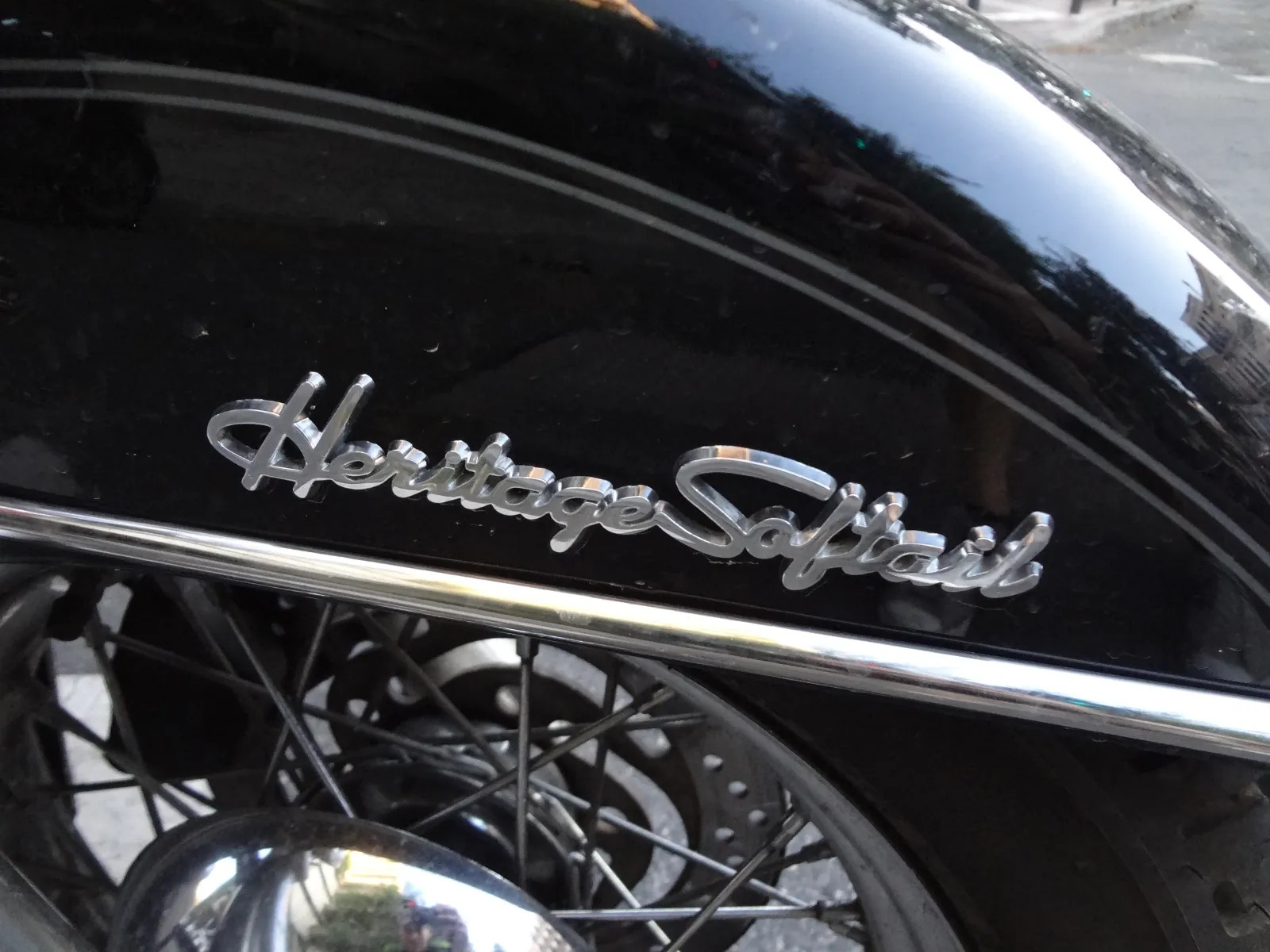
The Heritage Softail and Fat Boy models developed their own collector followings, with early Fat Boys (1990+) particularly sought after thanks to Terminator 2.
Ownership reality
This is the sweet spot for classic Harley ownership. The Evolution engine is genuinely reliable — it starts when you press the button, it doesn't leak (much), and it'll run for 80,000+ miles with basic maintenance.
The 5-speed transmission is smooth and robust. Belt drive means no chain adjustment or lubrication. Parts are absolutely everywhere — every Harley dealer, every aftermarket vendor, every swap meet.
Any motorcycle mechanic can work on an Evo, and most independent shops have Evo-specific experience. The Softail frame rides better than it looks — the hidden suspension actually works, though it's not as plush as a Dyna or touring frame.
Insurance is reasonable, fuel economy is acceptable, and the bikes are comfortable enough for day-long rides.
The verdict
Buy if
You want the most practical entry into classic Harley ownership. You want the V-twin sound and cruiser aesthetic without the maintenance burden of Panheads and Shovelheads. You appreciate that the Evo engine proved Harley could build reliable motorcycles. You want a classic that you can actually ride every day without worry.
Skip if
You want the raw mechanical character of a Panhead or Shovelhead — the Evo is refined by comparison, and some find it too refined. You're looking for appreciation — Evo Softails have been flat for years while older Harleys climb. You want a motorcycle that turns heads — these are common enough that nobody looks twice. You need the lightest possible Harley — Sportsters are more manageable.
What to look for
- → Cam chain tensioner shoes — the number one Evo failure point, plastic shoes wear and debris damages the engine
- → Inner primary seal condition — leaks here mean transmission fluid mixes with primary fluid
- → Starter clutch (compensator on later models) — listen for grinding or ratcheting on startup
- → Softail swing arm pivot bearings — wear causes handling vagueness
- → Aftermarket modifications — many Evo Softails are heavily modified, which affects value both ways
- → Service history — an Evo with documented maintenance is worth a premium over a mystery bike
Common problems
- ⚠ Cam chain tensioner shoe failure — the shoes are plastic and disintegrate, sending debris through the engine
- ⚠ Starter clutch wear — causes grinding on startup, relatively common on higher-mileage examples
- ⚠ Voltage regulator failures — especially on earlier models, carries risk of overcharging the battery
- ⚠ Softail frame can develop cracks at the swing arm pivot on high-mileage bikes
- ⚠ Carburetor (CV Keihin) can develop vacuum slide diaphragm tears — causes flat spots in acceleration
Parts & community
Parts sources
- J&P Cycles — everything for Evo Softails, the one-stop shop
- Drag Specialties — OEM and aftermarket, extensive catalog
- Dennis Kirk — competitive pricing on common maintenance parts
- Kuryakyn — accessories and cosmetic upgrades
- Harley-Davidson dealers — still stock most Evo parts
Forums & communities
- HDForums.com (hdforums.com)
Sources
- Harley-Davidson Archives · 2026-02-28
- Bring a Trailer · 2026-02-28
Specifications
| Engine | 1340cc (80ci) Evolution OHV V-twin |
| Power | ~55-65 hp |
| Torque | ~70-80 lb-ft |
| Transmission | 5-speed |
| Drivetrain | Belt |
| Weight | ~600-640 lbs (wet, varies by model) |
| Wheelbase | 62.5-66.5 inches (varies by model) |
| Production | Hundreds of thousands across Evo Softail era |
Notable Features
- • Hidden rear suspension mimicking hardtail appearance
- • Evolution engine — first truly reliable Harley big twin
- • Belt final drive standard
- • Multiple model variations (Standard, Custom, Heritage, Fat Boy, Springer)
About Harley-Davidson
The motorcycle company that became a religion. Love them or hate them, they're still here.
View all Harley-Davidson vehicles →Find one
Looking to buy? Search current and past listings on Bring a Trailer.
Search on Bring a Trailer →