Why this vehicle matters
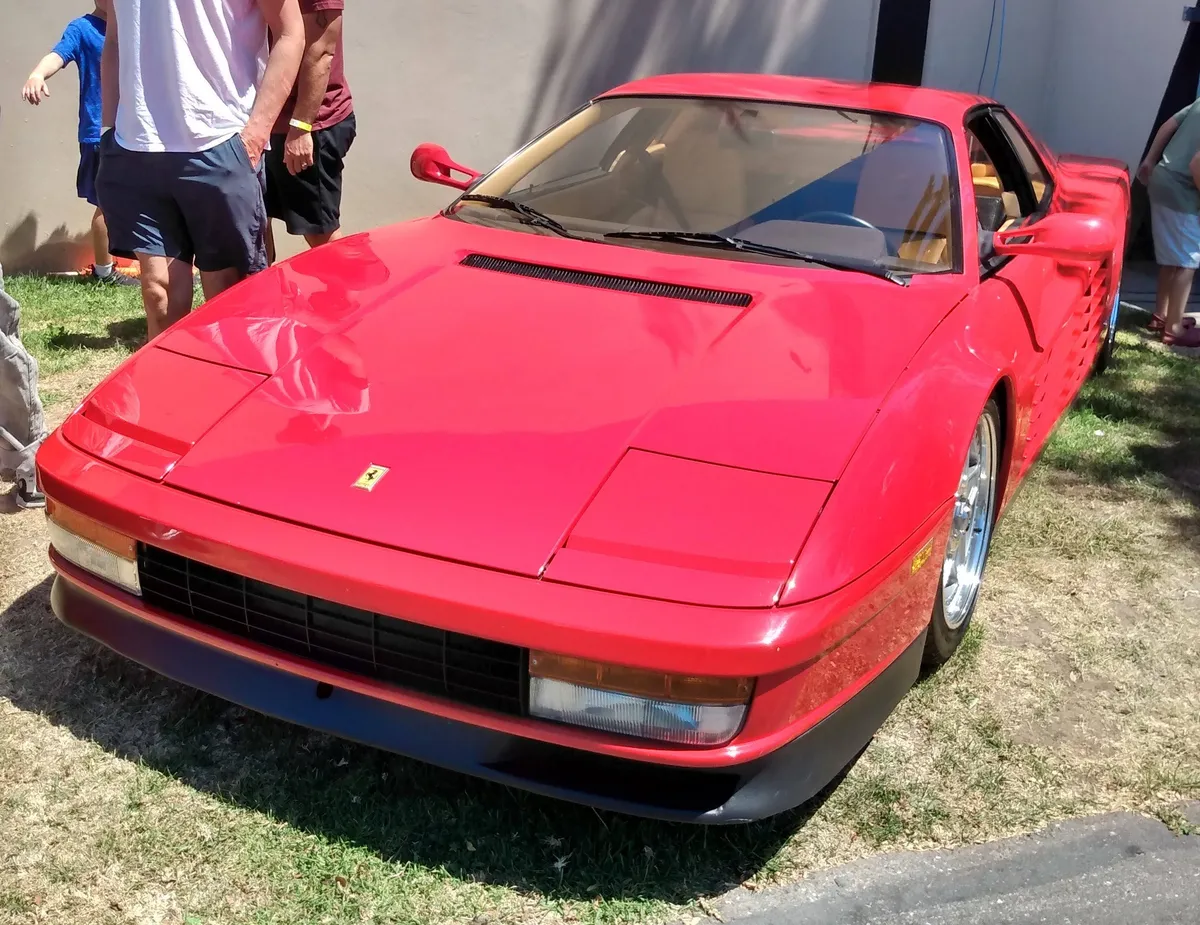
The Testarossa was the ultimate '80s supercar — wide, low, and straked to hell. Pininfarina's design put the radiators in the doors (hence the side strakes), allowing a lower nose and dramatic proportions.
The flat-12 engine was Ferrari racing technology adapted for the road. 'Miami Vice' made it a cultural icon; every kid in America had one on their wall. The name referenced Ferrari's legendary racing Testarossas ('red head' for the red cam covers).
Critics called it overstyled. They were wrong. The Testarossa was exactly as dramatic as the '80s demanded.
Patina notes
The wide body attracts attention even dirty, but the Testarossa rewards proper care. The iconic side strakes accumulate road debris; cleaning them is tedious but necessary. The paint and interior materials age well when maintained.
Neglected examples become expensive restoration projects. These are complex cars that need regular use to stay healthy.
Ownership reality
More accessible than you'd think, but don't confuse accessible with cheap. The flat-12 needs annual service: valve adjustments, belt tensioners, and the infamous major service at 30,000 miles that runs $8,000-15,000.
The good news: the community is huge, parts are available, and a well-maintained Testarossa is genuinely usable. These were designed as GT cars, not track weapons — comfortable, capable of long distances, and reliable by Italian supercar standards.
The verdict
Buy if
You want the '80s poster car experience. You have the budget for proper Ferrari maintenance. You appreciate the flat-12's unique character.
Skip if
You can't handle $10K+ maintenance years. You need subtle daily transportation. You're bothered by everyone wanting to talk about Miami Vice.
What to look for
- → Major service history (timing belts, tensioners)
- → Clutch condition (expensive to replace)
- → AC system (converted to R134a?)
- → Valve adjustment records
- → Brake rotor and caliper condition
- → Engine seals and gaskets
Common problems
- ⚠ Timing belt service is expensive and critical
- ⚠ Clutch replacement requires engine drop
- ⚠ Heat soak on starter and electronics
- ⚠ Power steering leaks
- ⚠ AC systems often need rebuilding
- ⚠ Sticky interior buttons (common '80s Italian problem)
Parts & community
Parts sources
- Ricambi America
- Hill Engineering
- SuperFormance
- Ferrari dealer network
Forums & communities
- FerrariChat.com
- Testarossa Talk
- FerrariLife.com
Sources
- Hagerty Valuation · 2026-02-04
- Bring a Trailer results · 2026-02-04
Specifications
| Engine | 4.9L flat-12 |
| Power | 385 hp @ 6,300 rpm |
| Torque | 361 lb-ft @ 4,500 rpm |
| Transmission | 5-speed manual |
| Drivetrain | RWD (mid-engine) |
| Weight | 3,660 lbs |
| Wheelbase | 100.4 inches |
| Production | Approximately 10,000 |
Notable Features
- • Iconic side strakes for radiator cooling
- • Flat-12 engine mounted longitudinally
- • Single side mirror (European spec)
- • Pininfarina design
- • Miami Vice car
About Ferrari
The prancing horse. Road cars that fund racing, racing that sells road cars.
View all Ferrari vehicles →Find one
Looking to buy? Search current and past listings on Bring a Trailer.
Search on Bring a Trailer →