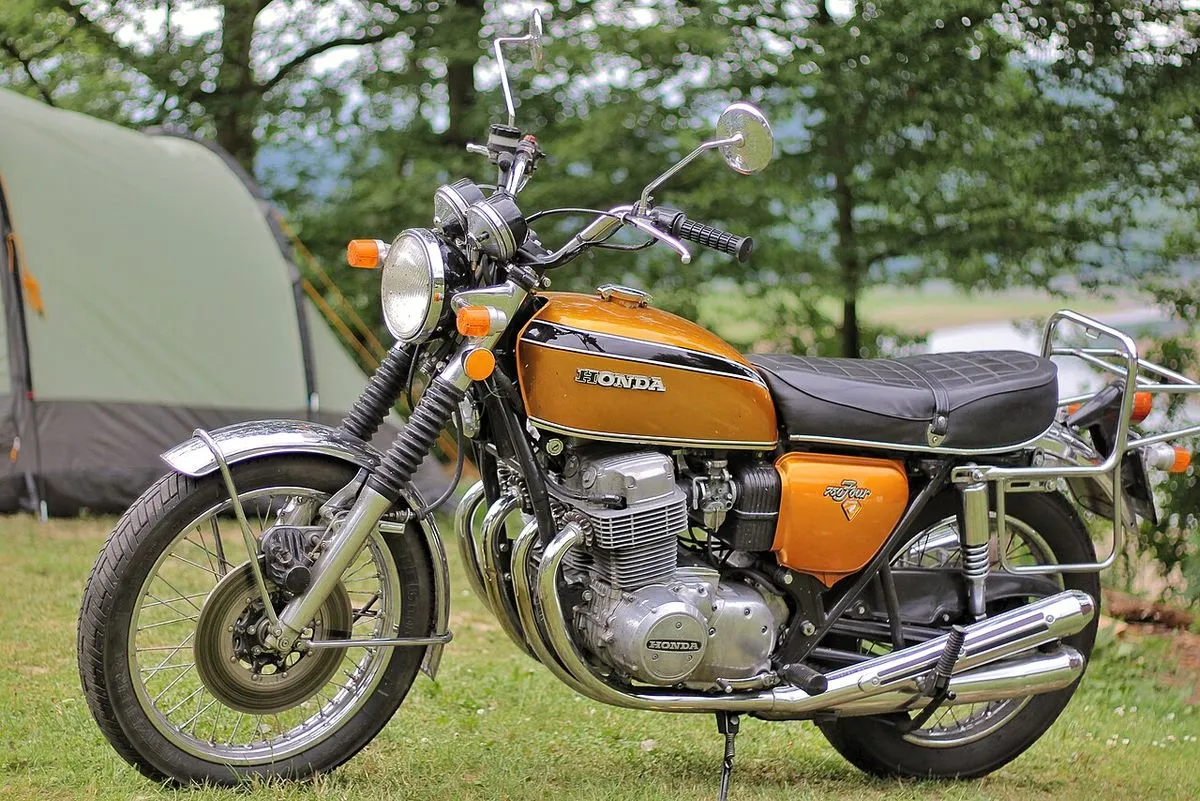
Why this vehicle matters
The CB750 is arguably the most important motorcycle ever made. Before 1969, if you wanted a fast, reliable motorcycle, you bought British — and accepted oil leaks, electrical gremlins, and kick-start rituals.
Honda showed up with an inline-four that was faster, smoother, more reliable, AND cheaper. It had an electric starter and a front disc brake when British bikes still had drums. Within five years, the British motorcycle industry was essentially dead. The CB750 didn't just win — it changed what a motorcycle could be.
Patina notes
Original candy paint (especially Candy Blue-Green or Candy Gold) in good condition is increasingly valuable. The chrome fenders, tank trim, and exhaust will show age but can be rechromed. Mechanically, these are bulletproof if maintained.
The SOHC engine is nearly indestructible. Watch for cam chain tensioner wear on high-mileage examples. Sandcast crankcases (very early '69s) command significant premiums — verify authenticity carefully. Later K-series bikes (1972-1978) are excellent riders but less collectible.
Ownership reality
The parts situation is excellent. Common Motor Collective and David Silver Spares have everything. The CB750 community is global and knowledgeable. These are simple motorcycles by modern standards — carburetors, points ignition, air cooling.
Any competent motorcycle mechanic can work on them. Many shops specialize in vintage Hondas specifically. Reliability is exceptional for a 50-year-old vehicle.
Daily rideable with attention to rubber (tires, hoses, seals) and electrical (wiring, connectors).
The verdict
Buy if
You want to own a piece of motorcycle history that you can actually ride. You appreciate mechanical simplicity and the ability to do your own maintenance. You want a classic that won't strand you.
Skip if
You want a comfortable long-distance tourer (the stock seat is brutal). You're not willing to learn basic carburetor tuning. You want the cachet of a British or Italian brand. You need modern safety features like ABS.
Sources
- Honda CB750 Encyclopaedia · 2026-02-01
- Bring a Trailer · 2026-02-01
Specifications
| Engine | 736cc inline-four SOHC |
| Power | 67 hp @ 8,000 rpm |
| Torque | 44 lb-ft @ 7,000 rpm |
| Transmission | 5-speed |
| Drivetrain | Chain |
| Weight | 480 lbs (wet) |
| Wheelbase | 57.3 inches |
| Production | ~400,000 (1969-1978) |
Notable Features
- • First mass-produced inline-four
- • First production front disc brake
- • Electric start standard
- • Overhead cam (vs. pushrod British bikes)
Find one
Looking to buy? Search current and past listings on Bring a Trailer.
Search on Bring a Trailer →More from Honda
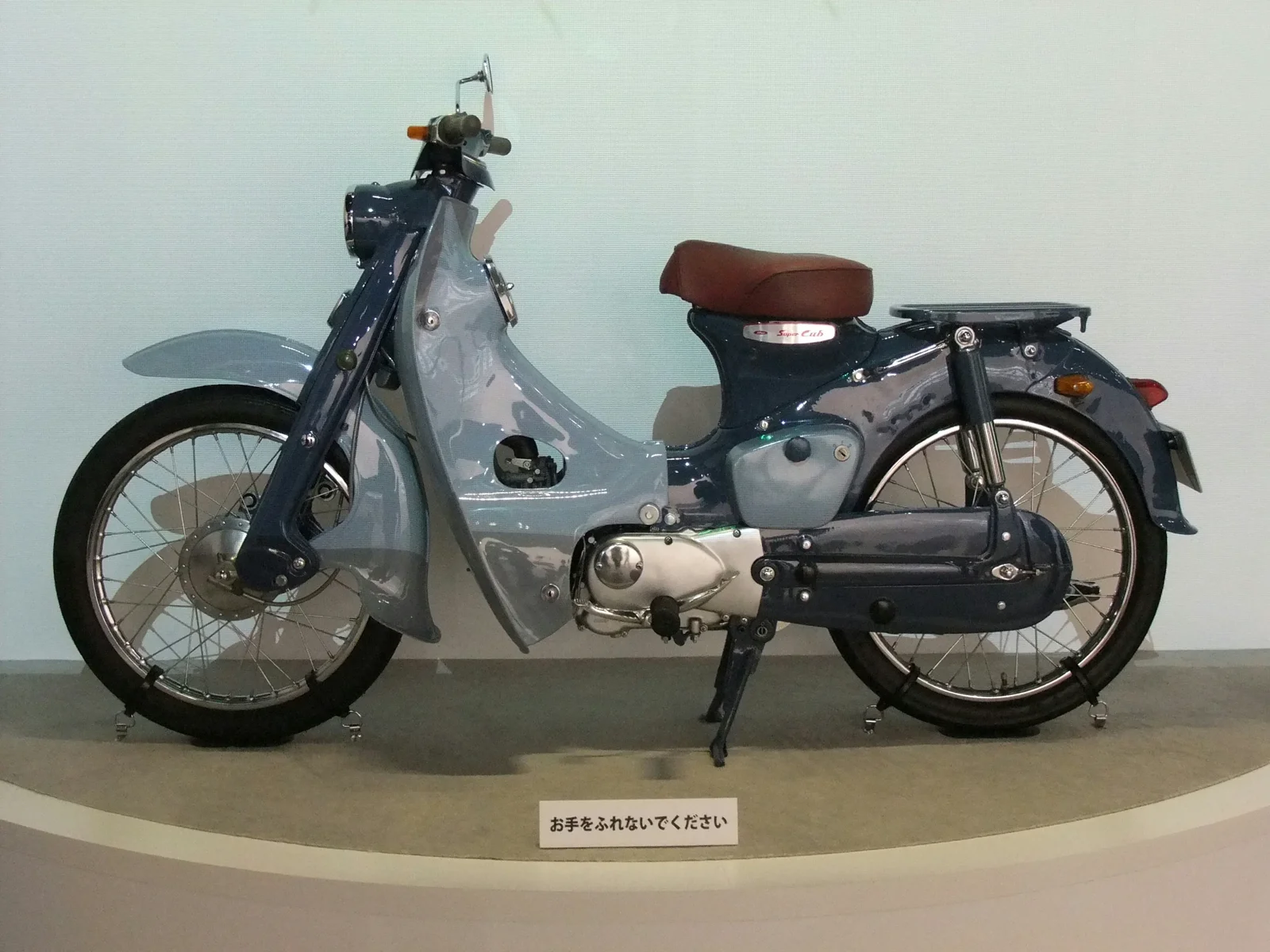
1958 Honda Super Cub
1958-present
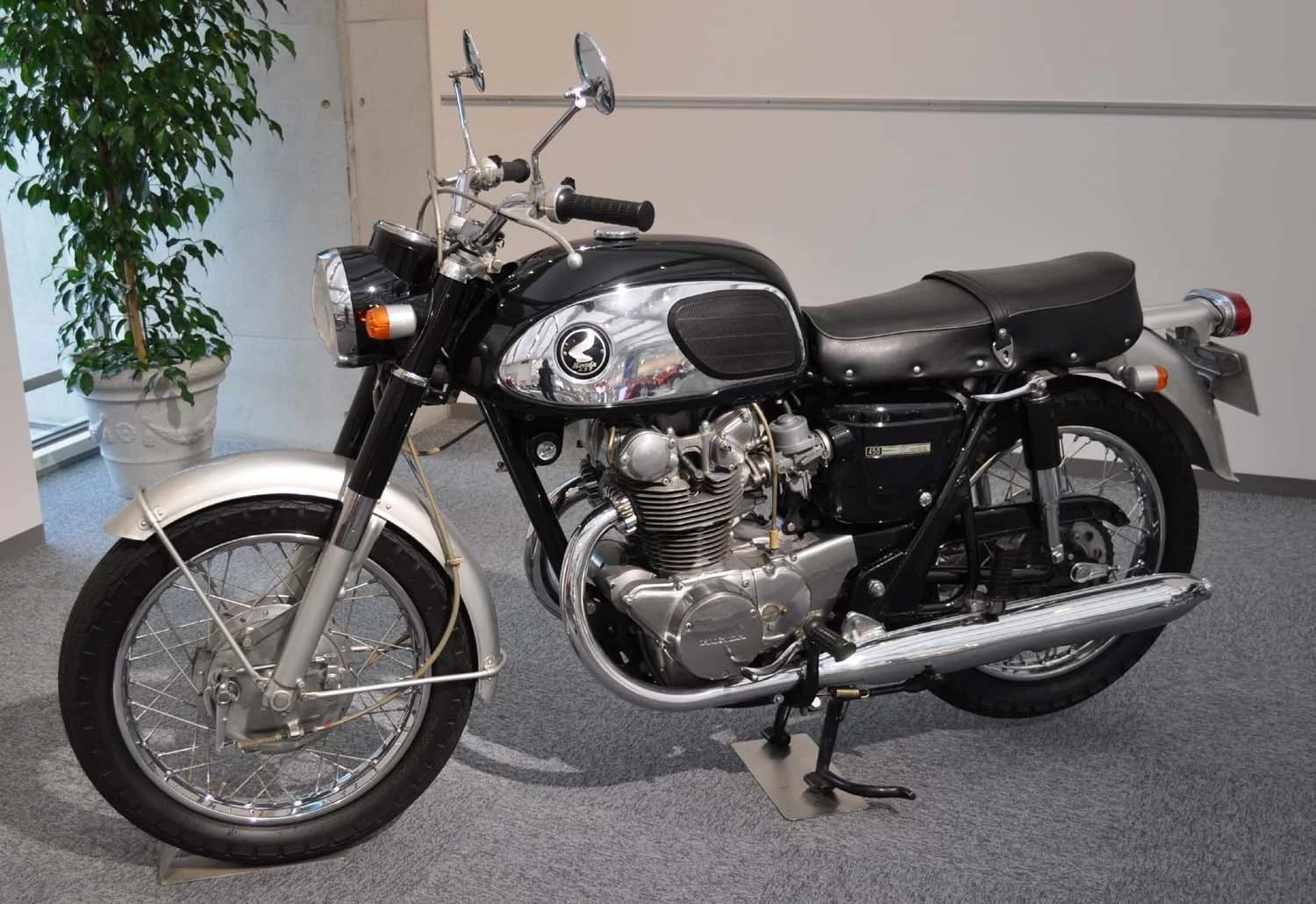
1965 Honda CB450 Black Bomber
1965-1974
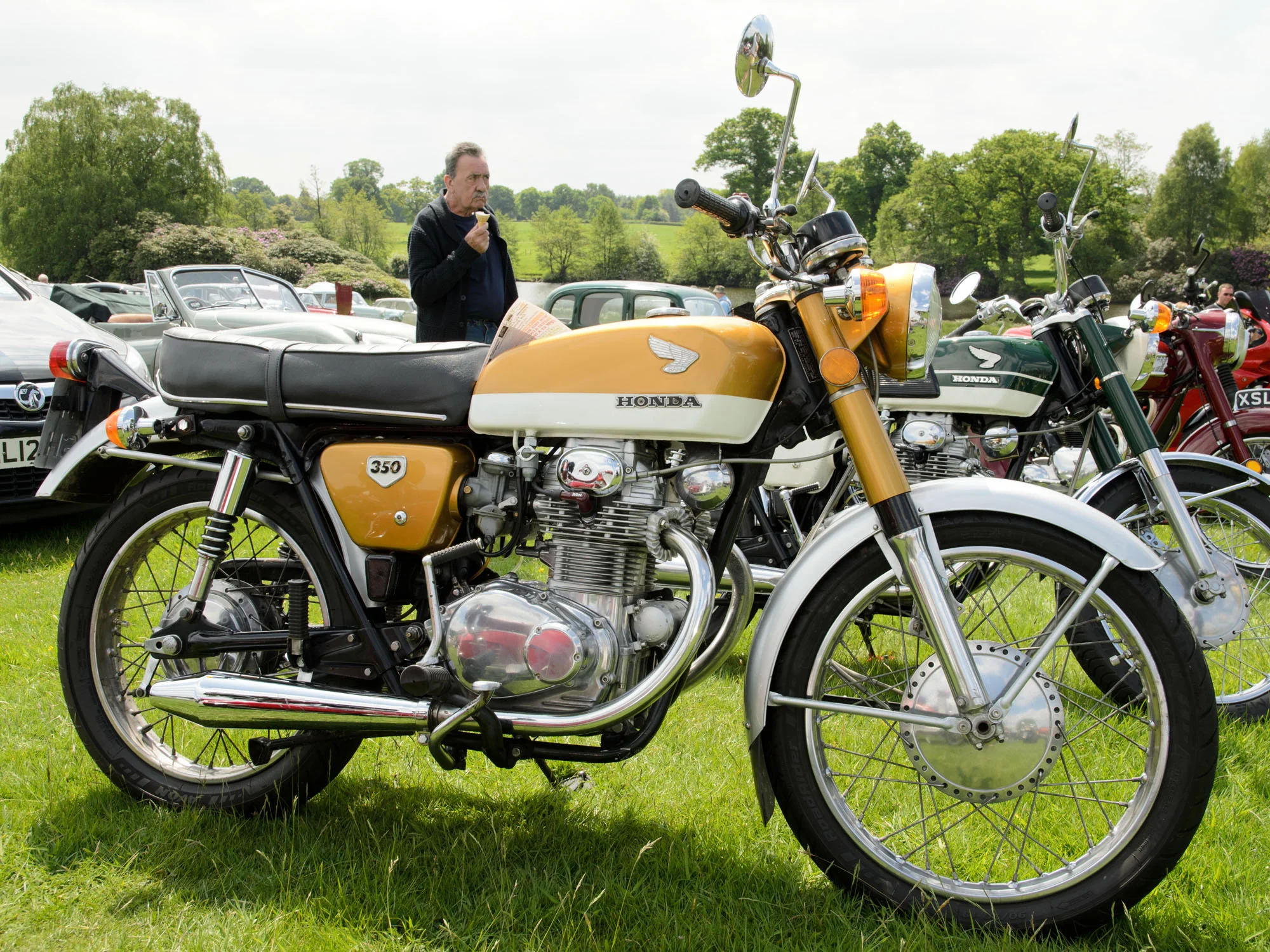
1969 Honda CB350
1968-1973
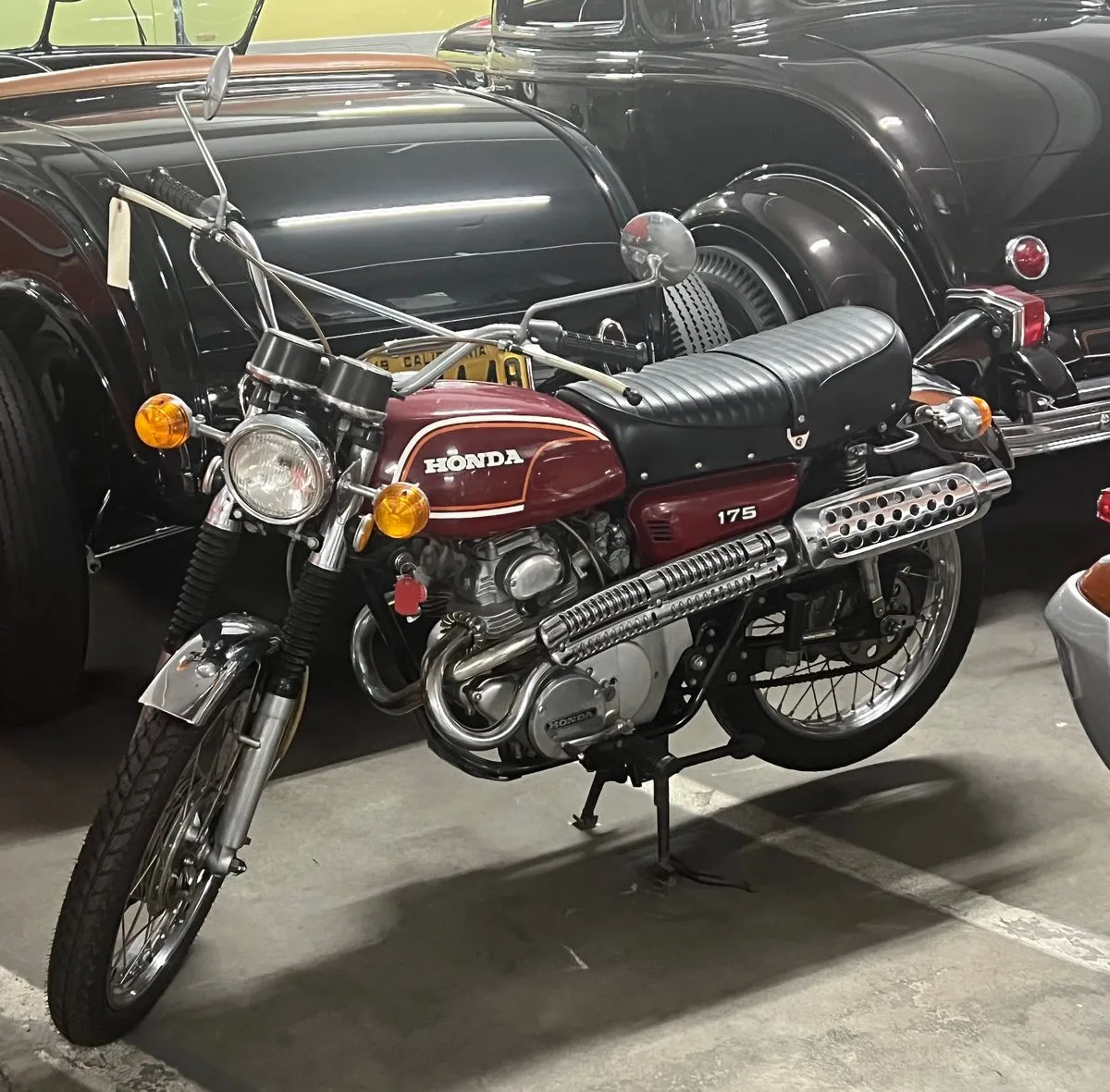
1974 Honda CL175 Scrambler
1968-1973
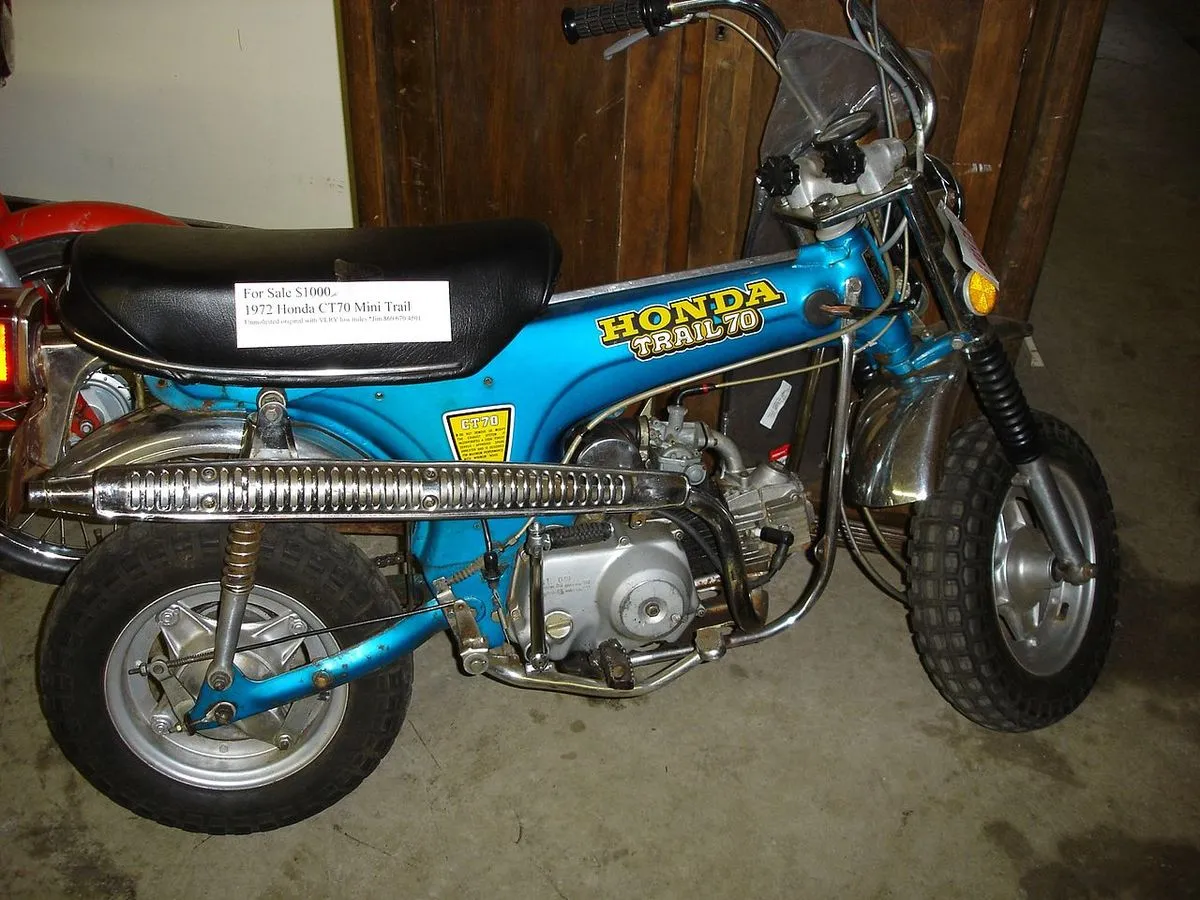
1974 Honda CT70 Trail
1969-1994
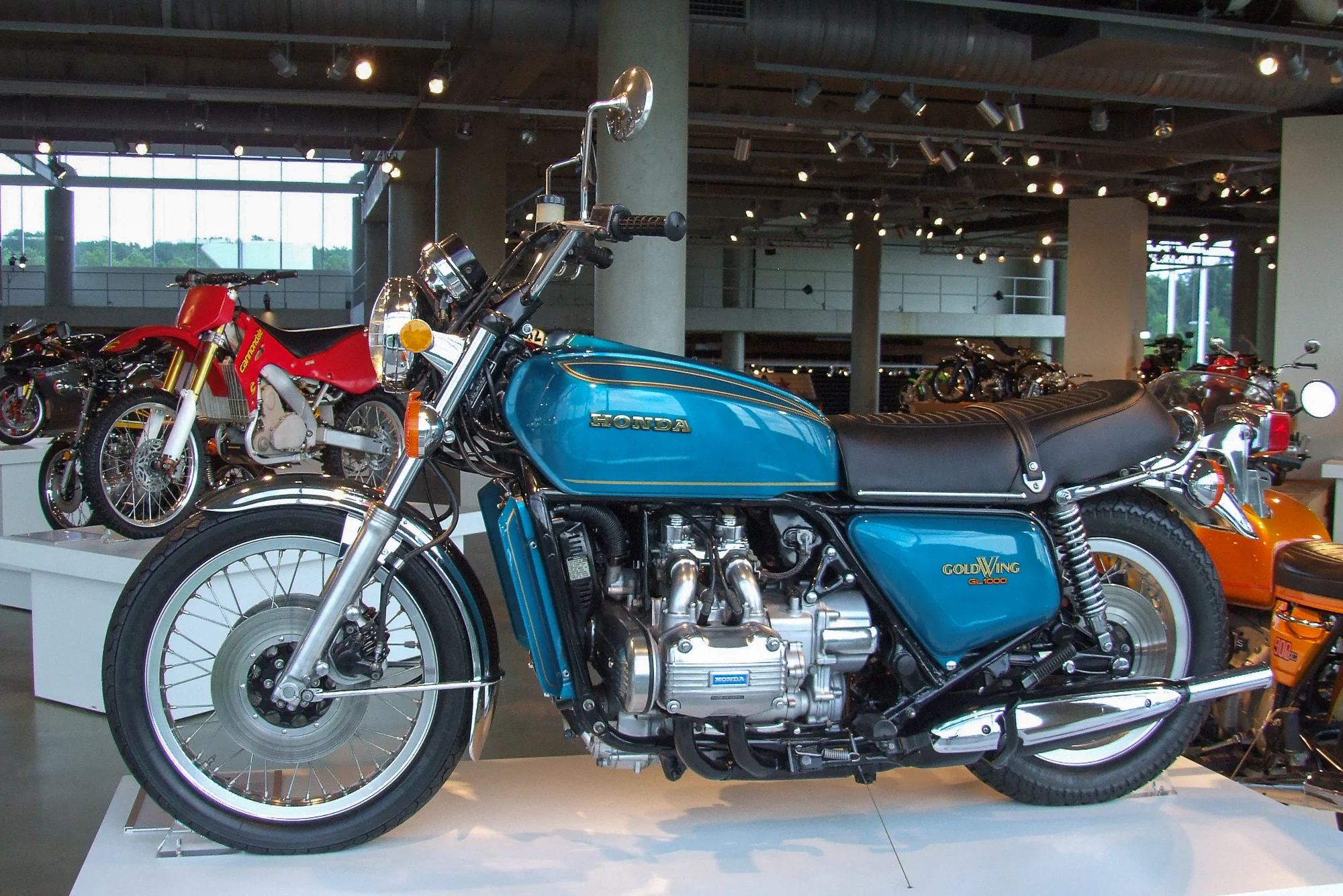
1975 Honda Gold Wing GL1000
1975-1979
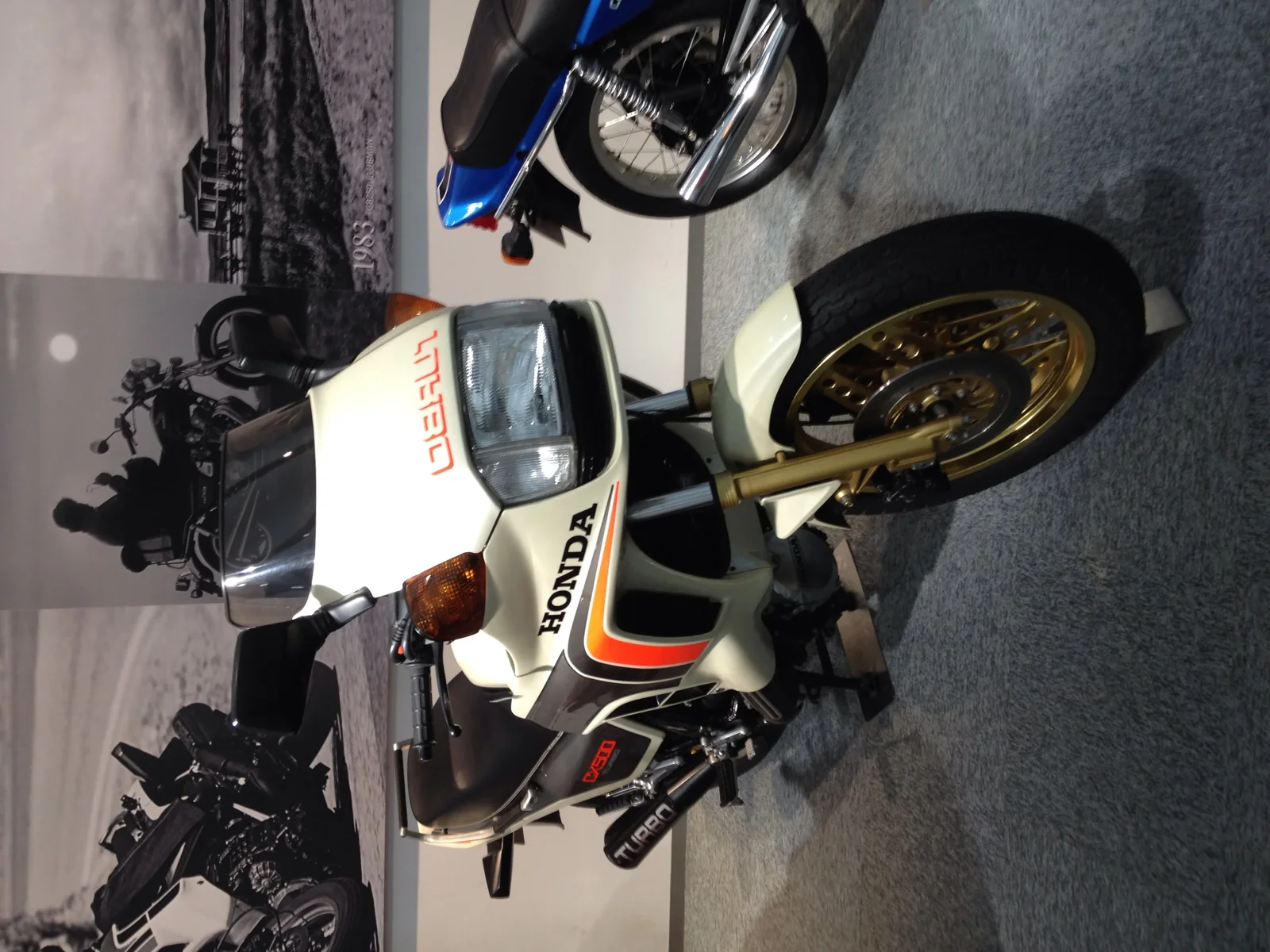
1982 Honda CX500 Turbo
1982-1983
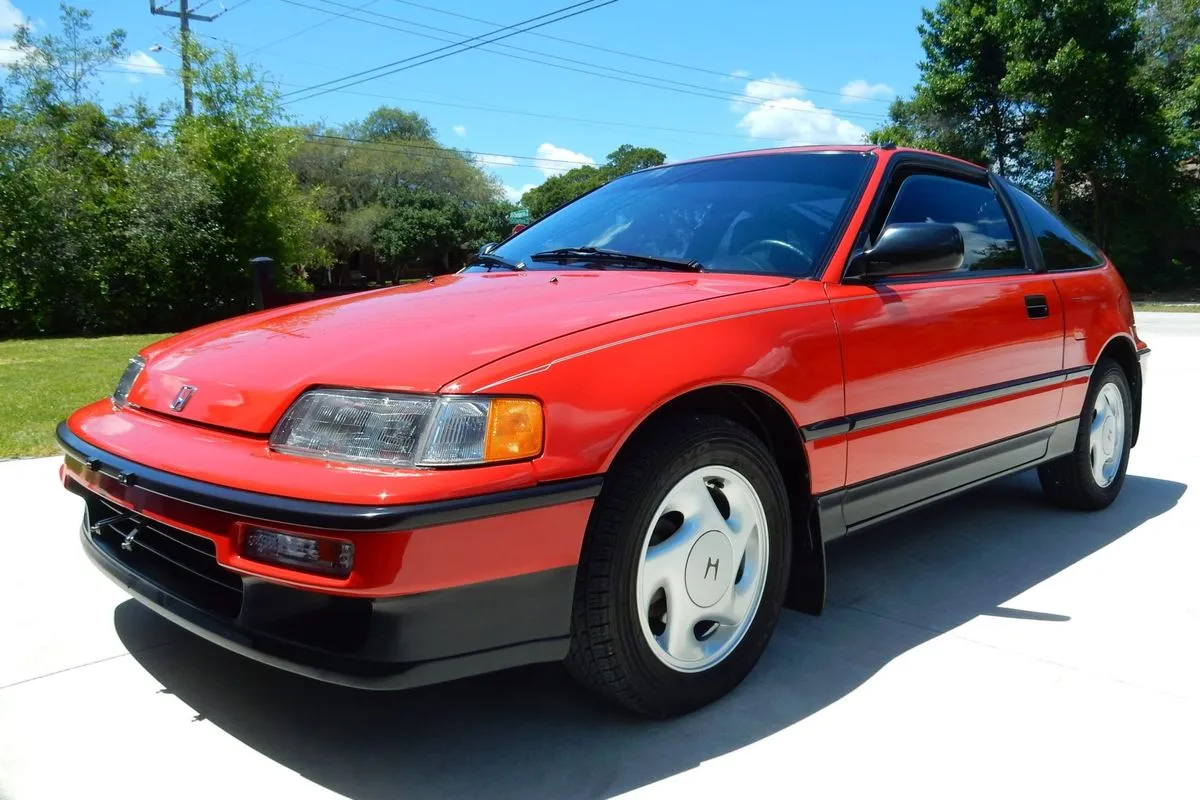
1990 Honda CRX Si
1988-1991