Why this vehicle matters
The Thing is what happens when you take a military utility vehicle and sell it to beach towns. Based on the WWII Kubelwagen design, VW updated it for the '60s and '70s as a recreational vehicle.
In America, it became a cult item for exactly two years before failing new safety standards. That brief window and the quirky design created instant collector appeal.
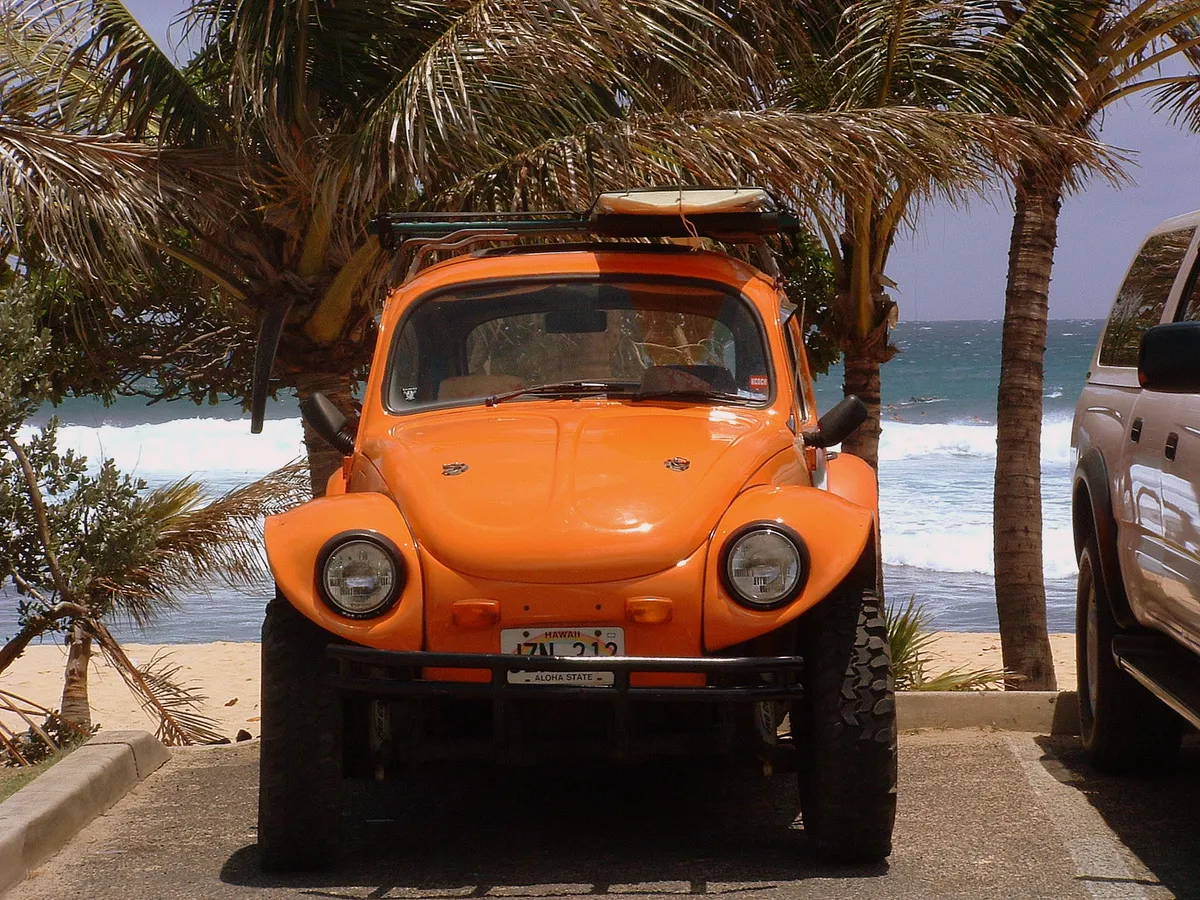
The Thing is the ultimate beach cruiser — doors off, top down, completely impractical, and absolutely joyful.
Patina notes
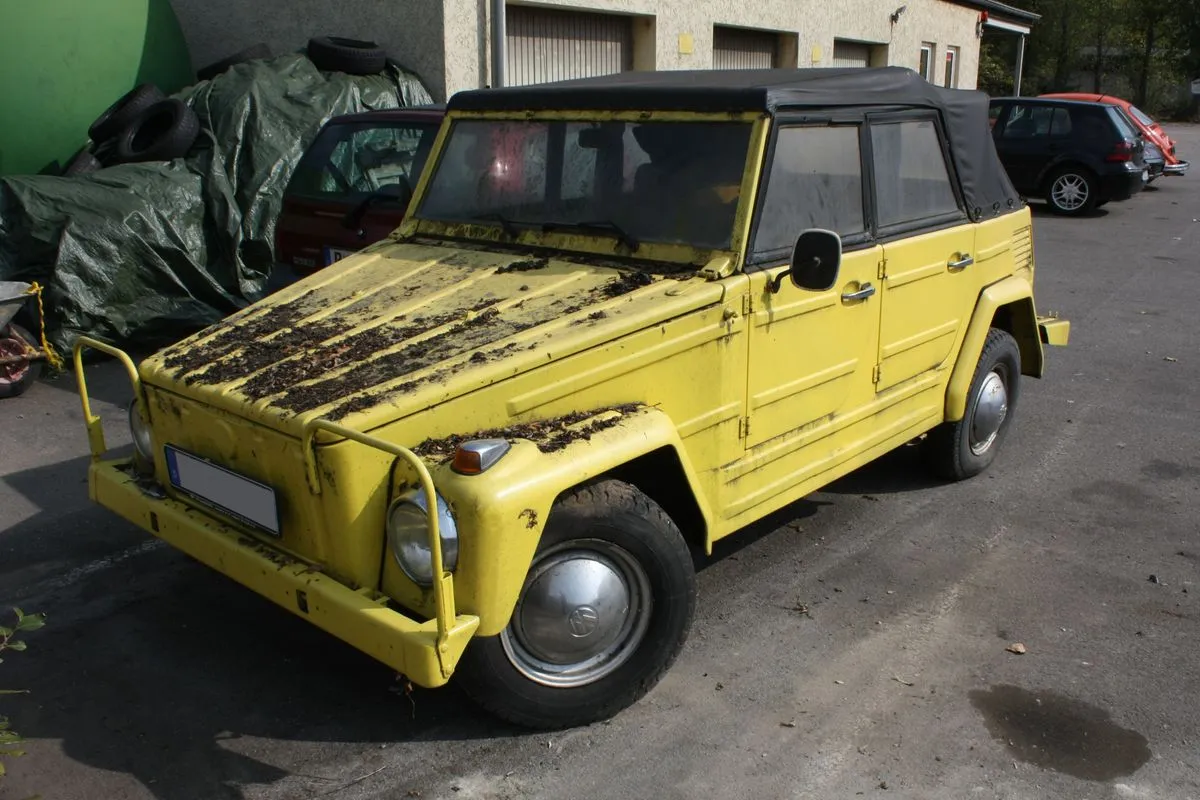
Things were beach cars and should look it. The simple body panels develop honest wear. The floors rust if you leave the top off in rain (people do this). The removable everything means gaps that let weather in.
A well-used Thing tells the story of every beach trip, every convertible-weather day, every impractical adventure. Over-restoration makes them look strange; let them age.
Ownership reality
Beetle mechanicals mean parts are everywhere. The air-cooled engine is simple and well-understood. But the body panels and Thing-specific trim are scarce and expensive. Rust is the enemy — the flat floor pans hold water.
The highway cruising experience is terrifying (46 horsepower, wind, and trucks). But around town, with the doors off and the top down, nothing else feels like this.
The verdict
Buy if
You want the ultimate beach/summer car. You're comfortable with air-cooled VW maintenance. You understand that slow and open beats fast and enclosed.
Skip if
You need highway capability. You want all-weather transportation. You can't embrace the impractical.
What to look for
- → Floor pan rust (check thoroughly with magnet)
- → Heater channel rust (common hidden area)
- → Engine compression and condition
- → Convertible top condition and fit
- → Door hinge and latch condition
- → Brake master cylinder (single circuit, terrifying)
Common problems
- ⚠ Rust in floor pans and heater channels
- ⚠ Generator/alternator issues
- ⚠ Fuel system problems (carb and tank)
- ⚠ Single-circuit brakes (convert to dual)
- ⚠ Convertible top leaks
- ⚠ Electrical gremlins (6V to 12V conversion common)
Parts & community
Parts sources
- TheSamba.com classifieds
- MOFOCO (VW air-cooled specialist)
- West Coast Metric
- JBugs
- Gene Berg Enterprises
Forums & communities
- TheSamba.com (Thing subforum)
- VWVortex.com
- Type181.org
- Facebook Thing groups
Sources
- Hagerty Valuation Tools · 2026-02-02
Specifications
| Engine | 1.6L air-cooled flat-4 |
| Power | 46 hp @ 4,000 rpm |
| Torque | 72 lb-ft @ 2,800 rpm |
| Transmission | 4-speed manual |
| Drivetrain | RWD |
| Weight | 2,000 lbs |
| Wheelbase | 94.5 inches |
| Production | US sales 1973-1974 only (failed DOT standards) |
Notable Features
- • Military-derived design (Kubelwagen successor)
- • Removable doors, convertible top, fold-down windshield
- • Beetle-based mechanicals
- • Four conventional doors
About Volkswagen
The people's car. From Nazi-era origins to counterculture icon, VW became synonymous with simple, honest transportation.
View all Volkswagen vehicles →Find one
Looking to buy? Search current and past listings on Bring a Trailer.
Search on Bring a Trailer →