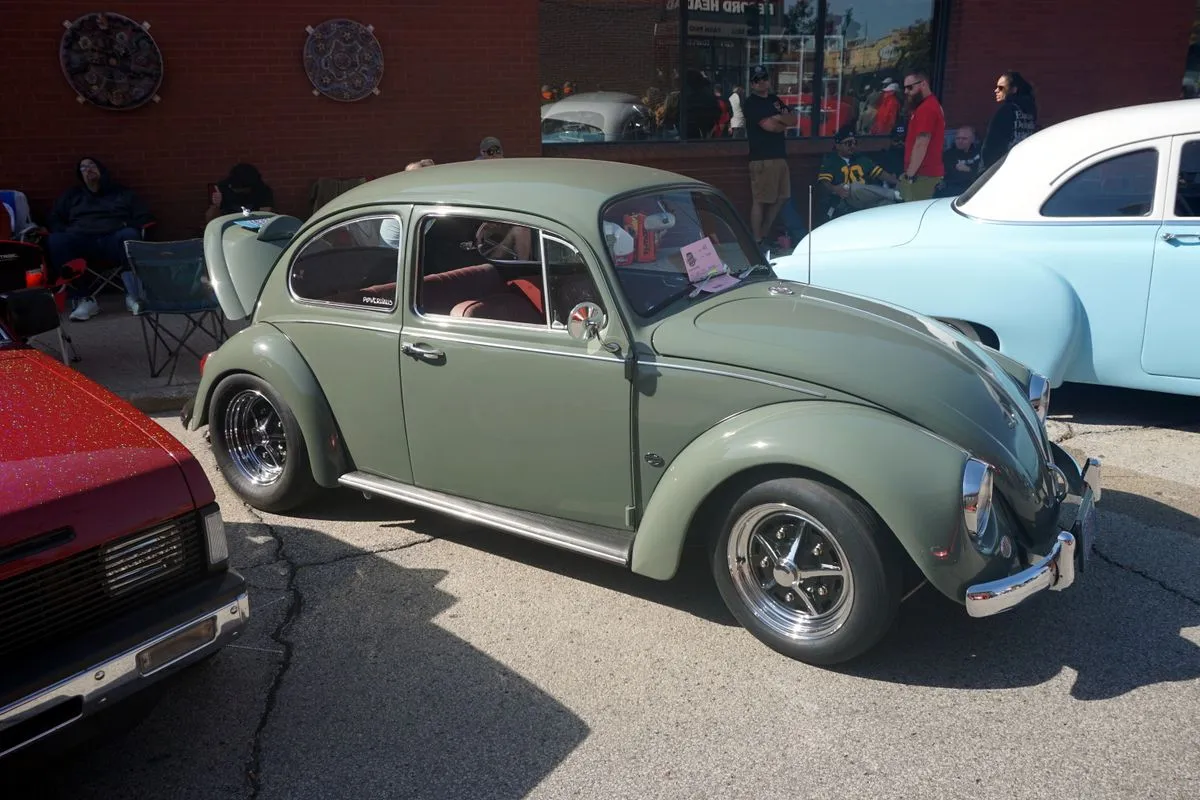
Why this vehicle matters
The Beetle is the most successful car design in history. Over 21 million produced. It democratized car ownership in post-war Europe, then became the counterculture icon in America.
The air-cooled flat-four is mechanically simple to the point of being educational — generations of enthusiasts learned to wrench on Beetles. The 1967 is the collector sweet spot: the last year before US-mandated safety changes brought larger bumpers and sealed-beam headlights.
But any classic Beetle captures the magic. This is where the entire air-cooled VW community starts.
Patina notes
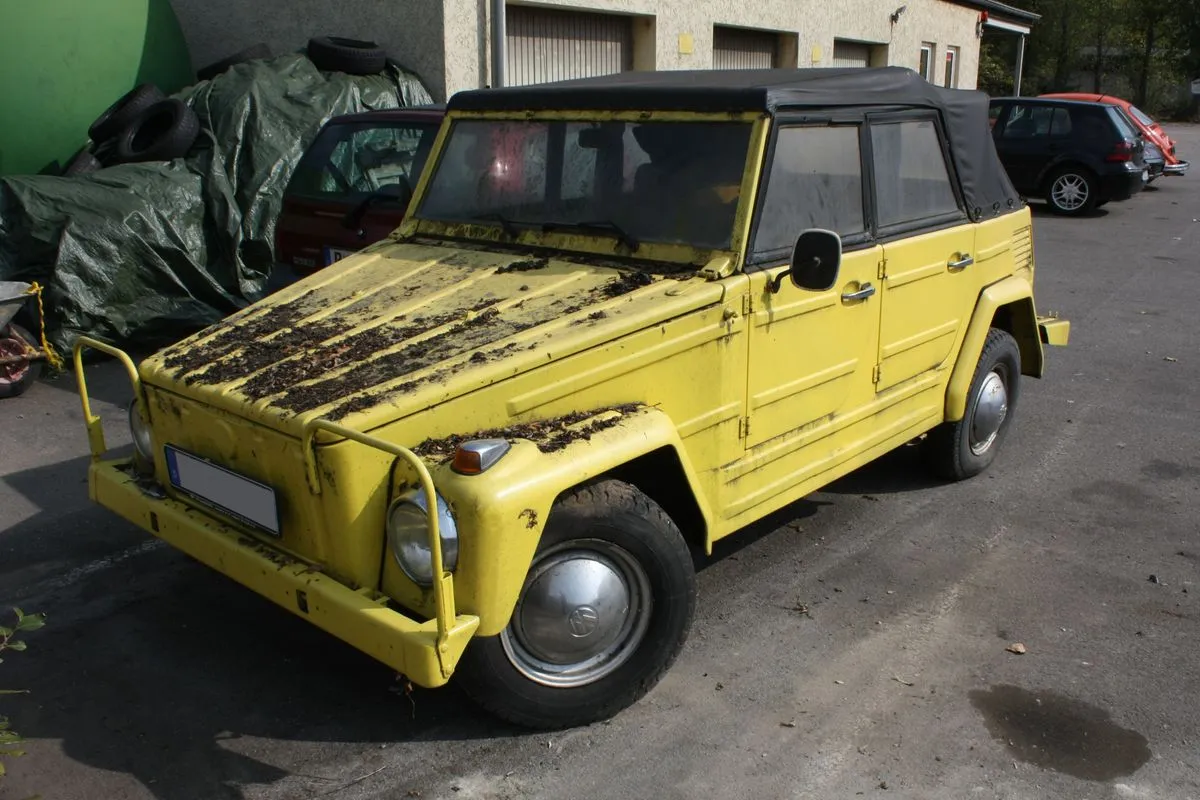
Beetles were people's cars — driven daily, parked outside, used up. The survivors show it. The paint oxidizes to pleasant pastels. The chrome pits. The running boards wear through. This is correct.
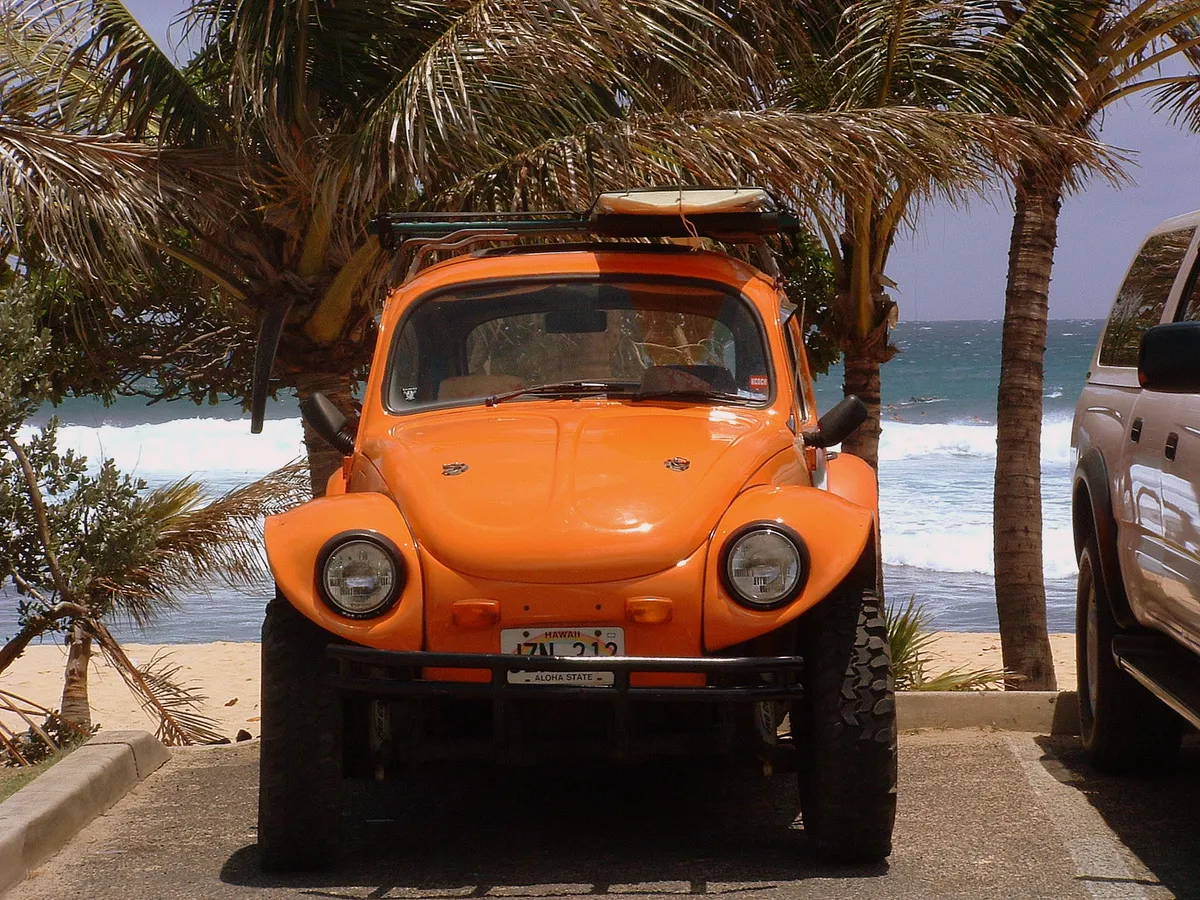
A Beetle should look like it's been someone's transportation, not a show piece. The simple curves age gracefully. Baja bugs and rat rods are legitimate expressions of Beetle culture — the platform invites modification.
Ownership reality
The air-cooled VW community is one of the most robust in the hobby. Parts availability is exceptional — you can build a complete Beetle from reproduction parts. The mechanical simplicity means any competent home mechanic can maintain one.
The engine is in the back, the trunk is in the front, and everything is backwards from what you expect — but once you understand it, it's brilliantly simple. Heat is marginal. Highway cruising is loud. But around town, top down (if convertible), nothing else feels quite like it.
The verdict
Buy if
You want to understand what made VW. You appreciate mechanical simplicity over modern convenience. You're ready to join one of the best car communities in existence.
Skip if
You need highway comfort. You want air conditioning. You can't embrace the quirks of air-cooled life.
What to look for
- → Floor pan rust (most critical — use a magnet)
- → Heater channel rust (structural)
- → Battery box rust
- → Frame head cracks
- → Engine case condition (check for repairs)
- → Matching numbers (matters for value)
Common problems
- ⚠ Floor pan and heater channel rust
- ⚠ Generator/alternator failures
- ⚠ Fuel system issues (carb and tank)
- ⚠ Heat exchanger leaks (exhaust in cabin)
- ⚠ Valve adjustments needed regularly
- ⚠ Distributor wear
Parts & community
Parts sources
- TheSamba.com classifieds
- MOFOCO
- West Coast Metric
- JBugs
- Chirco Performance
Forums & communities
- TheSamba.com
- VWVortex.com
- Aircooled.net
- Facebook VW groups
Sources
- Hagerty Valuation Tools · 2026-02-03
Specifications
| Engine | 1.5L air-cooled flat-4 (1967) / 1.2L-1.6L across production |
| Power | 53 hp @ 4,200 rpm (1967 1500cc) |
| Torque | 78 lb-ft @ 2,600 rpm |
| Transmission | 4-speed manual |
| Drivetrain | RWD |
| Weight | 1,800 lbs |
| Wheelbase | 94.5 inches |
| Production | Over 21 million (best-selling single design in history) |
Notable Features
- • Air-cooled rear engine
- • Torsion bar suspension
- • 1967: last year of upright headlights in US
- • Unibody construction
About Volkswagen
The people's car. From Nazi-era origins to counterculture icon, VW became synonymous with simple, honest transportation.
View all Volkswagen vehicles →Find one
Looking to buy? Search current and past listings on Bring a Trailer.
Search on Bring a Trailer →