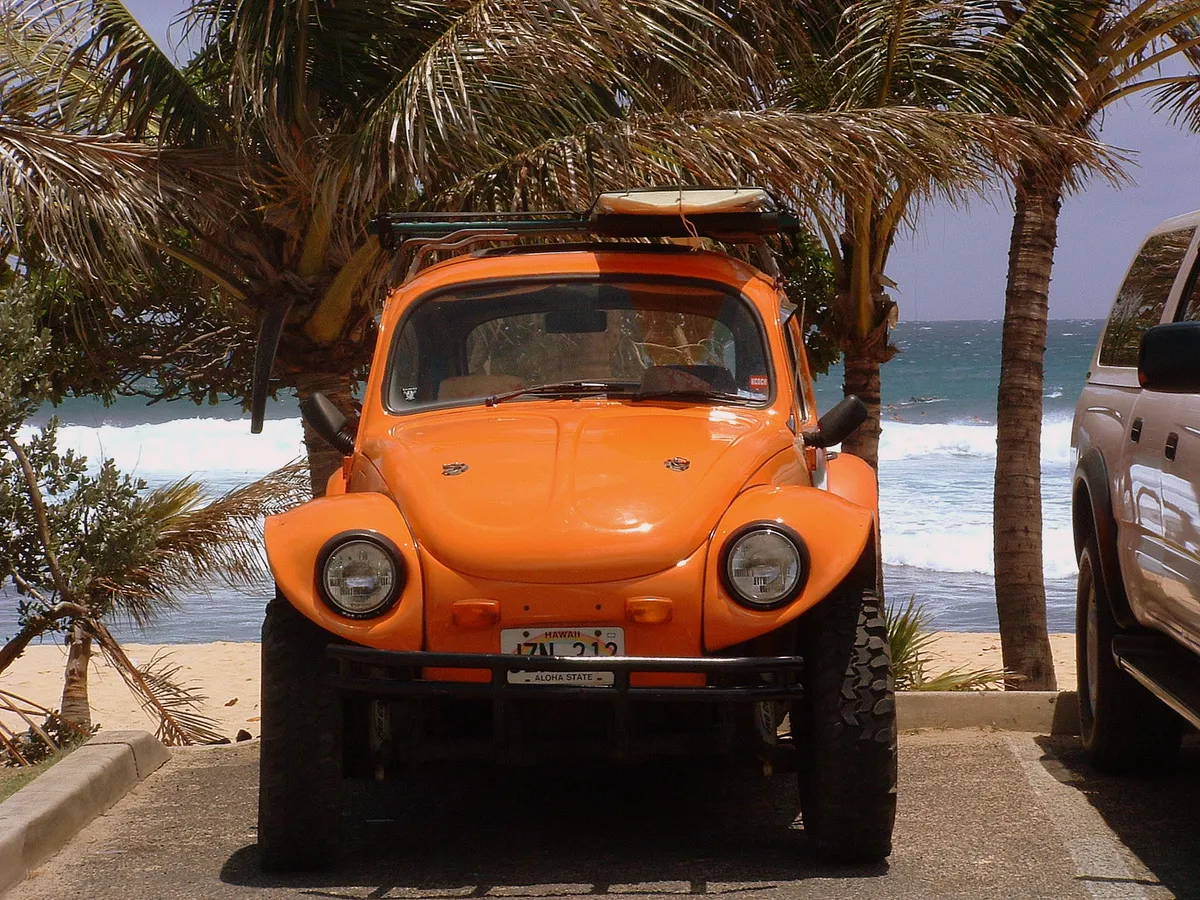
1969 Volkswagen Baja Bug
1960s-present
Why this vehicle matters
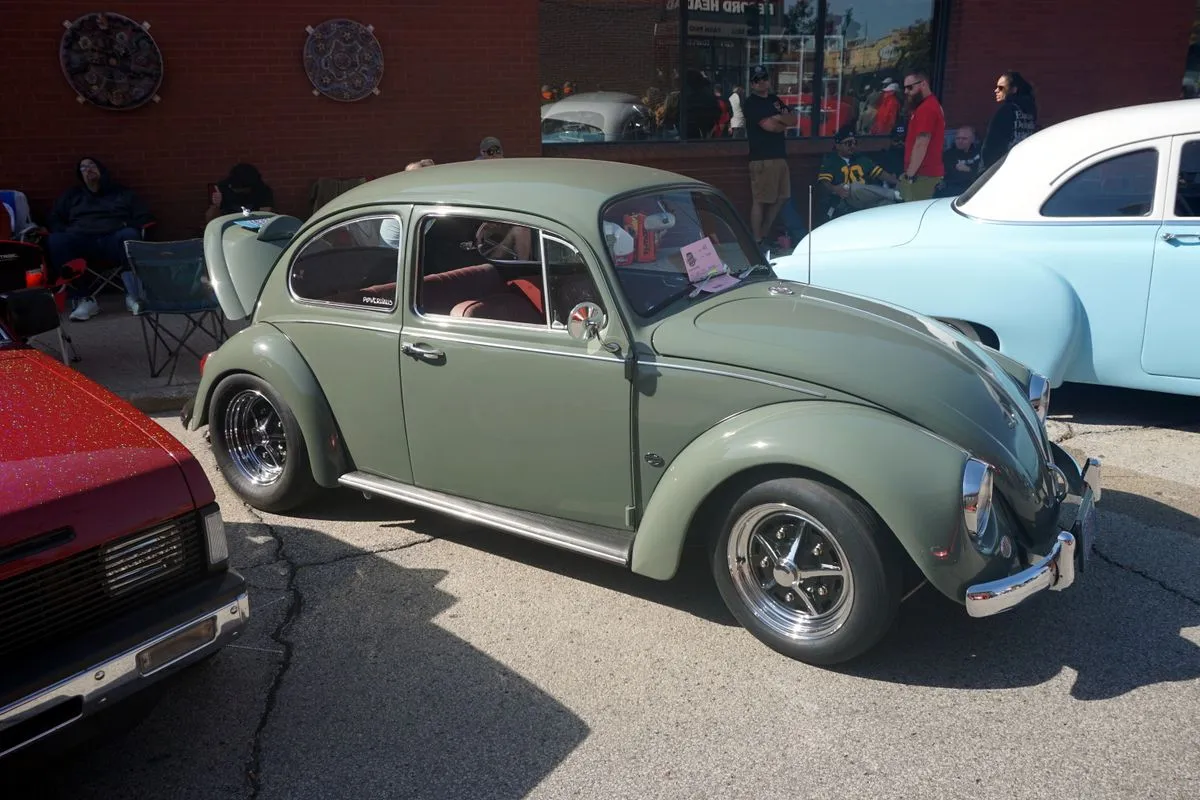
The Baja Bug proved that the humble Volkswagen Beetle — designed for German roads in the 1930s — could conquer the harshest desert terrain in the Americas.
When the Baja 1000 started in 1967, people showed up with Beetles because they were cheap, air-cooled (no radiator to puncture), rear-engined (weight over the drive wheels), and nearly indestructible.
Cut the fenders for bigger tires, add a skid plate, raise the suspension, and suddenly you had a legitimate off-road racer. The Baja Bug became the everyman's entry into desert racing — you didn't need a factory team or a purpose-built vehicle. You needed a beater Beetle, a welder, and more courage than sense.
Patina notes
Every Baja Bug is different. Some are meticulously built race machines with tube frames, long-travel suspension, and built engines. Others are hacked-up daily drivers with bolt-on fender flares and aggressive tires.
The condition varies wildly because these are modified vehicles, not production cars. Rust is the enemy — VW pans rust from underneath, and desert racing beats the hell out of everything. A well-built Baja Bug is a thing of beauty; a poorly built one is a death trap.
Ownership reality
Baja Bugs are maintenance-intensive but mechanically simple. You're working on Volkswagen Beetle running gear, which means parts are everywhere and every air-cooled shop knows the platform.
The modifications are the variable — suspension geometry, tire clearance, cooling, all require attention. These are not set-it-and-forget-it vehicles. They're projects that never truly end.
But that's the appeal: you can always make it better, faster, more capable. The Baja Bug community is dedicated and helpful.
The verdict
Buy if
You want off-road capability without breaking the bank. You enjoy wrenching and improving. You appreciate the grassroots desert racing heritage.
Skip if
You want reliability without effort. You need to pass strict inspections. You can't handle constant project-car attention.
What to look for
- → Pan condition (rust underneath)
- → Suspension quality and geometry
- → Engine cooling adequacy
- → Frame/roll cage welds
- → Overall build quality vs. hack job
Common problems
- ⚠ Rust in the pan (hidden by dirt)
- ⚠ Overheating (inadequate cooling mods)
- ⚠ Poor suspension geometry
- ⚠ Cracked welds from vibration
- ⚠ Electrical gremlins
Parts & community
Parts sources
- JBugs
- Chirco Performance
- Bugpack Performance
- CB Performance
- Sway-A-Way
Forums & communities
- TheSamba.com (Off-Road section)
- BajaRacing.net
- Class 11 community forums
Sources
- SCORE International History · 2026-02-04
- Bring a Trailer results · 2026-02-04
Specifications
| Engine | VW flat-four (1200cc-2332cc, highly variable) |
| Power | 36-150+ hp (stock to built) |
| Torque | Varies dramatically by build |
| Transmission | 4-speed manual (VW) |
| Drivetrain | RWD |
| Weight | ~1,700-2,000 lbs |
| Wheelbase | 94.5 inches (stock VW) |
| Production | Unknown (individual builds) |
Notable Features
- • Cut fenders for tire clearance
- • Raised suspension
- • Skid plates
- • Off-road tires
- • Desert racing heritage
About Volkswagen
The people's car. From Nazi-era origins to counterculture icon, VW became synonymous with simple, honest transportation.
View all Volkswagen vehicles →Find one
Looking to buy? Search current and past listings on Bring a Trailer.
Search on Bring a Trailer →