Why this vehicle matters
The 308 democratized Ferrari. Before it, Ferraris were V12 exotics for the wealthy. The 308 was a V8 that middle-class professionals could actually aspire to own.
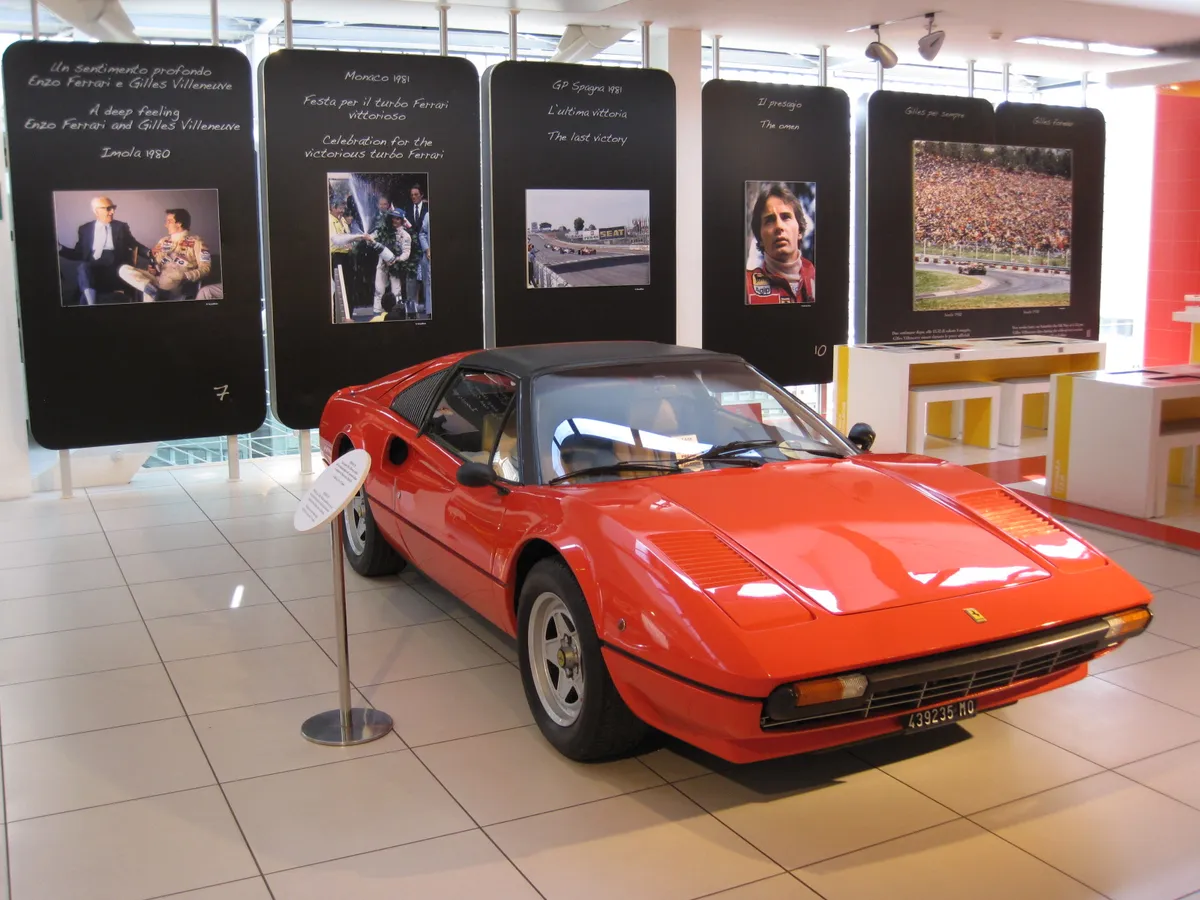
Pininfarina's design set the template for mid-engine sports cars — the proportions, the flying buttresses, the wedge shape. Then Tom Selleck drove one in 'Magnum P.I.' for eight seasons, and the 308 GTS became the definitive '80s poster car.
Yes, the V8 was down on power compared to the V12s. Yes, the malaise-era emissions equipment strangled performance. None of that mattered. The 308 looked like your dream of a Ferrari, and that was enough.
Patina notes
The 308's fiberglass body (early cars) or aluminum body (late cars) holds up well, but the steel frame rusts. The tubular chassis is the structural concern — inspect thoroughly.
Well-maintained 308s can be genuinely beautiful with age; neglected ones become money pits. The carbureted cars are worth more than the fuel-injected versions, despite making similar power.
Ownership reality
This is the 'accessible' Ferrari — but accessible is relative. Annual maintenance runs $3,000-5,000 at a specialist shop. The timing belt service is notorious: every 3-5 years or 30,000 miles, and it requires dropping the engine.
The good news: parts availability is decent, the community is helpful, and these are actually enjoyable to drive. A well-sorted 308 is a genuine sports car experience, not just a badge. Just budget accordingly.
The verdict
Buy if
You want 'attainable' Ferrari ownership. You're okay with significant maintenance costs. You understand that 'cheap Ferrari' is an oxymoron.
Skip if
You can't afford $5K/year in maintenance. You need reliability for daily driving. You want 12-cylinder Ferrari status.
What to look for
- → Frame rust — especially around the fuel tank and suspension pickups
- → Timing belt service history (critical)
- → Clutch slave cylinder and master cylinder
- → AC system (often disconnected)
- → Cam chain tensioner condition
- → Evidence of accident repair in the nose
Common problems
- ⚠ Frame rust is a structural concern
- ⚠ Timing belt failure destroys the engine
- ⚠ Starters fail due to heat soak
- ⚠ Electrical issues (Italian wiring)
- ⚠ Clutch hydraulics leak
- ⚠ Distributor problems on carbureted cars
Parts & community
Parts sources
- Ferrari of Los Gatos
- SuperFormance
- Ricambi America
- Hill Engineering
- eBay (for common items)
Forums & communities
- FerrariChat.com
- FerrariLife.com
- Ferrari 308 Club
Sources
- Hagerty Valuation · 2026-02-04
Specifications
| Engine | 2.9L V8 |
| Power | 240 hp (carbureted) / 230 hp (fuel injected) |
| Torque | 181 lb-ft |
| Transmission | 5-speed manual |
| Drivetrain | RWD (mid-engine) |
| Weight | 2,930 lbs |
| Wheelbase | 92.1 inches |
| Production | Approximately 12,000 (308 GTB/GTS combined) |
Notable Features
- • Pininfarina design
- • Mid-mounted transverse V8
- • Targa-style removable roof panel
- • First mass-produced Ferrari V8
- • Magnum P.I.'s car
About Ferrari
The prancing horse. Road cars that fund racing, racing that sells road cars.
View all Ferrari vehicles →Find one
Looking to buy? Search current and past listings on Bring a Trailer.
Search on Bring a Trailer →