Why this vehicle matters
The GT750 was Suzuki's answer to the Kawasaki H1, but where Kawasaki chose violence, Suzuki chose refinement. Same basic concept — two-stroke triple — but liquid-cooled, heavier, and tuned for smooth torque instead of terrifying top-end hits.
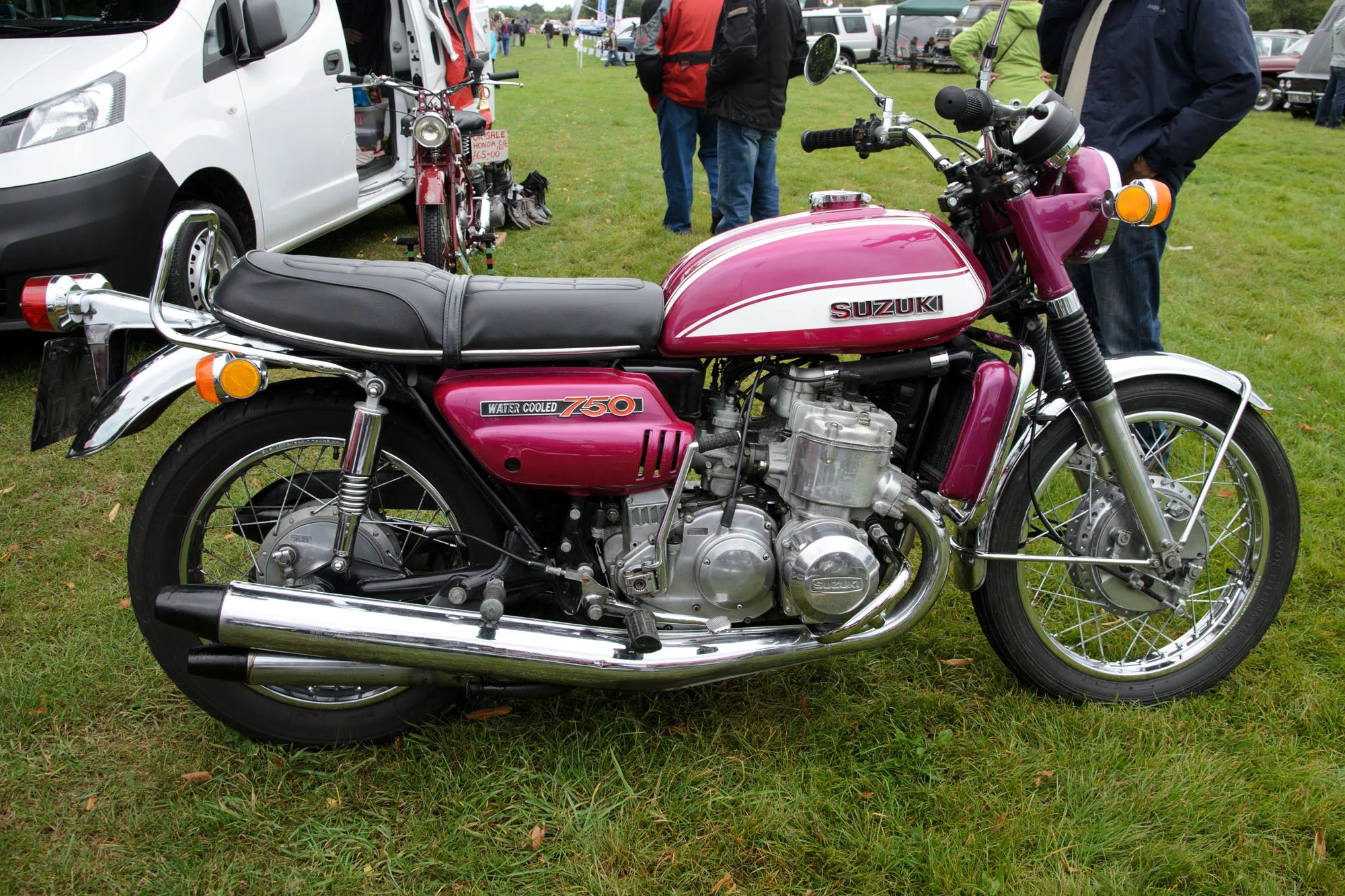
The radiator was the headline: nobody had ever put a radiator on a Japanese motorcycle before. It earned the nickname 'Water Buffalo' in the US (and 'Kettle' in the UK) because the idea of a water-cooled motorcycle was that bizarre.
The GT750 proved that two-strokes could be civilized, powerful, and reliable. It was the gentleman's alternative to the Widowmaker.
Patina notes
The GT750's radiator is its visual signature — an anachronism on a 1970s motorcycle that makes it immediately identifiable. The liquid-cooled engine stays cleaner than air-cooled contemporaries, so engine cases develop a more uniform patina.
The chrome radiator guard and front-mounted radiator show road debris impact over time. Paint was typically metallic blues, golds, and greens that fade with a particular warmth.
The three expansion chamber exhausts develop the heavy baked-on patina typical of two-stroke pipes. A GT750 with honest age showing is a conversation piece — the radiator alone generates questions from people who think water cooling on motorcycles started in the 1980s.
Ownership reality
The GT750 has a dedicated following, and the community has kept parts flowing for decades. The two-stroke engine means oil injection maintenance (or premix conversion), plug fouling potential, and the perpetual two-stroke aroma.
But the liquid cooling adds a dimension that the Kawasaki triples don't have — cooling system maintenance including radiator, hoses, thermostat, and water pump.
The engine itself is strong and reliable for a two-stroke, with the liquid cooling extending cylinder life significantly. These bikes are heavy — 525 pounds is a lot for a 1970s motorcycle.
They ride like touring bikes, not sport bikes, which was always the point. Parts are available through Suzuki-specific suppliers and the GT750 community.
The verdict
Buy if
You want a two-stroke triple without the death wish of the Kawasaki H1. You appreciate engineering firsts — the first water-cooled Japanese production bike. You want something rare enough to be interesting but common enough to actually maintain.
Skip if
You want the raw, terrifying two-stroke experience (that's the H1). You don't want to maintain a cooling system on top of two-stroke obligations. You need a lightweight, flickable motorcycle — this is a 525-pound tourer at heart.
What to look for
- → Cooling system integrity (radiator, hoses, thermostat, water pump)
- → Cylinder bore condition (score marks indicate overheating or seizure history)
- → Crankshaft seal condition (two-stroke survival depends on sealed crankcases)
- → Oil injection pump function (CCI system — test delivery rates)
- → Expansion chamber exhaust condition (rusts from inside out)
- → Frame and swingarm for cracks (heavy bike, stress accumulates)
Common problems
- ⚠ Cooling system leaks from aged hoses, radiator corrosion, and water pump seals
- ⚠ Oil injection pump calibration drift (causes lean or rich running)
- ⚠ Crankshaft seal failures (the universal two-stroke failure mode)
- ⚠ Expansion chamber exhaust rot (internal condensation causes rust-through)
- ⚠ Electrical system age-related failures (ignition, lighting, charging)
- ⚠ Transmission second gear wear (common Suzuki issue of the era)
Parts & community
Parts sources
- Suzuki GT750 parts specialists (several small operations serve this community)
- CMSNL.com (Dutch — comprehensive Suzuki catalog)
- eBay (NOS parts still surface)
- GT750 Registry classifieds
- Two-stroke specialists (regional, ask the forums)
Forums & communities
- GT750.com (dedicated GT750 registry and forum)
- Suzuki GT750 Owners Club
- GT750 Facebook groups
- Reddit r/vintagemotorcycles
Sources
- Bring a Trailer · 2026-02-28
- Motorcycle Classics · 2026-02-28
Specifications
| Engine | 738cc liquid-cooled two-stroke triple |
| Power | 67 hp @ 6,500 rpm |
| Torque | 50 lb-ft @ 5,500 rpm |
| Transmission | 5-speed |
| Drivetrain | Chain |
| Weight | 525 lbs wet |
| Wheelbase | 58.3 inches |
| Production | Moderate volume, 1972-1977 |
Notable Features
- • First Japanese production motorcycle with liquid cooling
- • Two-stroke triple with radiator (unprecedented in 1972)
- • Ram-air cooling for cylinder heads (hybrid cooling approach)
- • CCI automatic oil injection
About Suzuki
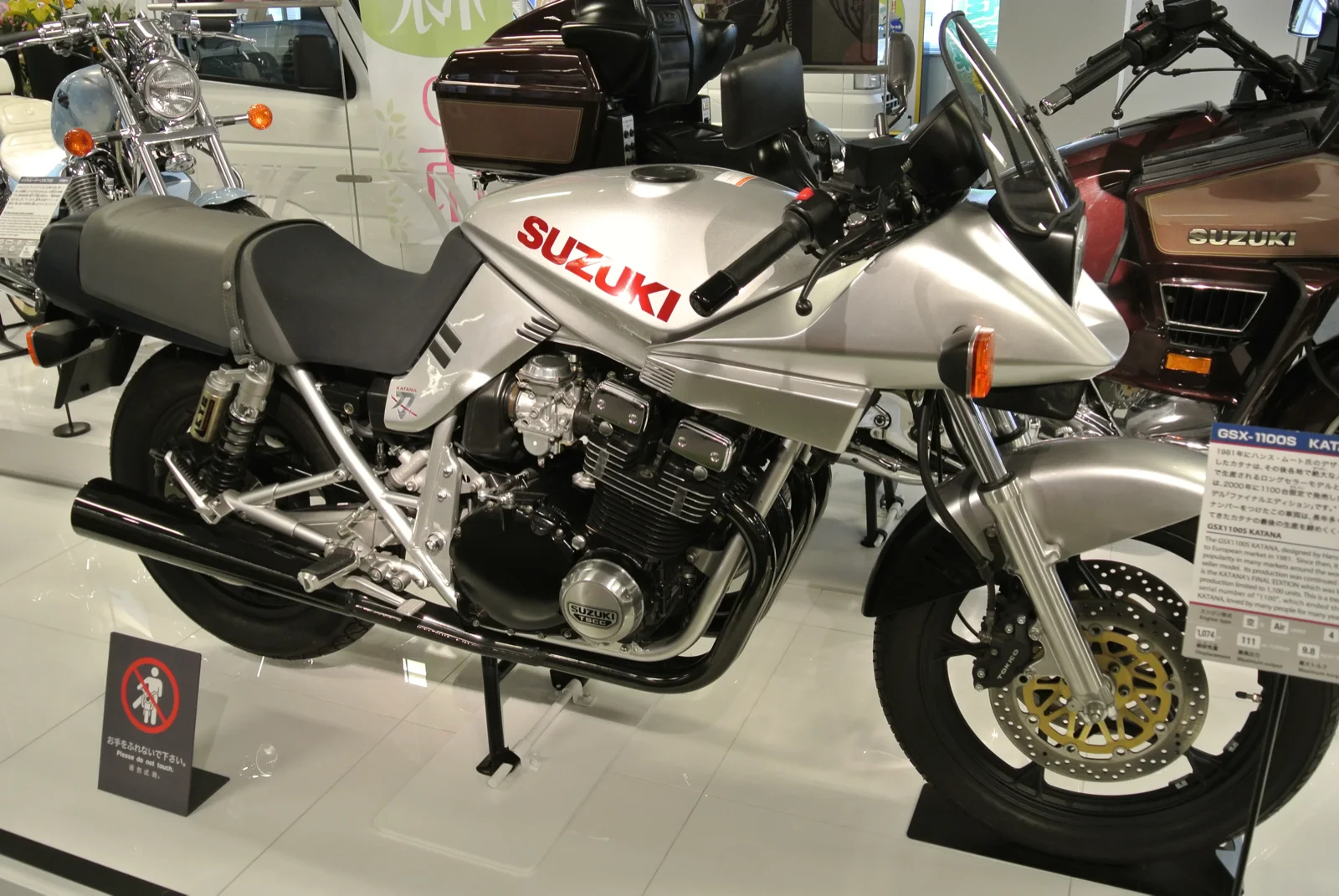
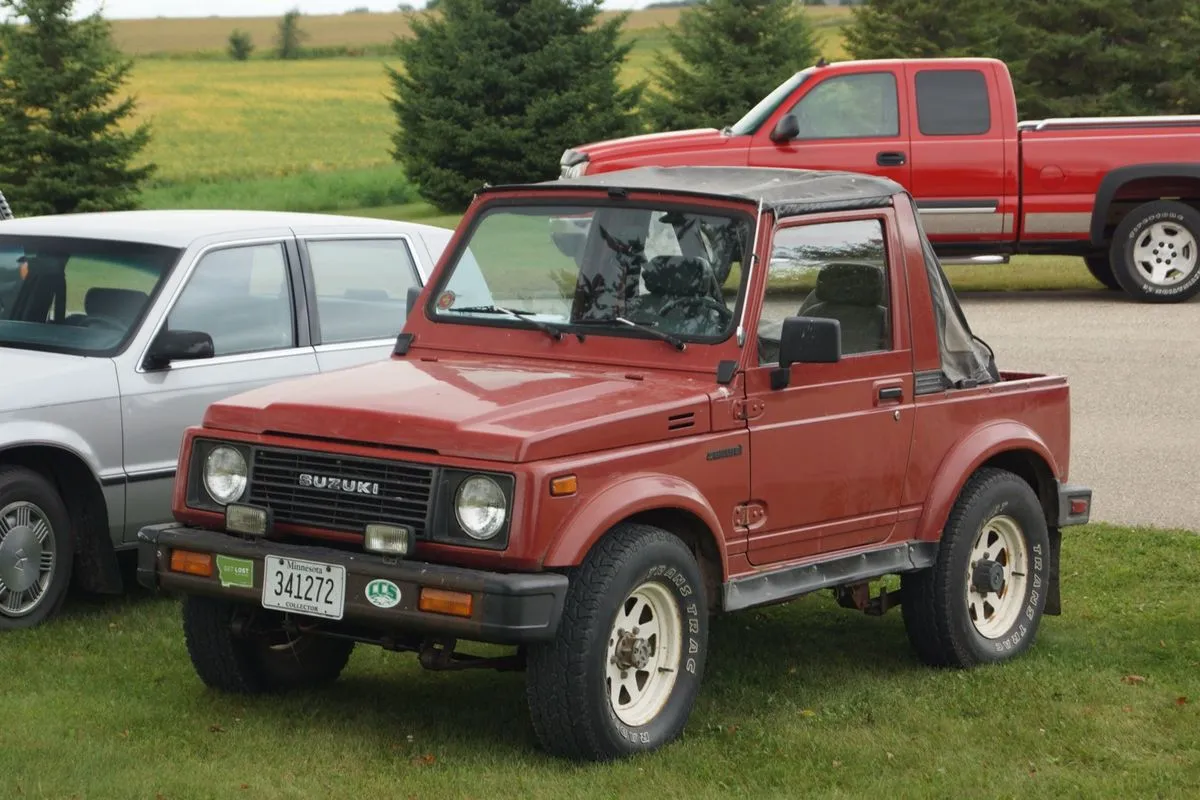
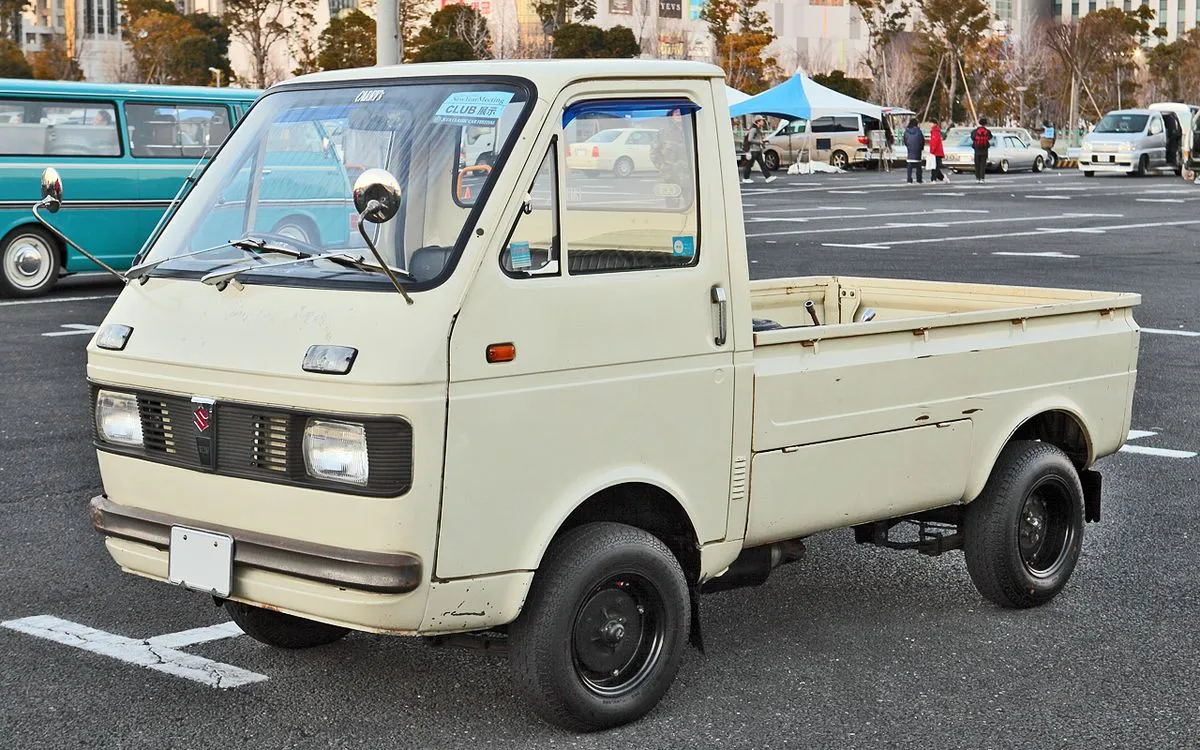
Small but mighty. Suzuki built motorcycles, kei cars, and tiny trucks that punched well above their weight class.
View all Suzuki vehicles →Find one
Looking to buy? Search current and past listings on Bring a Trailer.
Search on Bring a Trailer →