Why this vehicle matters
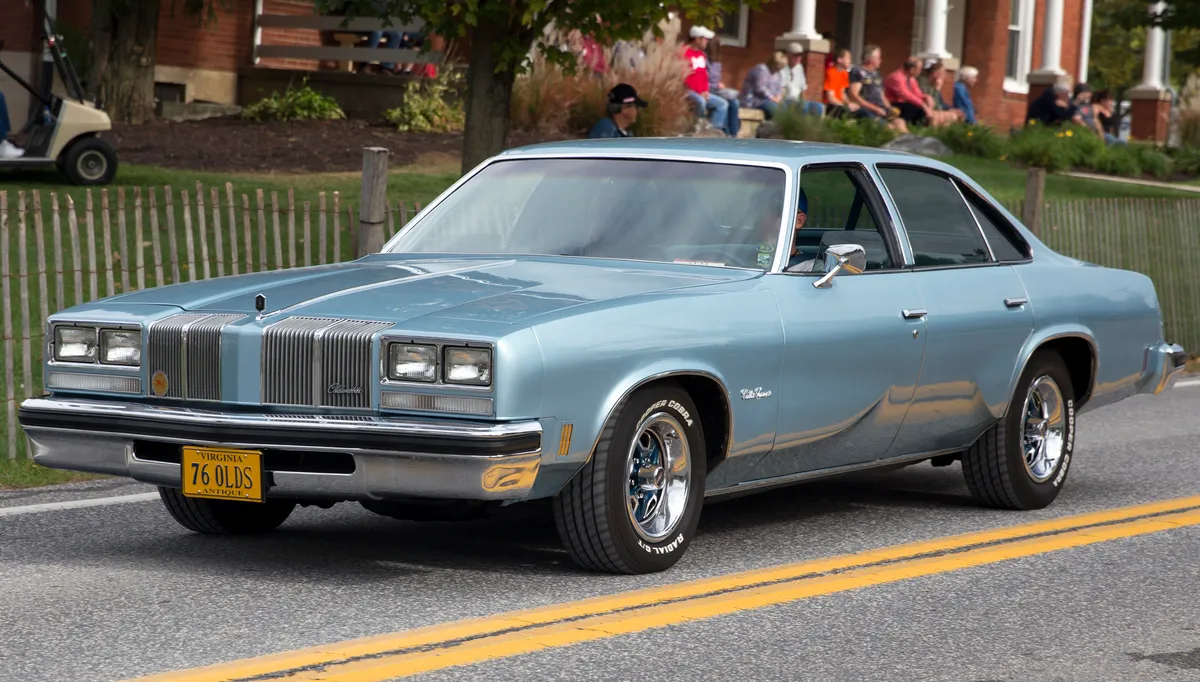
The Cutlass Supreme was America's favorite car in the mid-1970s — not a Chevy, not a Ford, but an Oldsmobile. The Colonnade body introduced in 1973 hit exactly the right note of personal luxury: formal rooflines, opera windows, comfortable interiors, and enough engine options to satisfy most tastes.
The 1976 model year was peak Cutlass, selling over 500,000 units. These were the cars parked in suburban driveways across America, the cars driven to disco and back, the cars that defined malaise-era comfort. Today, they're finally getting respect as survivors of an underappreciated era.
Patina notes
Cutlass Supremes in honest, preserved condition are increasingly valued. The Colonnade styling ages gracefully. Many were optioned heavily — look for interesting configurations like the Salon package or Hurst/Olds equipment.
Vinyl tops were popular and often hide rust underneath. Low-mile survivors exist because these were often purchased by older buyers who drove them carefully.
Ownership reality
Excellent parts availability through GM A-body channels. The 350 and 455 Oldsmobile engines are reliable and well-documented. Mechanical simplicity makes DIY maintenance practical.
These cars ride and drive well by period standards — they were comfortable then and remain comfortable now. The challenge is finding one that wasn't used up; many were daily drivers that accumulated miles and deferred maintenance.
The verdict
Buy if
You want affordable personal luxury nostalgia. You appreciate the Colonnade era. You like having the best-selling car of its year.
Skip if
You want muscle car performance. You can't appreciate malaise-era styling. You need excitement over comfort.
What to look for
- → Rust under vinyl top
- → Lower fender rust behind wheels
- → Trunk floor and spare tire well
- → Frame rail rust at front and rear
- → Interior condition (colors often fade)
- → Unusual options or packages
Common problems
- ⚠ Rust in typical GM locations
- ⚠ Vinyl top traps moisture
- ⚠ Power accessories failures (windows, locks)
- ⚠ AC system leaks and failures
- ⚠ Worn front suspension components
- ⚠ Brake master cylinder leaks
Parts & community
Parts sources
- OPGI
- The Parts Place
- Rock Auto
- Classic Industries
- Local salvage yards (still available)
Forums & communities
- GBodyForum.com
- 442.com
- GarageJournal
Sources
- Hagerty Valuation · 2026-02-04
Specifications
| Engine | 350 cu in V8 (standard) / 455 cu in V8 (option) |
| Power | 170-190 hp (350) / 190 hp (455) |
| Torque | 275 lb-ft (350) / 370 lb-ft (455) |
| Transmission | 3-speed auto / 4-speed manual (rare) |
| Drivetrain | RWD |
| Weight | 3,800 lbs |
| Wheelbase | 112 inches |
| Production | Best-selling car in America (1976) |
Notable Features
- • Colonnade hardtop design
- • Opera windows
- • Swivel bucket seats optional
- • Hurst/Olds package available
- • Landau roof option
About Oldsmobile
GM's innovation lab. Automatic transmissions, Rocket V8s, front-wheel drive muscle — and then they killed it.
View all Oldsmobile vehicles →Find one
Looking to buy? Search current and past listings on Bring a Trailer.
Search on Bring a Trailer →