Why this vehicle matters
The Pacer is automotive proof that courage and good intentions don't guarantee success. AMC designed it for a rotary engine GM never delivered. They built it anyway with their inline-6.
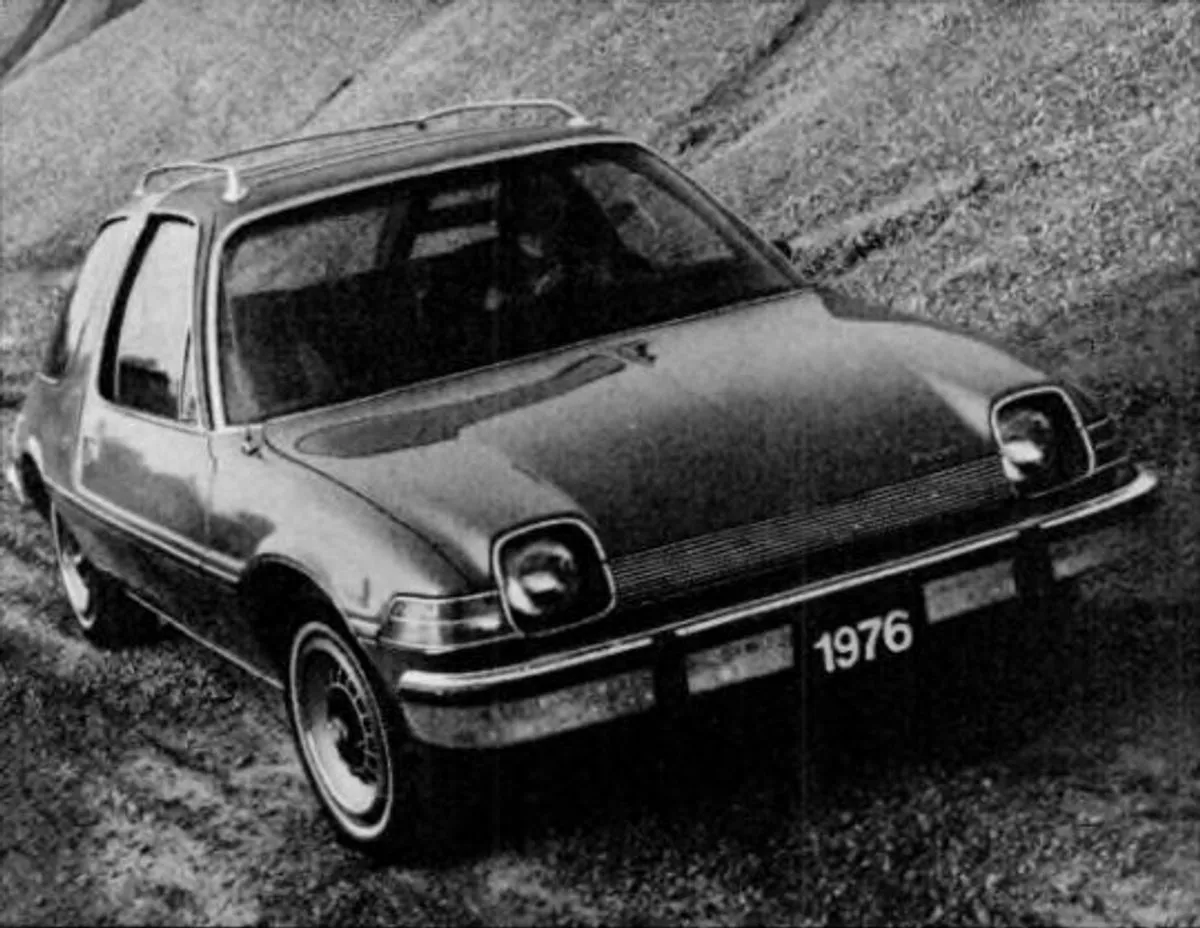
The styling was genuinely innovative — the fishbowl glass, the width, the rounded shape were all intentional aerodynamic choices. Critics destroyed it. Sales collapsed after 1975. But the Pacer was trying something.
In an era of Detroit conformity, AMC swung for the fences. They missed, but at least they swung.
Patina notes
Pacers are survivors by definition — anyone who kept one running this long cares about it. The massive glass area creates greenhouse effects that crack dashboards and fade interiors. The body seams rust predictably.
But a Pacer in good condition is a conversation starter. They're distinctive in ways modern cars could never be. Let it look its age; over-restoration makes them look even stranger.
Ownership reality
The AMC inline-6 is reliable and easy to work on. The unique body means unique body parts, which are scarce. The Pacer community exists and is helpful.
Daily driving is possible but attention-getting — you will be stopped at every gas station for conversations. These are surprisingly practical as actual cars once you get past the looks.
The verdict
Buy if
You want to own automotive history's most interesting failure. You don't mind being the center of attention. You appreciate that AMC tried.
Skip if
You want to blend in. You need parts availability. You can't embrace the weird.
What to look for
- → Rust in rocker panels and floor pans
- → Door alignment (asymmetric doors need adjustment)
- → Dash cracking from sun exposure
- → Glass condition (very expensive to replace)
- → A/C system (crucial with all that glass)
- → Weatherstripping deterioration
Common problems
- ⚠ Rust in predictable places
- ⚠ Dashboard cracking from UV exposure
- ⚠ Door alignment issues
- ⚠ Cooling system struggles in hot climates
- ⚠ Glass replacement nearly impossible
- ⚠ Interior parts scarcity
Parts & community
Parts sources
- Kennedy American
- American Parts Depot
- Pacer Ltd (dedicated supplier)
- eBay (NOS parts exist)
- AMC club swap meets
Forums & communities
- AMC Forum
- AMCPacer.com
- Facebook Pacer groups
- AMC Rambler Club
Sources
- Hagerty Valuation Tools · 2026-02-02
Specifications
| Engine | 3.8L AMC inline-6 / 4.2L AMC inline-6 |
| Power | 100-120 hp depending on year and engine |
| Torque | 165-210 lb-ft |
| Transmission | 3-speed manual / 4-speed manual / 3-speed auto |
| Drivetrain | RWD |
| Weight | 3,000-3,200 lbs |
| Wheelbase | 100 inches |
| Production | 1975: 72,158 (best year) |
Notable Features
- • Massive glass area (37% of surface)
- • Asymmetric doors (passenger 4" longer)
- • Widest compact car of its era
- • Originally designed for Wankel rotary
About AMC
The scrappy underdog of American automakers. AMC punched above its weight with innovative designs that Detroit's Big Three wouldn't touch.
View all AMC vehicles →Find one
Looking to buy? Search current and past listings on Bring a Trailer.
Search on Bring a Trailer →