Why this vehicle matters
The Rocket Gold Star is what happens when the factory hot-rodders get impatient. BSA took the sweet-handling Gold Star chassis — the best single-cylinder frame in the world — and shoved a 650 A10 Super Rocket twin into it. On paper, brilliant.
In practice, a production nightmare that BSA could only sustain for two model years before the logistics of hand-fitting twin engines into single-cylinder frames broke them. That brevity is exactly what makes it special.
This was BSA's factory café racer, a machine that acknowledged what the Ace Café boys had been doing in their sheds for years and said, 'Fine, we'll build it properly.' Faster than the Gold Star single, better-handling than the standard A10 — the RGS occupied a sweet spot that no other BSA ever quite hit again.
Patina notes
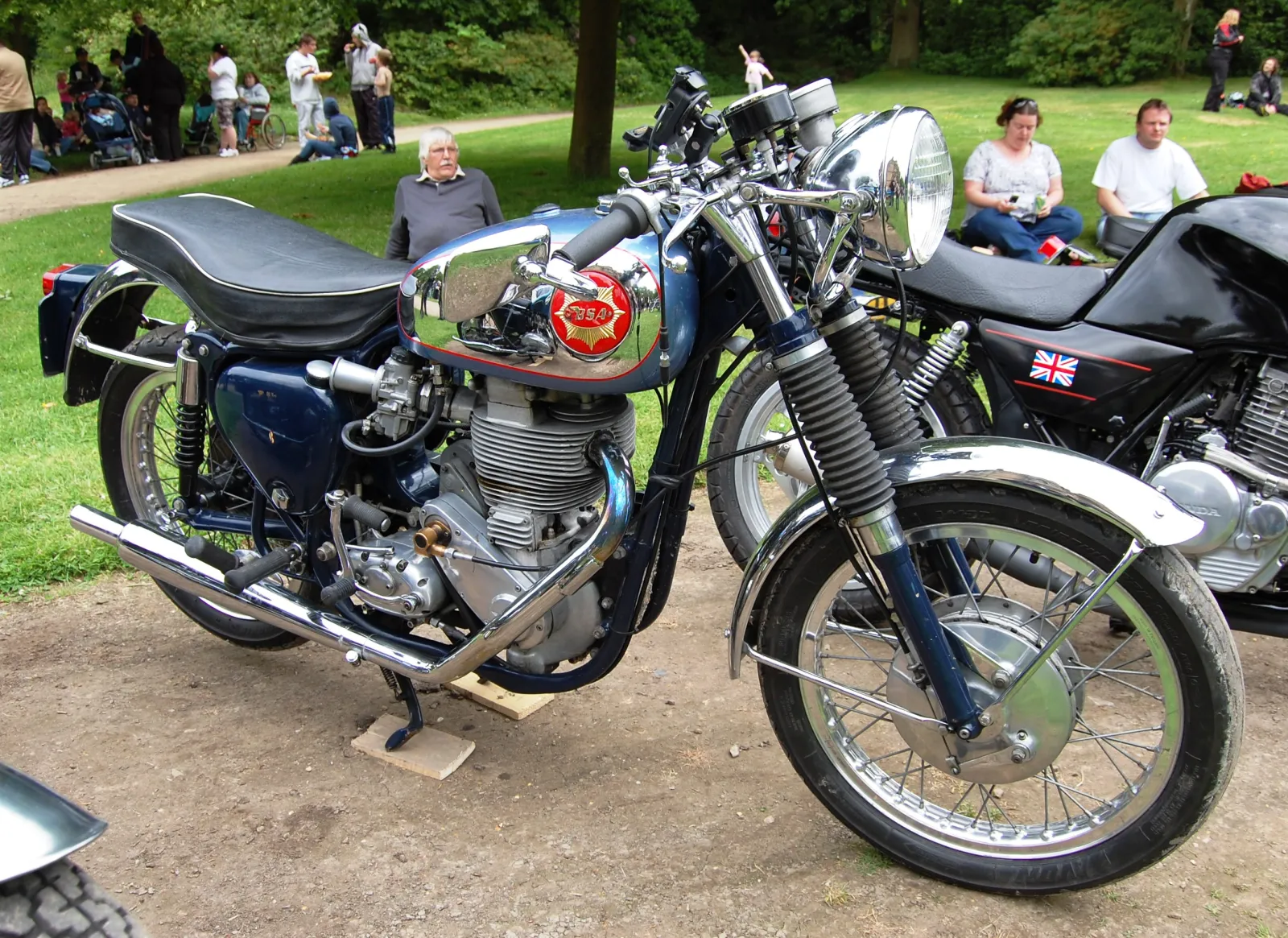
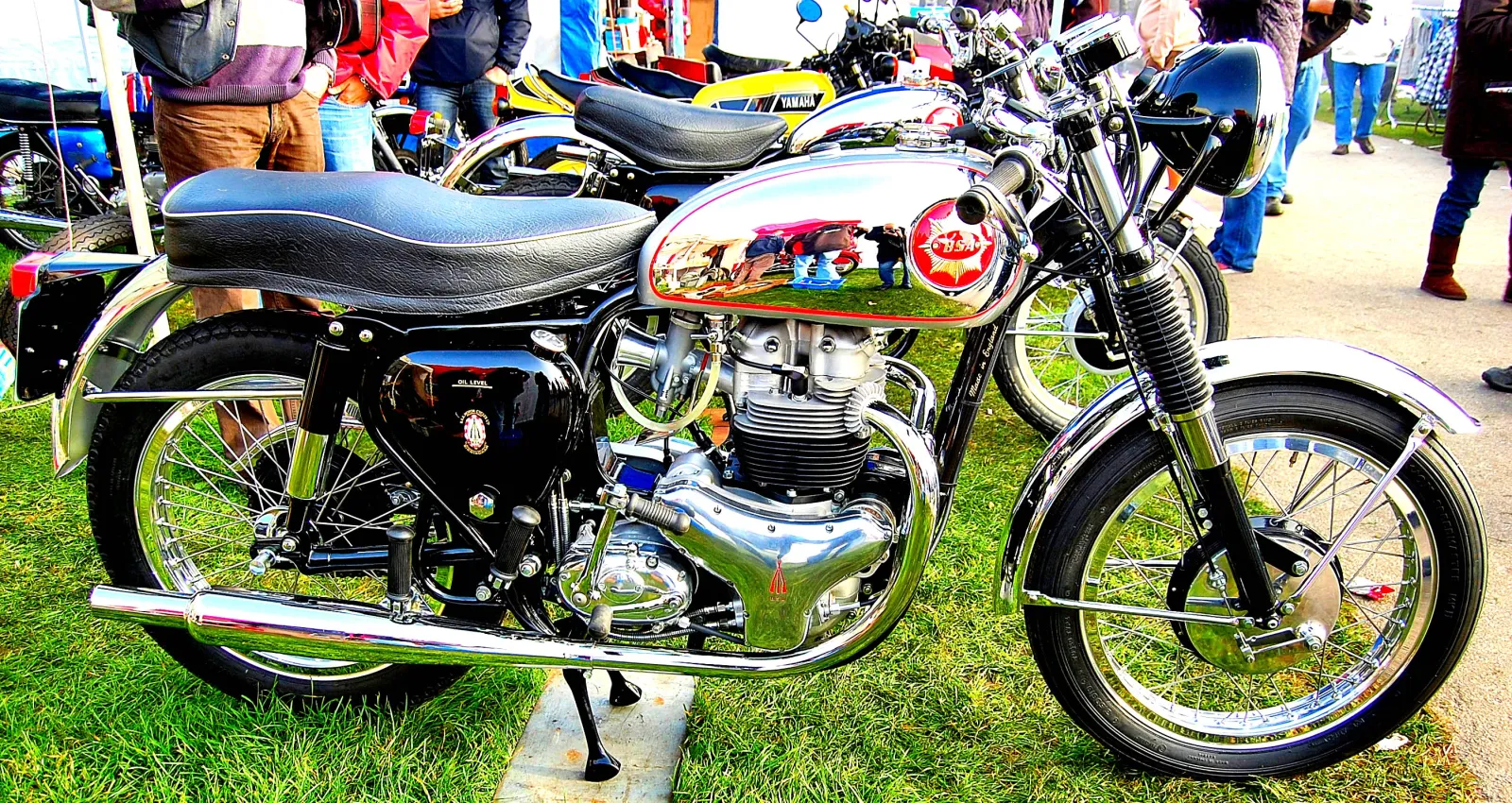
Rocket Gold Stars wear their age with a hot-rod dignity. The twin engine runs hotter than the single ever did, so thermal discoloration on the exhaust header pipes and around the head is normal and adds character.
The chrome on the siamesed exhaust system pits more aggressively than you'd expect — the heat cycling is relentless. Alloy components take on that beautiful soft grey patina.
The paint on the tank and mudguards tends to check and craze, particularly around the knee cutouts. Because production numbers were so low, finding one in honest, unrestored condition is increasingly rare — most have been through at least one restoration.
An original-paint RGS with patina intact is worth considerably more to the right buyer than a concours restoration.
Ownership reality
Living with a Rocket Gold Star means accepting that you own a bike BSA could barely figure out how to build. The A10 twin in the Gold Star chassis is a tighter fit than the factory intended, and that manifests as challenging access to the timing side of the engine and fiddly carburetor synchronization.
The RRT2 close-ratio gearbox is the same unit from the single and it works, but the twin's broader torque curve makes the tight ratios less necessary and more busy.
The siamesed exhaust limits power slightly but sounds magnificent — a deep, raspy bark that's instantly recognizable. Starting is easier than the single (lower compression ratio per cylinder), but the kick-start still demands respect.
Parts are a hybrid problem: you need Gold Star chassis parts AND A10 engine parts, and the specific RGS components that bridge the two are the hardest to find.
The verdict
Buy if
You want the rarest factory BSA ever made and you appreciate the hot-rod logic of stuffing a bigger engine into a better chassis. You understand that a two-year production run means parts scarcity is a feature of ownership, not a bug. You want something that'll turn more heads at a British bike meet than any Gold Star single because the people who know, know.
Skip if
You'd rather have the purity of the Gold Star single or the simplicity of a standard A10. The hybrid nature of the RGS means more complexity without dramatically more performance. If you're spending $30,000+ on a British twin, a well-sorted Manx Norton or early Bonneville might give you more usable riding experience. And if you just want a fast BSA twin, the Spitfire is cheaper and nearly as quick.
What to look for
- → Matching frame and engine numbers — critical with only 1,584 made, and fakes exist
- → Correct RRT2 close-ratio gearbox (not a standard A10 box swapped in)
- → Gold Star-specific frame — check for correct lugs and gussets
- → 190mm front drum brake in correct Gold Star hub
- → Siamesed exhaust system — reproductions are available but originals are preferred
- → A10 engine in correct Super Rocket specification
- → Documentation or provenance — BSA factory records can verify production
- → Signs of crash repair to the frame, especially steering head and swingarm pivot
Common problems
- ⚠ Engine-to-frame fitment issues — even from the factory, these were hand-fitted, so replacement engines rarely drop straight in
- ⚠ Oil leaks from the A10 engine, particularly the pushrod tubes and rocker boxes
- ⚠ Primary chain tensioner wear — the twin's power delivery accelerates this
- ⚠ Carb synchronization on the twin Amals requires patience and a proper vacuum gauge
- ⚠ Gearbox mainshaft oil seal failure — allows gearbox oil into the primary
- ⚠ Electrical system deterioration — Lucas wiring and the magneto both need attention
- ⚠ Cylinder head gasket weeping — the A10's aluminum head on iron barrel is thermally mismatched
Parts & community
Parts sources
- SRM Engineering (UK) — Gold Star and RGS chassis specialists
- British Cycle Supply (USA) — A10 engine parts and general BSA components
- Draganfly Motorcycles (UK) — NOS BSA parts
- Devimead Engineering (UK) — A10 performance parts and rebuilds
- Central Wheel Components — wheel rebuilds and rim sets
Forums & communities
- BSA Owners Club (bsaownersclub.co.uk)
- British Bike Forum (britishbikeforum.co.uk)
- Britbike Forum (britbike.com)
- BSA A10 Enthusiasts Group
Sources
- BSA Rocket Gold Star Production Records · 2026-02-28
- Classic Motorcycle Mechanics — RGS History · 2026-02-28
- The BSA Rocket Gold Star by Norman Vanhouse · 2026-02-28
Specifications
| Engine | 646cc OHV air-cooled parallel twin (A10) |
| Power | 46 hp @ 6,250 rpm |
| Torque | 40 lb-ft @ 4,500 rpm |
| Transmission | 4-speed close-ratio (RRT2 gearbox) |
| Drivetrain | Chain |
| Weight | 400 lbs |
| Wheelbase | 55.5 inches |
| Production | Approximately 1,584 units total (1962-1963) |
Notable Features
- • Gold Star chassis with A10 twin engine
- • Clip-on handlebars
- • Rear-set footpegs
- • 190mm front drum brake
- • Siamesed exhaust system
- • Alloy wheel rims
- • Competition-spec fuel tank
About BSA
Birmingham Small Arms. Built rifles, then built the motorcycles that won the desert.
View all BSA vehicles →Find one
Looking to buy? Search current and past listings on Bring a Trailer.
Search on Bring a Trailer →