Why this vehicle matters
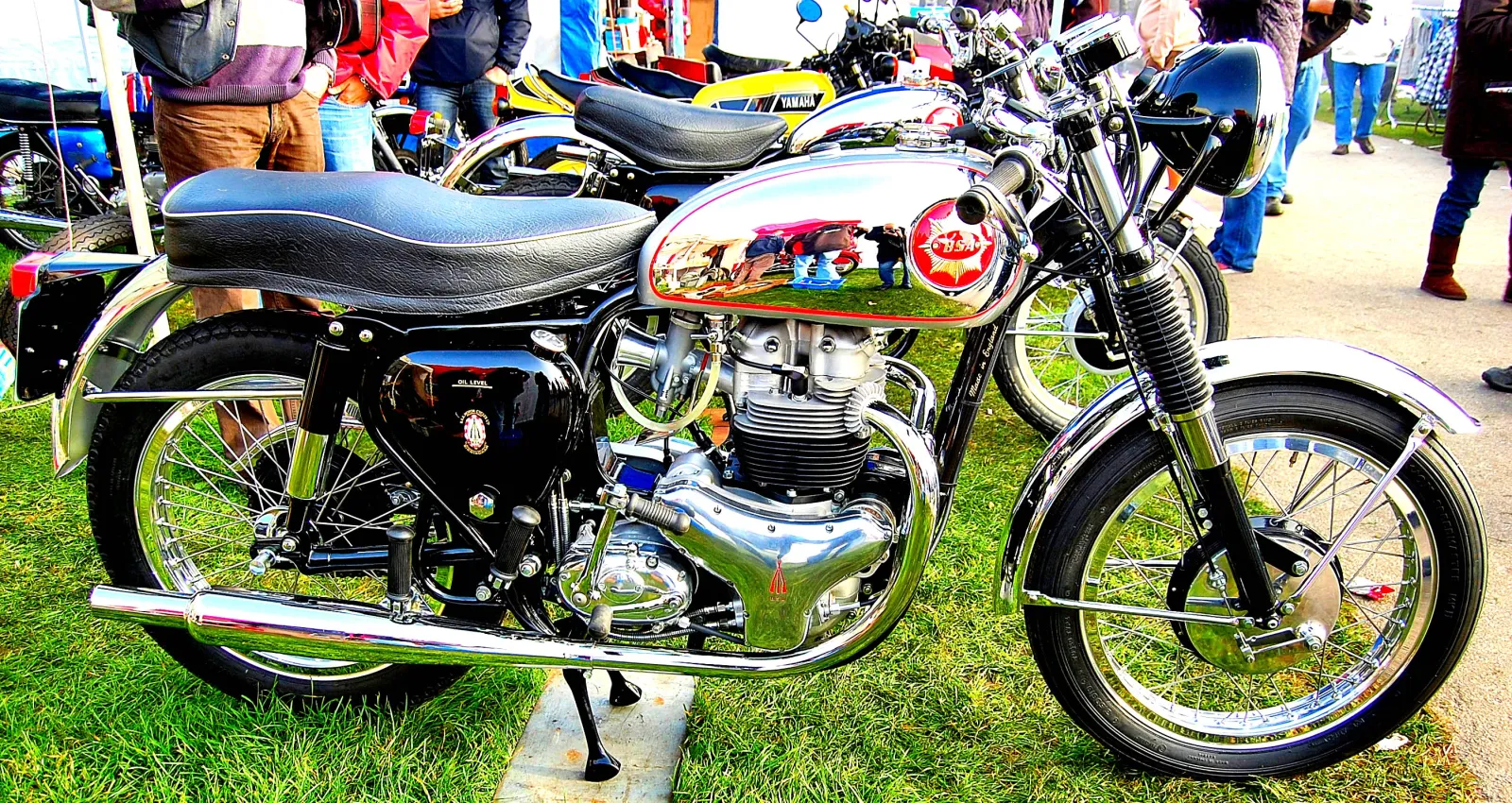
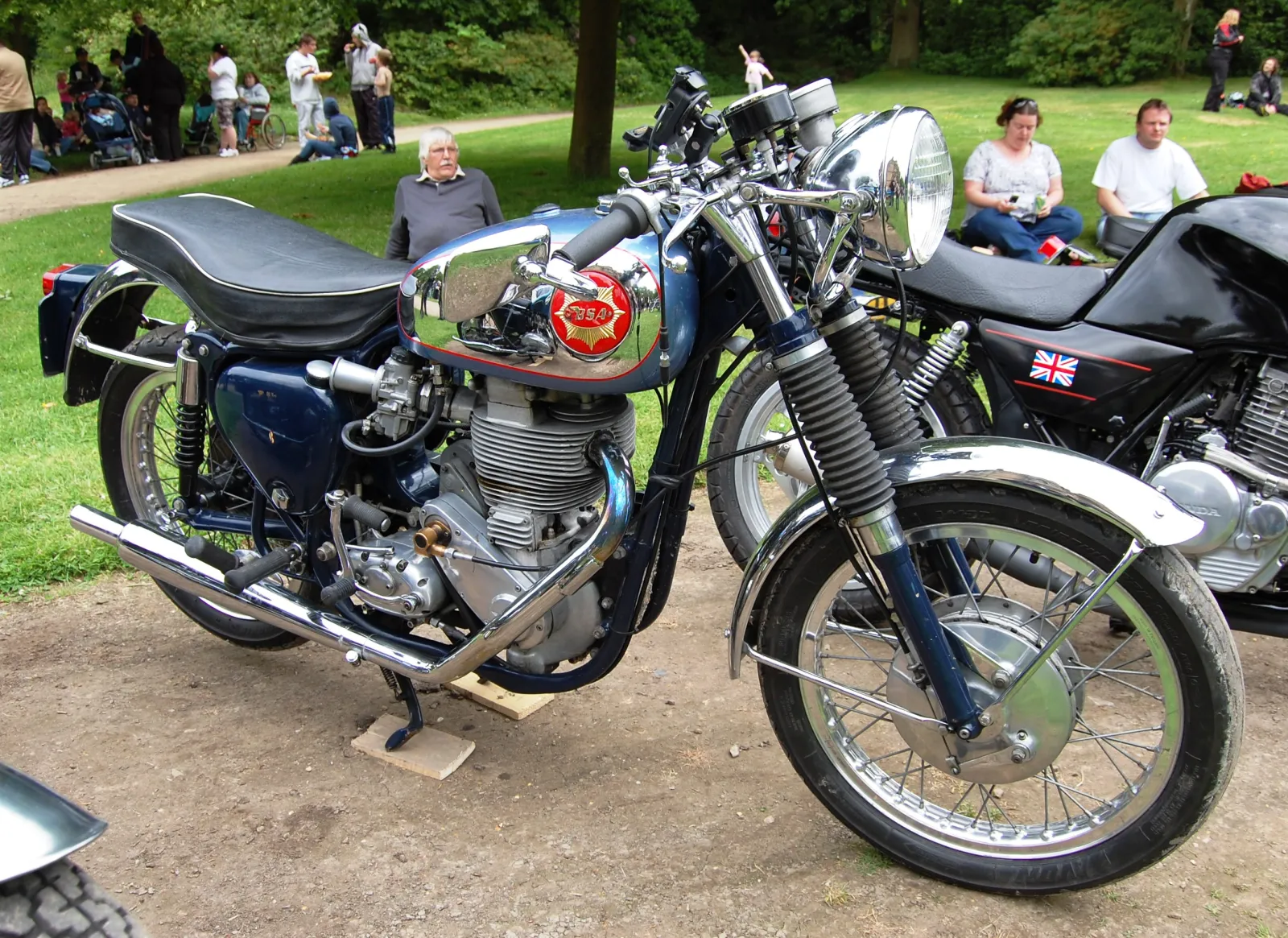
The Gold Star is the founding document of the café racer movement. Every ton-up boy who burned down the North Circular from the Ace Café to Hanger Lane and back before the record finished — this is the bike they wanted under them.
The DBD34 Clubmans variant, with its clip-ons, rear-sets, and that gorgeous alloy tank, wasn't just fast for a 500 single — it was the fastest production single you could buy, period.
BSA named it after Wal Handley's 1937 Brooklands lap that earned a Gold Star award, and the bike spent the next two decades earning that name on every racing surface that existed.
Isle of Man TT, Daytona, club racing, scrambles — the Goldie did it all. It defined what a sporting British single was supposed to be, and sixty years later, every custom builder bolting clip-ons onto a standard frame is still chasing this bike's silhouette.
Patina notes
Goldies age like old racing equipment should — with purpose and evidence. The alloy tanks develop a soft, matte patina that's infinitely better than polish.
Chrome on the pipes and wheel rims will pit in damp climates, but sympathetically weathered chrome on a Gold Star looks right in a way that re-chroming never quite achieves.
The RR2 gearbox develops a distinctive mechanical feel with age — not sloppy, just characterful. Paint on steel tanks checks and crazes in fine patterns.
The thing to watch is the primary chaincase — they leak from new, and decades of oil seepage leaves its mark on the left side of the engine cases. A Goldie that's too clean either just came out of a restoration or isn't real.
Ownership reality
Owning a Gold Star is an exercise in managing a temperamental thoroughbred. The Amal GP carb is a work of art and a constant fiddle — jetting changes with altitude, humidity, and apparently the bike's mood.
The close-ratio gearbox requires a precise, deliberate technique that will punish lazy shifts with false neutrals. Starting procedure is a ritual: tickle the carb, find compression, decompress, kick through — get it wrong and the kickback will rearrange your ankle.
These bikes were built for racing and grudgingly adapted for the road, so expect a committed riding position and minimal concessions to comfort. But when it's running right and you're wringing out that single through the gears, the mechanical connection is something no modern motorcycle can replicate. Budget for an Amal specialist and a good supply of patience.
The verdict
Buy if
You understand that the most important British motorcycle ever made demands a rider who's willing to learn its rituals. You want the bike that invented café racing, you're mechanically sympathetic enough to keep an Amal GP carb happy, and you're buying for the experience of operating a piece of motorcycling history rather than reliable weekend transport.
Skip if
You want a British single you can actually ride regularly without a PhD in carburetor tuning. You're not comfortable with kick-starting a high-compression single that bites back. Or you're looking for value — Goldies command serious money and the gap between a genuine DBD34 Clubmans and a tarted-up B33 is measured in tens of thousands of dollars and a lot of expert scrutiny.
What to look for
- → Frame and engine numbers matching — the single most important verification on any Gold Star purchase
- → Correct RRT2 close-ratio gearbox (not the standard BSA box)
- → Genuine Amal GP carburetor (reproductions exist but aren't the same)
- → Alloy tank condition — dents are expensive to repair properly
- → 190mm front brake — should be present on Clubmans spec bikes
- → Crankcase casting numbers confirming DBD34 designation
- → Evidence of racing history (adds provenance but check for crash damage)
- → Head gasket seepage — the single's Achilles heel
Common problems
- ⚠ Amal GP carburetor requires constant fettling — slides wear, needles need matching, and they're sensitive to ethanol fuel
- ⚠ Kickback on starting — high compression and a heavy flywheel make this a real injury risk if technique is sloppy
- ⚠ Gearbox false neutrals between 2nd and 3rd — characteristic of worn selectors
- ⚠ Primary chain tension needs regular checking — too tight kills the gearbox bearing
- ⚠ Oil leaks from everywhere, but especially the primary chaincase and rocker box
- ⚠ Magneto deterioration — Lucas competition magnetos need periodic rebuild
- ⚠ Exhaust valve seat recession on unleaded fuel without hardened inserts
Parts & community
Parts sources
- SRM Engineering (UK) — Gold Star specialists, reproduction and NOS parts
- British Cycle Supply (USA) — comprehensive BSA parts catalog
- Draganfly Motorcycles (UK) — NOS and quality reproduction parts
- Amal Carburettors — genuine Amal GP carb parts and rebuilds
- Central Wheel Components — wheel rebuilds and spoke sets
Forums & communities
- BSA Owners Club (bsaownersclub.co.uk)
- British Bike Forum (britishbikeforum.co.uk)
- BSA Gold Star Owners Club
- Britbike Forum (britbike.com)
Sources
- BSA Gold Star Registry · 2026-02-28
- Classic Bike Guide — Gold Star Buyer's Guide · 2026-02-28
- Real Classic Magazine — BSA DBD34 History · 2026-02-28
Specifications
| Engine | 499cc OHV air-cooled single (DBD34) |
| Power | 40 hp @ 7,000 rpm |
| Torque | 32 lb-ft @ 5,500 rpm |
| Transmission | 4-speed RRT2 close-ratio |
| Drivetrain | Chain |
| Weight | 385 lbs |
| Wheelbase | 54 inches |
| Production | Approximately 2,500 DBD34 models (1956-1963) |
Notable Features
- • Clip-on handlebars
- • Rear-set footpegs
- • Amal GP carburetor
- • Alloy fuel tank option
- • 190mm front drum brake
- • Swept-back exhaust with megaphone silencer
About BSA
Birmingham Small Arms. Built rifles, then built the motorcycles that won the desert.
View all BSA vehicles →Find one
Looking to buy? Search current and past listings on Bring a Trailer.
Search on Bring a Trailer →