Why this vehicle matters
The Roadmaster is the final chapter of American motorcycle royalty. By 1950, Indian knew the end was coming — British imports were eating their lunch and Harley was outproducing them five to one.
So they did what any proud, stubborn company would do: they made the best version of their flagship they'd ever built. The 80ci Thunderstroke engine was the most powerful Indian flathead ever produced.
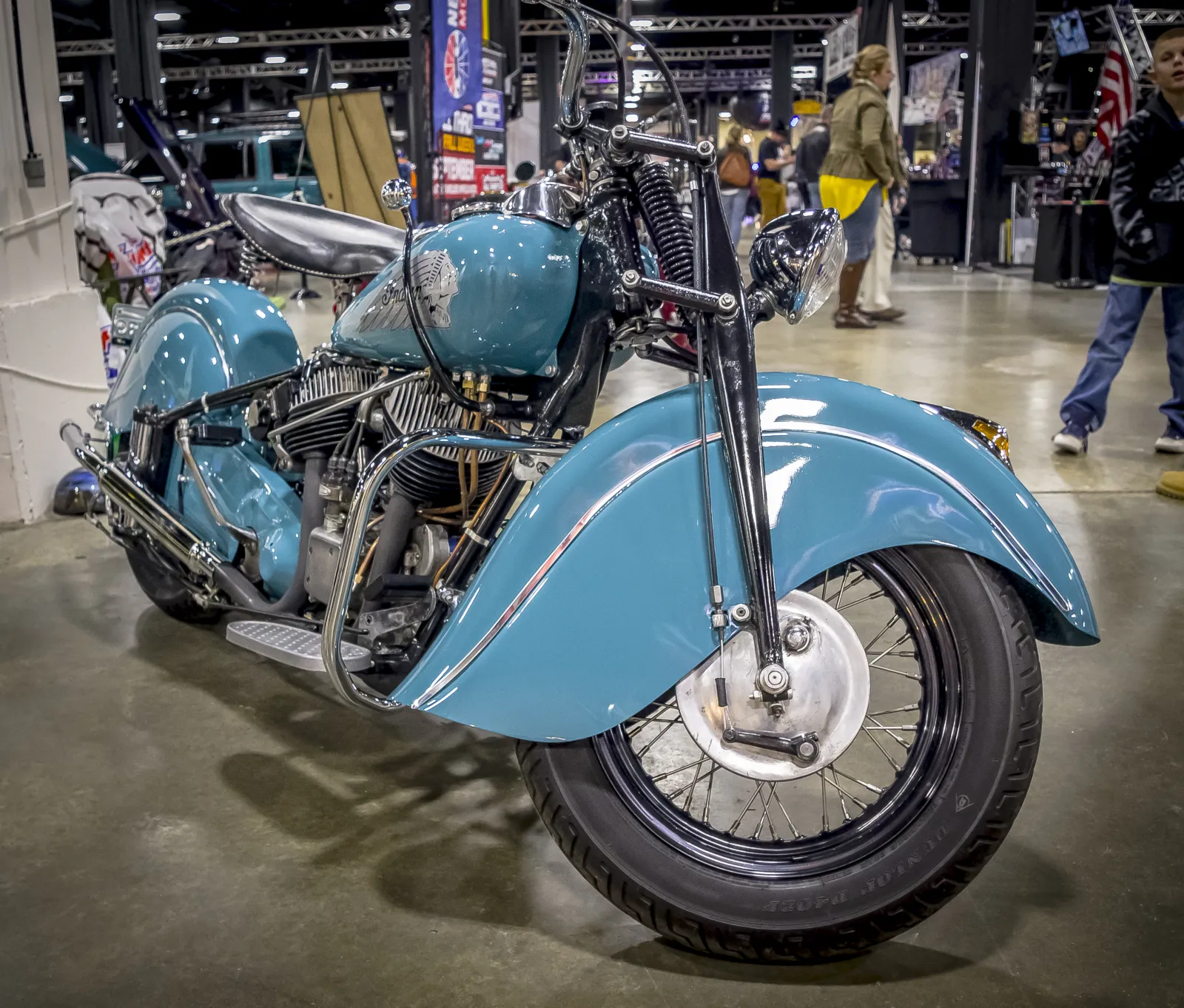
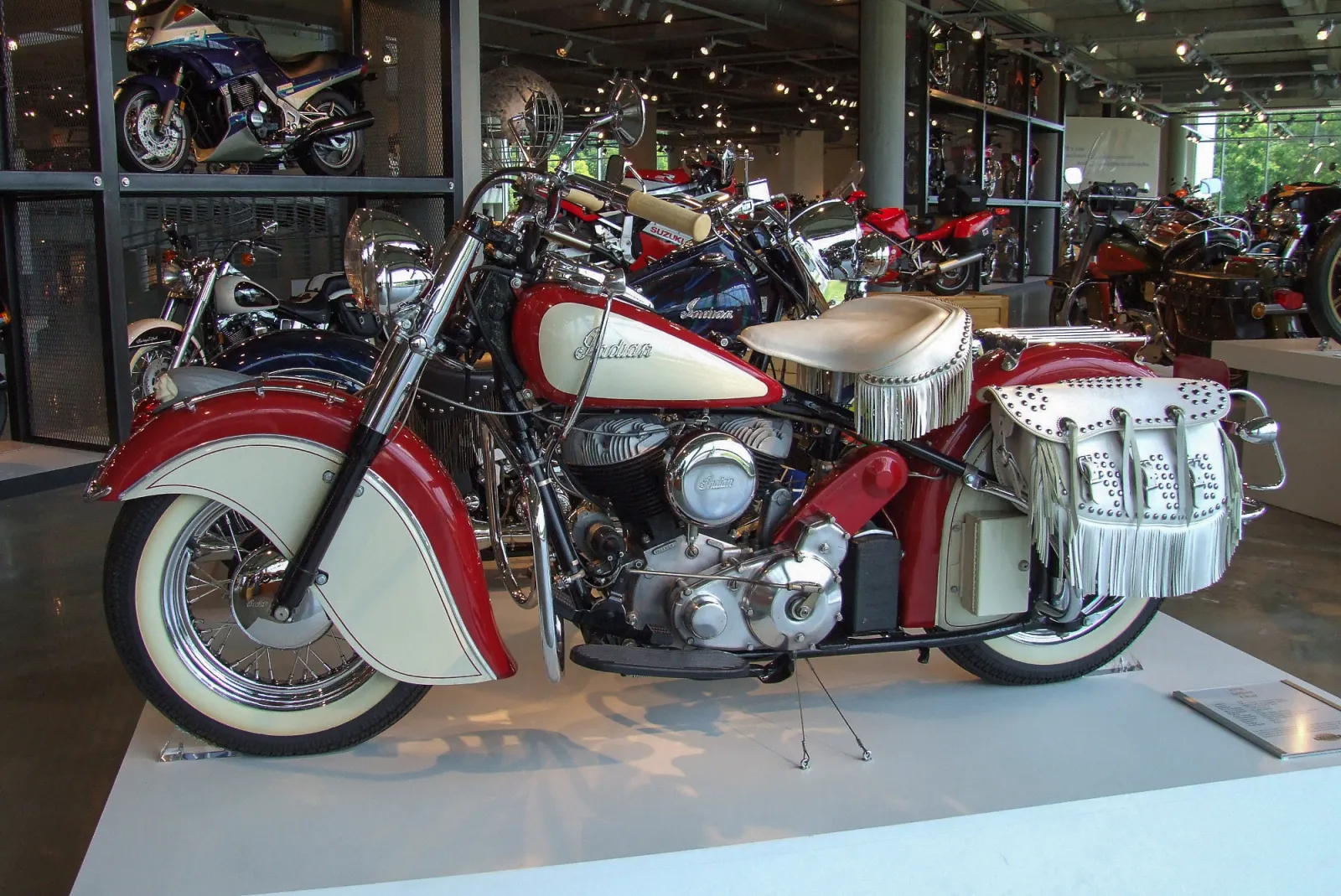
Telescopic forks finally replaced the springer, giving riders suspension that belonged in the same decade as the rest of the motorcycle. When the Springfield factory closed for good in 1953, the Roadmaster was the last bike to roll off the line. Every one that exists is a funeral hymn in chrome and iron.
Patina notes
Rarity changes everything about how you approach these bikes. An unrestored Roadmaster in any condition is a significant find. Original paint — even rough — is worth preserving because you'll never find another one.
The telescopic forks distinguish these from earlier springered Chiefs at a glance, and correct forks in good condition are extremely hard to source. The 80ci jugs are larger than the 74ci and are not interchangeable, so a correct engine is critical to value.
Patina on a Roadmaster isn't just charming, it's provenance. These aren't project bikes — they're artifacts.
Ownership reality
You're buying a museum piece that runs. The parts situation is significantly tighter than the standard Chief — fewer were made, fewer survive, and 80ci-specific components are genuinely scarce.
Kiwi Indian and Starklite carry some Roadmaster parts, but you'll spend serious time hunting NOS pieces at swap meets and through private networks. The hand shift / foot clutch is the same as the standard Chief, so the riding experience is identical — slow, deliberate, and deeply satisfying once you've got the muscle memory.
Insurance and storage become real considerations at this price point. Most Roadmaster owners ride them sparingly and deliberately, which is appropriate for something this rare.
The verdict
Buy if
You want the absolute pinnacle of Indian's original production. You collect at a level where $60,000+ for a motorcycle makes sense. You understand that rarity and historical significance are the point, not miles ridden. You want to own the literal last word from Springfield.
Skip if
You want an Indian you can actually ride without anxiety. The standard 74ci Chief gives you 90% of the experience at half the price. You're not prepared for the parts scarcity that comes with a three-thousand-unit production run. You'd rather ride than preserve.
What to look for
- → Verify 80ci engine — bore and stroke differ from 74ci, and swaps happen
- → Correct telescopic fork assembly (not a springer conversion or aftermarket)
- → Matching numbers — engine and frame correspondence is critical at this price point
- → Factory color and trim correctness (Indian changed specifications frequently)
- → Documentation and provenance — titled history adds significant value
- → Completeness of original tinwork, especially the skirted fender valances
Common problems
- ⚠ Parts scarcity is the defining ownership challenge — 80ci-specific components are genuinely rare
- ⚠ Same oil seepage and 6-volt electrical issues as standard Chiefs
- ⚠ Early telescopic forks can develop leaks and may need complete seal kits
- ⚠ Finding qualified Indian mechanics is even harder than for standard Chiefs
- ⚠ Risk of incorrect parts mixed in during previous restorations — verify everything
Parts & community
Parts sources
- Kiwi Indian Parts (kiwi-indian.com) — best source for reproduction components
- Starklite Indian Motorcycles — NOS and reproduction parts
- Antique Indian Motorcycle Club swap meets — the real parts pipeline for rare pieces
Forums & communities
- Indian Motocycles Forum (indianmotocycles.net)
Sources
- Motorcycle Classics · 2026-02-28
- Bring a Trailer · 2026-02-28
Specifications
| Engine | 80ci (1300cc) Thunderstroke flathead V-twin |
| Power | ~45 hp |
| Torque | ~55 lb-ft (estimated) |
| Transmission | 3-speed, hand shift |
| Drivetrain | Chain |
| Weight | 560 lbs (dry) |
| Wheelbase | 62 inches |
| Production | ~3,000 (1950-1953 Roadmasters) |
Notable Features
- • Telescopic front forks (replacing springer)
- • Larger 80ci engine over standard Chief's 74ci
- • Full-skirted fenders retained
- • Last motorcycles built by the original Indian company
About Indian
America's first motorcycle company. Before Harley was a household name, Indian was already winning races.
View all Indian vehicles →Find one
Looking to buy? Search current and past listings on Bring a Trailer.
Search on Bring a Trailer →