Why this vehicle matters
The CJ is where the Jeep legend lives. The military MB won World War II; the civilian CJ brought that go-anywhere capability to everyone else. The CJ-5 ran for 28 years with relatively minor changes — a testament to the design's rightness.
The CJ-7, introduced in 1976 with a 10-inch longer wheelbase, added practicality without sacrificing capability. These were the Jeeps that crawled Moab before Instagram.
The AMC inline-6 engines that arrived in 1972 are bulletproof and still run daily. The CJ is the original recreational 4x4 — every Wrangler since has been chasing this formula.
Patina notes
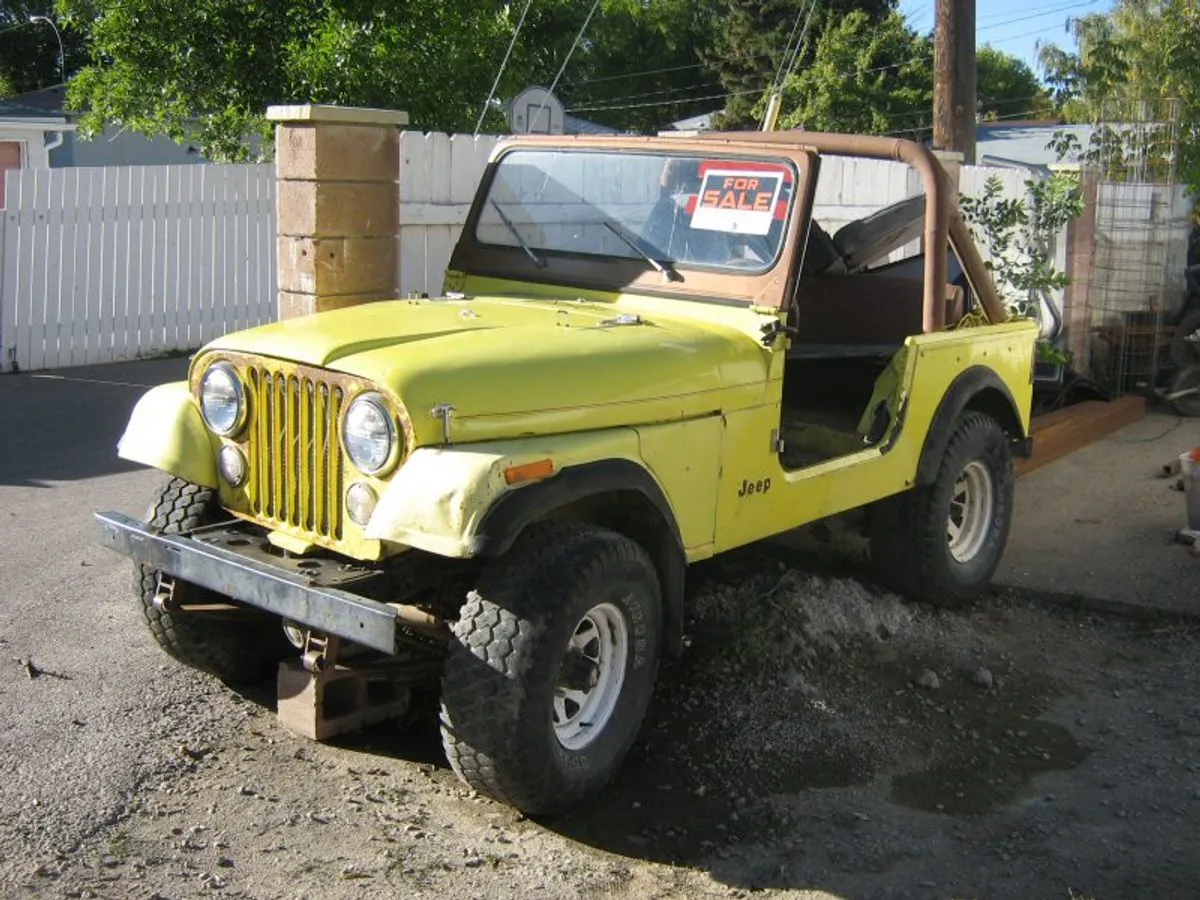
CJs develop honest patina that looks appropriate for their purpose. Original Olympic White, Renegade Yellow, or Mellow Yellow with surface rust tells a story. The body panels are simple steel and easy to repair or replace.
Watch for frame rust — especially around the spring mounts and body mounting points. The tub floors rust from water intrusion and mud accumulation. A CJ with a solid frame and rusty tub is salvageable; a CJ with a rusty frame is a parts vehicle. Check the leaf spring mounting points and shock towers carefully.
Ownership reality
The CJ aftermarket is enormous. Companies like Quadratec and Morris 4x4 Center have complete catalogs. The AMC 258 inline-6 is the best engine choice — reliable, torquey, and supported forever. The V8 options add power but also complexity and heat.
The short wheelbase makes the CJ-5 tippy on highway — the CJ-7's longer wheelbase is more stable. Most CJs have been modified for off-road use; finding an unmolested original is increasingly rare and valuable. These are not comfortable highway vehicles, but that's not the point.
The verdict
Buy if
You want the original recreational off-roader. You appreciate simple, fixable engineering. You understand that comfort was never part of the design brief.
Skip if
You need a vehicle that's comfortable on the highway. You want something that's safe by modern standards. You're not prepared for constant small maintenance tasks.
What to look for
- → Frame rust — especially spring mounts and body mount points
- → Tub floor rust under mats and under seats
- → Cowl rust at windshield frame base
- → Rear wheel well rust from mud
- → Dana 30/44 axle condition
- → Transfer case (Dana 20 or Dana 300) operation
- → Roll bar condition and mounting
Common problems
- ⚠ Frame rust is the biggest concern
- ⚠ Tub floor rust from water intrusion
- ⚠ Soft top leaks — they all leak
- ⚠ Transfer case shifter linkage wears
- ⚠ Steering wander (worn steering components)
- ⚠ Carburetor issues with ethanol fuel
Parts & community
Parts sources
- Quadratec
- Morris 4x4 Center
- 4WheelParts
- Collins Bros Jeep
- Omix-ADA
Forums & communities
- Jeep CJ Forums
- CJ-7.com
- JeepForum.com
- Jeep-CJ.com
Sources
- Hagerty Valuation Tools · 2026-02-01
- Bring a Trailer auction results · 2026-02-01
Specifications
| Engine | 232 I6 / 258 I6 / 304 V8 / 360 V8 |
| Power | 100-175 hp |
| Torque | 185-285 lb-ft |
| Transmission | 3-speed manual / 4-speed manual / TH400 auto |
| Drivetrain | 4WD (Dana 30/44 axles) |
| Weight | 2,700-3,200 lbs |
| Wheelbase | 84-94 inches (CJ-5: 84, CJ-7: 94) |
| Production | 603,303 (CJ-5) / 379,299 (CJ-7) |
Notable Features
- • CJ-5 ran from 1955-1983
- • CJ-7 added 1976 with longer wheelbase
- • Available factory hardtop
- • Roll bar standard from 1975
About Jeep
Born in war, built for adventure. Jeep is the original American off-road brand.
View all Jeep vehicles →Find one
Looking to buy? Search current and past listings on Bring a Trailer.
Search on Bring a Trailer →