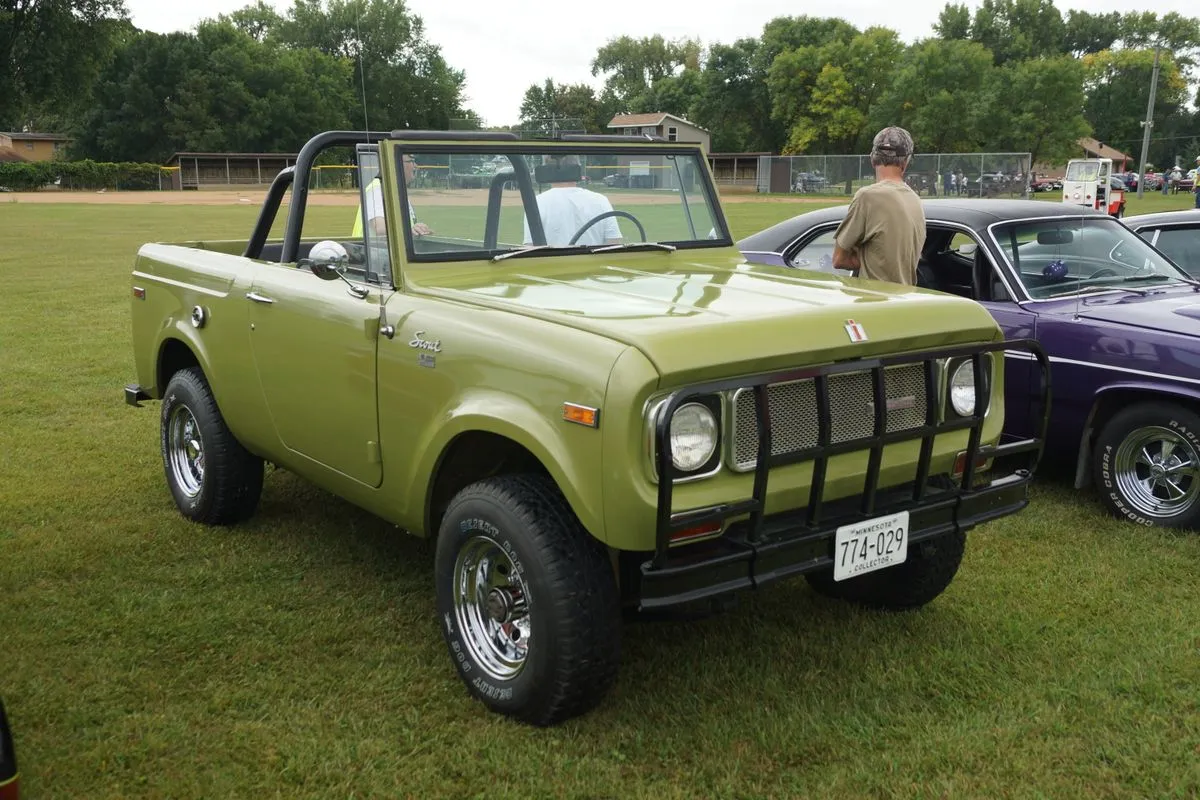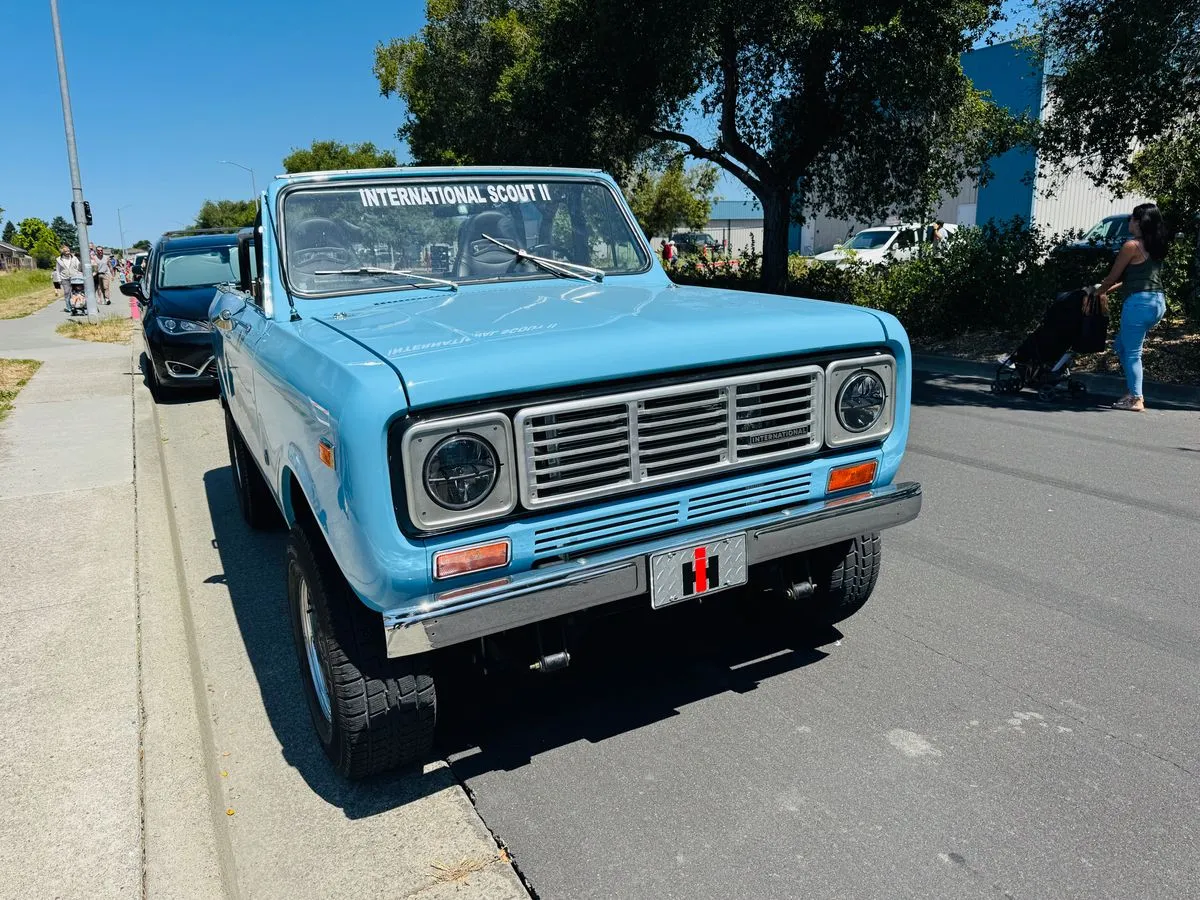
Why this vehicle matters
International Harvester was a tractor company that decided to build trucks, and the Scout was what happened when farm equipment engineers tackled the 4x4 market.
Where Jeeps were refined over decades, the Scout II was built like a piece of agricultural machinery — overbuilt, simple, and nearly indestructible. The Dana 44 front axle was overkill for a vehicle this size.
The transfer case could take abuse that would kill lesser trucks. When IH went under in 1980, the Scout died with it, creating instant rarity. These are the trucks for people who think Jeeps are too complicated.
Patina notes
Scouts are working trucks, and they should look like it. Original paint with honest fade is perfect. Dents happen when you actually go off-road. The steel fenders and removable tops take abuse gracefully.
Rust is the enemy — these trucks lived hard lives and many have returned to the earth. Survivors with original patina are increasingly rare and increasingly valuable. Don't restore the character out of them.
Ownership reality
Parts are the challenge. International Harvester stopped making trucks in 1980, and the enthusiast community has to source everything from specialists.
Super Scout Specialists, IH Parts America, and the IHPA (International Harvester Preservation Association) are essential. The good news: the powertrain is simpler than dirt.
The 304 and 345 V8s share DNA with industrial engines and were built to run forever. The bad news: body panels, trim, and interior pieces are getting scarce. Find a complete Scout and keep it complete.
The verdict
Buy if
You want the road less traveled — literally and figuratively. You prefer mechanical simplicity to electronic complexity. You're comfortable with a specialist parts network.
Skip if
You need dealer support. You want something you can easily insure. You're not ready to join a club to find parts.
What to look for
- → Frame rust (critical — check behind the gas tank)
- → Floor pan condition (rot starts around seat mounts)
- → Cowl rust where the windshield seals
- → Transfer case condition (rebuild kits available)
- → Fender rust (especially bottom edges)
- → Completeness — missing parts are hard to find
Common problems
- ⚠ Frame rust at body mounts
- ⚠ Carburetors hate ethanol fuel
- ⚠ Heater core failures (behind the dash)
- ⚠ Vacuum-operated 4WD hubs fail
- ⚠ Fuel sending units corrode
- ⚠ Weatherstripping deterioration
Parts & community
Parts sources
- Super Scout Specialists
- IH Parts America
- Scout Connection
- Cornbinder Connection
- IHPA swap meets
Forums & communities
- BinderPlanet.com
- IH Scout Forum
- International Harvester Preservation Association
- Scout II Facebook groups
Sources
- Hagerty Valuation Tools · 2026-02-03
Specifications
| Engine | 304 V8 / 345 V8 / 196 inline-4 / 258 inline-6 |
| Power | 143-163 hp (emissions era ratings) |
| Torque | 230-272 lb-ft |
| Transmission | 3-speed manual / 4-speed manual / 3-speed auto |
| Drivetrain | Part-time 4WD / Full-time 4WD (optional) |
| Weight | 3,800-4,200 lbs |
| Wheelbase | 100 inches |
| Production | Scout II 1971-1980, approximately 90,000 total |
Notable Features
- • Removable hardtop (Traveltop)
- • Dana 44 front axle (bulletproof)
- • Available full-time 4WD before Jeep
- • Last American-made competitor to Jeep
About International Harvester
The farm equipment giant that built the original American SUV. International Harvester was making trucks tough before tough was a marketing slogan.
View all International Harvester vehicles →Find one
Looking to buy? Search current and past listings on Bring a Trailer.
Search on Bring a Trailer →