Why this vehicle matters
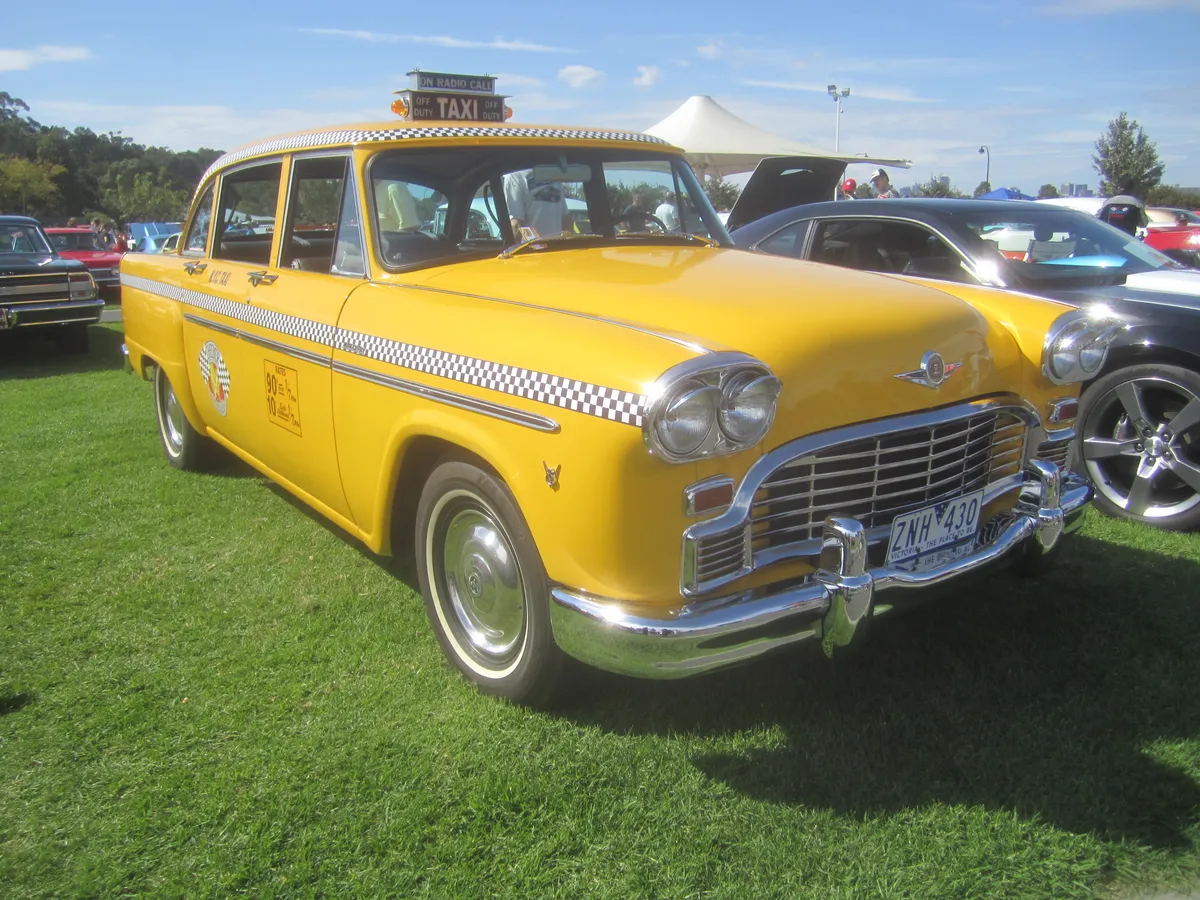
The Checker Marathon was the taxi. For 60 years, Checker Motors did one thing exceptionally well: build taxicabs. While Detroit chased styling trends and planned obsolescence, Checker kept building the same basic car because it worked.
The Marathon's massive doors could open wide enough to load a gurney or wheelchair. The jump seats turned it into a six-passenger vehicle. The body-on-frame construction survived urban abuse that would kill lesser cars.
When you picture a yellow NYC cab from any movie made between 1960 and 1990, you're picturing a Checker. They didn't build exciting cars. They built monuments to durability.
Patina notes
Most Checkers lived hard lives in taxi service, accumulating hundreds of thousands of miles before retirement. Survivors fall into two categories: taxi refugees with character (and probably some rust) and carefully preserved civilian models that were always rare.
The paint quality was industrial, not automotive — expect imperfections. Patina is authentic on a Checker; over-restoration misses the point.
Ownership reality
Checker used GM drivetrains — mostly Chevrolet V8s and TH350/TH400 automatics — so mechanical parts are easy and cheap. Body panels and trim are another story; these are scarce and expensive.
The Marathon was designed for 300,000+ miles of taxi service, so mechanically sound examples have plenty of life left. The massive size (120-inch wheelbase) makes parking challenging. Fuel economy is poor. The appeal is the conversation it starts, not the driving experience.
The verdict
Buy if
You want the ultimate conversation starter. You appreciate industrial design over styling. You're okay with parts hunting. You want something that says 'New York City, 1975' louder than anything else on the road.
Skip if
You need parts availability. You want something sporty. You can't handle the size. You don't have a sense of humor about your car.
What to look for
- → Rust (floor pans, rocker panels, trunk — the usual suspects)
- → Frame condition (especially former taxi/fleet cars)
- → Engine swap history (GM engines are fine, oddball swaps less so)
- → Door hinge wear (those massive doors stress the hinges)
- → Interior condition (taxi interiors got destroyed)
- → VIN decoding (A11/A12 sedan vs. A12W wagon vs. A12E long-wheelbase)
Common problems
- ⚠ Body panel rust (especially wheel wells and floors)
- ⚠ Door alignment from hinge wear
- ⚠ Trim and body parts scarcity
- ⚠ Window regulators (manual windows preferred)
- ⚠ Weatherstripping deterioration
- ⚠ Exhaust system rot
Parts & community
Parts sources
- Checker Parts (checkerparts.com)
- Checker Club of America
- General Motors dealers (drivetrain parts)
- eBay (used and NOS parts)
Forums & communities
- Checker Car Club of America
- Checker-Clubs Yahoo Group
- H.A.M.B. (Checker threads)
Sources
- Checker Marathon Wikipedia · 2026-02-04
Specifications
| Engine | 350ci Chevrolet V8 (common), various inline-6 options |
| Power | 145-175 hp (emissions-era) |
| Torque | 250-275 lb-ft |
| Transmission | 3-speed automatic (standard) |
| Drivetrain | RWD |
| Weight | 3,800-4,200 lbs |
| Wheelbase | 120 inches |
| Production | ~7,000 per year (peak) |
Notable Features
- • Body-on-frame construction
- • Massive rear doors (26 inches)
- • Jump seats for extra passengers
- • Industrial-grade durability
- • Same basic design for 22 years
About Checker
The company that built the American taxi. For decades, the yellow Checker was synonymous with New York City.
View all Checker vehicles →Find one
Looking to buy? Search current and past listings on Bring a Trailer.
Search on Bring a Trailer →