Why this vehicle matters
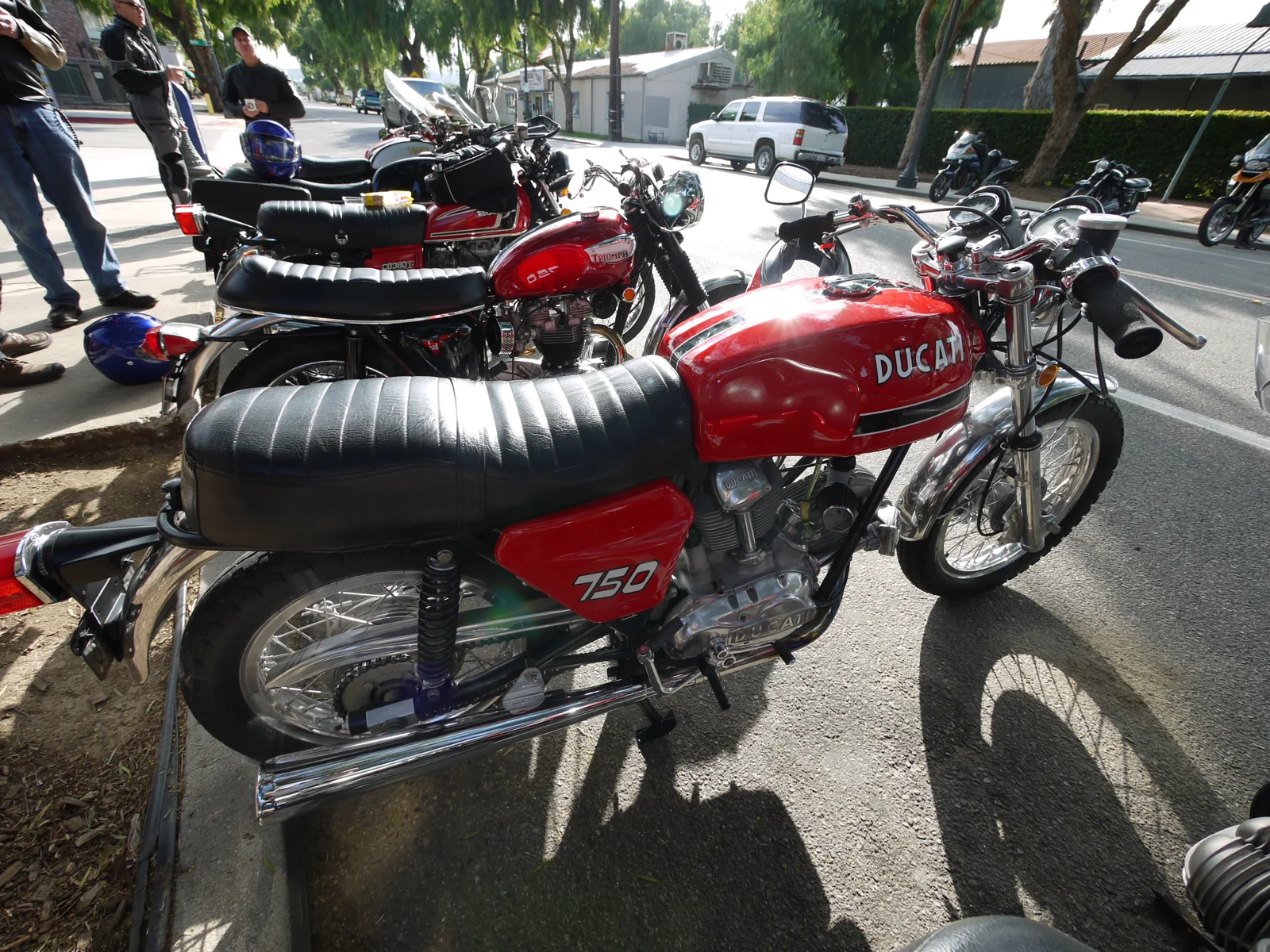
Every Ducati you've ever lusted after — the 916, the Monster, the Panigale — started here. Fabio Taglioni's 750 GT was the first production Ducati V-twin, and he got the fundamental architecture so right that Bologna is still building 90-degree L-twins fifty years later.
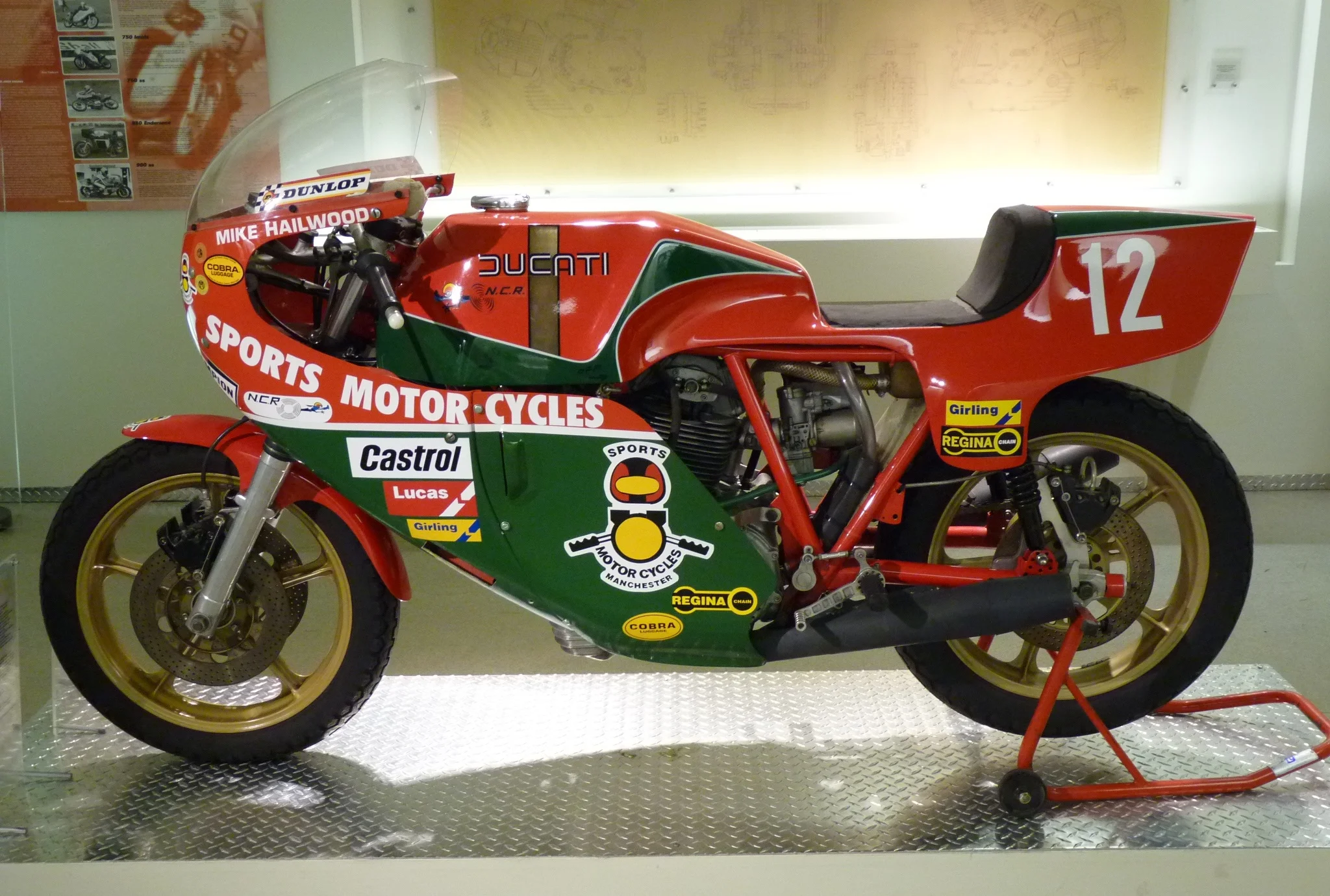
The round-case engine is the genesis document. Paul Smart won the 1972 Imola 200 on the Sport version and put Ducati on the international racing map overnight, but the GT is the more interesting motorcycle precisely because it's the civilian version.
No clip-ons, no rear-sets, just comfortable bars and a sensible riding position on a motorcycle with one of the most mechanically beautiful engines ever designed.
That bevel-drive camshaft tower is a piece of kinetic sculpture — you can watch the gears mesh through the inspection cover. The GT is the Ducati you can actually ride to dinner.
Patina notes
Round-case Ducatis develop a particular kind of beauty with age. The sand-cast engine cases on early production bikes have a rough, almost handmade texture that polished cases can't replicate — never bead-blast these.
The bevel tower covers develop a warm oxidation. Chrome on the Conti mufflers discolors to a deep bronze behind the headers. The steel tank is prone to dents (Italian steel was thinner than British or German), and those dents become part of the bike's story.
The original Veglia instruments develop hairline cracks in the faces that look like aged parchment. Paint was thin by Ducati's own admission — checking and micro-crazing is normal on unrestored examples.
An original-paint round-case Ducati with forty years of honest wear looks better than any restoration.
Ownership reality
Here's what nobody tells you about owning a bevel Ducati: the valve adjustment involves removing the bevel tower, checking clearances with feeler gauges, and shimming as needed.
It's not hard, but it's involved — budget two hours if you know what you're doing, a full day if you're learning. The reward is an engine that sounds like nothing else on earth — that dry-clutch rattle at idle transitioning into a deep, mechanical howl as the revs climb.
The 90-degree firing order creates a loping, uneven pulse that vibrates through the whole motorcycle. Electrics are Bosch, which is better than Lucas but still 1970s European, so carry a spare fuse and know where your regulator lives.
The desmodromic valve system on the later 900SS gets all the attention, but the spring-valve 750 GT is actually simpler to maintain. Parts are the real challenge — this is a niche within a niche, and you'll be ordering from specialists, not Amazon.
The verdict
Buy if
You want to own the motorcycle that started the Ducati V-twin dynasty, and you understand that Italian motorcycles reward patient, knowledgeable owners with an experience that no other country's bikes can match. The GT is the approachable entry point to bevel-drive Ducatis — more affordable than the Sport or SS, more comfortable to ride, and mechanically identical where it counts. This is the thinking enthusiast's Ducati.
Skip if
You want parts on your doorstep in two days. Bevel Ducatis require specialist suppliers and sometimes genuine patience waiting for components. Skip if you need a motorcycle that starts reliably on cold mornings without ritual, or if the idea of adjusting valves through a bevel gear tower sounds more like a threat than a weekend project. Also skip if you want the poster bike — that's the 900SS. The GT is the one you ride, not the one you stare at.
What to look for
- → Round-case vs. square-case engine — the 750 GT should have round cases, square cases indicate a later replacement engine
- → Bevel tower condition — listen for whining that indicates worn bevel gears, an expensive repair
- → Frame cracks at the steering head gussets — a known stress point on early frames
- → Sand-cast vs. die-cast cases — early production sand-cast cases are more desirable but also more porous
- → Original Veglia instruments — reproductions exist but lack the correct font and markings
- → Check for evidence of bore-through to 860cc — popular modification that changes the bike's character
- → Conti muffler condition — originals are rare and expensive to replace
Common problems
- ⚠ Bevel gear lash requires periodic adjustment — too tight causes whine and accelerated wear, too loose causes clatter
- ⚠ Generator output marginal for modern accessories — the original system barely keeps up with stock electrics
- ⚠ Clutch drag when cold — the dry clutch plates stick together after sitting, a few pulls of the lever usually frees them
- ⚠ Oil weeping from cases and bevel tower gaskets — Italian gasket technology of this era was aspirational at best
- ⚠ Kickstart only (no electric start) — requires technique and a good knee
- ⚠ Fuel petcock leaks — the original Ducati petcocks are notoriously unreliable
Parts & community
Parts sources
- Bevel Heaven (bevelheaven.com) — the premier source for bevel Ducati parts worldwide
- Ducati Omaha — deep bevel-drive parts inventory and expert knowledge
- NCR (Bologna) — race-quality bevel Ducati components
- Moto Italiane (Australia) — surprisingly strong bevel parts source
- eBay Italy — seriously, some of the best NOS bevel parts surface here
Forums & communities
- Ducati.ms (ducati.ms) — the largest Ducati forum, with a dedicated bevel section
- Ducati Sporting Club (ducatisportingclub.com) — focused on vintage Ducatis
- Bevel Heaven forum — specialist community for bevel-drive owners
- VJMC (Vintage Japanese Motorcycle Club) — despite the name, covers European bikes too
Sources
- Ian Falloon — The Book of the Ducati 750 · 2026-02-28
- Bevel Heaven — 750 GT Technical Reference · 2026-02-28
- Motorcycle Classics — Ducati 750 GT History · 2026-02-28
Specifications
| Engine | 748cc air-cooled SOHC 90-degree L-twin, bevel-gear driven camshaft |
| Power | 60 hp @ 8,000 rpm |
| Torque | 46 lb-ft @ 6,000 rpm |
| Transmission | 5-speed |
| Drivetrain | Chain |
| Weight | 415 lbs |
| Wheelbase | 58 inches |
| Production | Approximately 4,500 units (750 GT, 1971-1974) |
Notable Features
- • Round-case engine — first Ducati big twin
- • Bevel-driven single overhead cam per cylinder
- • 90-degree cylinder angle eliminating primary vibration
- • Conti mufflers
- • Bosch electrics
- • Marzocchi front fork
About Ducati
Bologna's finest. Desmodromic valves, L-twins, and the kind of passion that makes accountants nervous.
View all Ducati vehicles →Find one
Looking to buy? Search current and past listings on Bring a Trailer.
Search on Bring a Trailer →